

Everything at a glance
- AI-powered SEO automates data-intensive tasks and increases efficiency by up to 50%.
- Core AI methods, machine learning, NLP and LLMs, form the basis of modern SEO tools.
- From keyword research through technical audits to chatbots, AI covers every SEO pillar.
- A sound integration concept with clear KPIs, human oversight and ethical safeguards is essential.
- Future search will be hybrid: you should combine AI snippets with classic SEO in order to dominate page 1.
Have you noticed how AI is quietly turning the SEO playbook upside down? Today 86% of SEO professionals build AI into their workflows, and search interest in “AI SEO” has grown by almost 1,900% over the past five years Exploding Topics.
From automated keyword research to writing meta descriptions in seconds, AI frees up time for your team to spend on strategy, creativity and the human polish that really counts.
In this article you will learn exactly how AI and ChatGPT can speed up your SEO tasks: from uncovering hidden keyword potential and optimising on-page elements to streamlining technical audits.
We share expert tips so that your content stays human, give you practical steps for integrating AI into your existing processes, and show you the ethical guardrails you need in order to stay on course. Ready to make your SEO future-proof? Then let us get started.
What is AI-powered SEO?
Let us be honest: AI is no longer hype, it has long been in use. It is a powerful tool that is changing the SEO game in the background.
And we are not just talking about Google’s algorithms (which have relied on AI since RankBrain). We are talking about how you can use AI today to make SEO faster, smarter and more scalable.
From keyword clustering through content optimisation to technical audits, AI tools are taking over more and more of the repetitive and time-consuming tasks. That means less time in spreadsheets and more time for strategy.
But one thing is clear: AI-powered SEO is not a “set it and forget it” solution. It does not replace smart minds, it supports them. Tools based on NLP, LLMs and machine learning help you analyse huge data sets, discover hidden opportunities and make better decisions, without burning out your team.
According to SEO.com, 52% of marketers report faster and more efficient work after using AI for SEO tasks in 2025. And with new models improving quarter by quarter, the lead over purely manual SEO keeps growing.
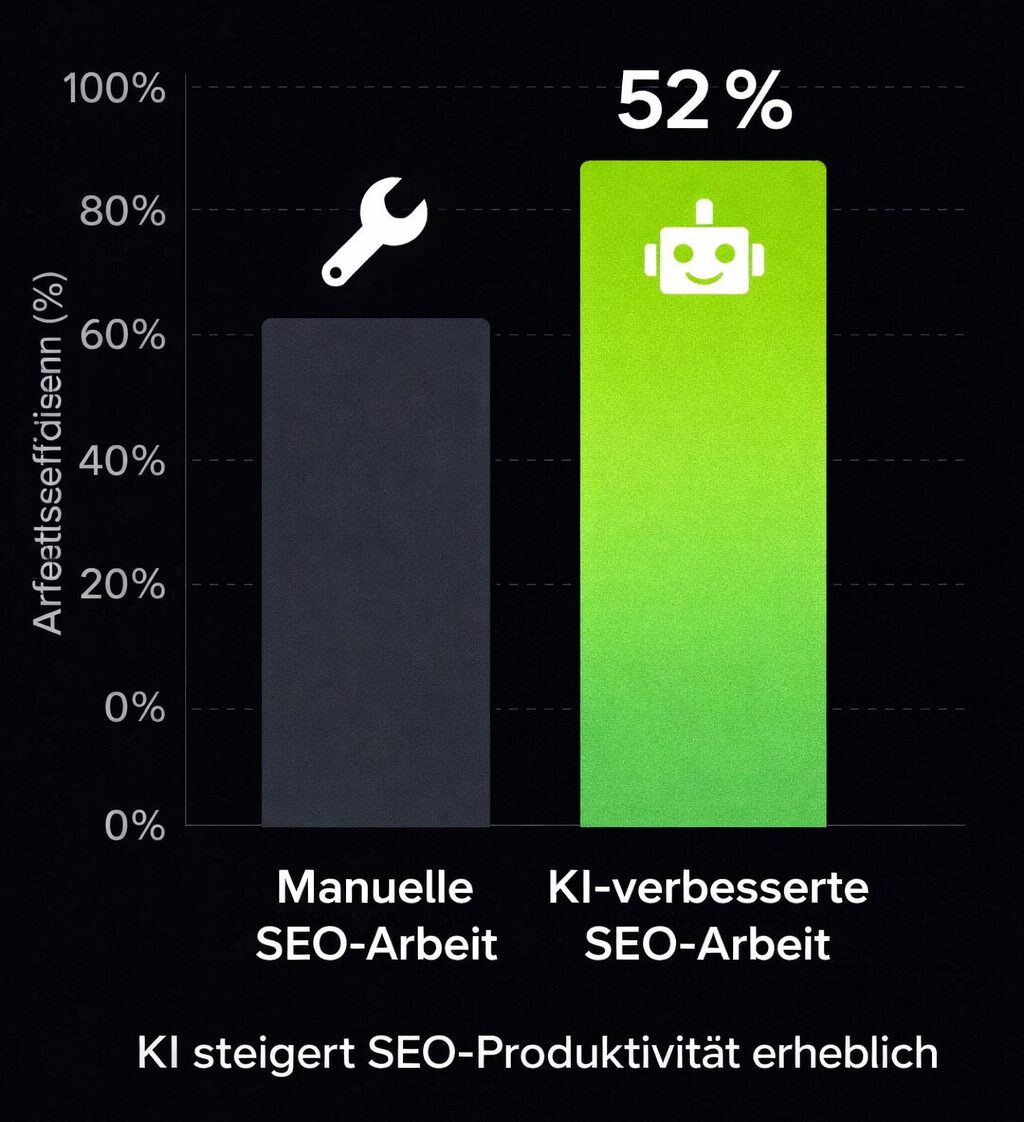
The result? You get insights faster, campaigns scale more smoothly, and your content reaches the right people at the right time.
Want to see how we put AI to work in practice? Our YouTube channel publishes new walkthroughs with real SEO use cases every week, with no frills.
What is meant by artificial intelligence?
Artificial intelligence (AI) describes the attempt to reproduce human thinking and acting with the help of computers and algorithms. The aim is to develop machines so that they can carry out tasks which normally require human intelligence, such as learning, problem solving, perceiving, understanding language or making decisions.
Broadly speaking, there are two forms:
-
Narrow AI: specialised in one specific task, for example voice assistants such as Siri or translation programmes. It can often solve that task better or faster than people, but it is not generally “intelligent”.
-
General AI: so far only a theoretical form, which could imitate human intelligence across its full breadth and react flexibly to different situations.
Technically, AI is based on algorithms, data and computing power. Particularly important today are machine learning and deep learning, in which systems recognise patterns in large volumes of data and improve themselves.
We use AI every day: when Spotify recommends your next favourite song, when Gmail suggests a reply, or when a chatbot answers your customer enquiry at 2 in the morning.
Four technologies play a central role in SEO:
- Machine learning (ML): recognises patterns and makes predictions, for example about which keywords will bring traffic.
- Deep learning (DL): a more powerful form of ML, modelled on our brain, which analyses large data sets such as search logs.
- Natural language processing (NLP): makes it possible to read, understand and generate language, which is how meta descriptions or content summaries are produced.
- Large language models (LLMs): advanced NLP systems such as GPT-4, which can create high-quality content, answer complex questions and perform semantic search analysis.
Why does this matter for SEO? With the right tools you can automate content tasks, extract trends from thousands of search queries and generate keyword-rich text instantly, without any loss of quality.
A global report by Statista shows that 71% of digital marketers in 2025 already use AI to automate parts of their SEO and content workflows, from topic discovery to performance forecasting Statista, 2025.
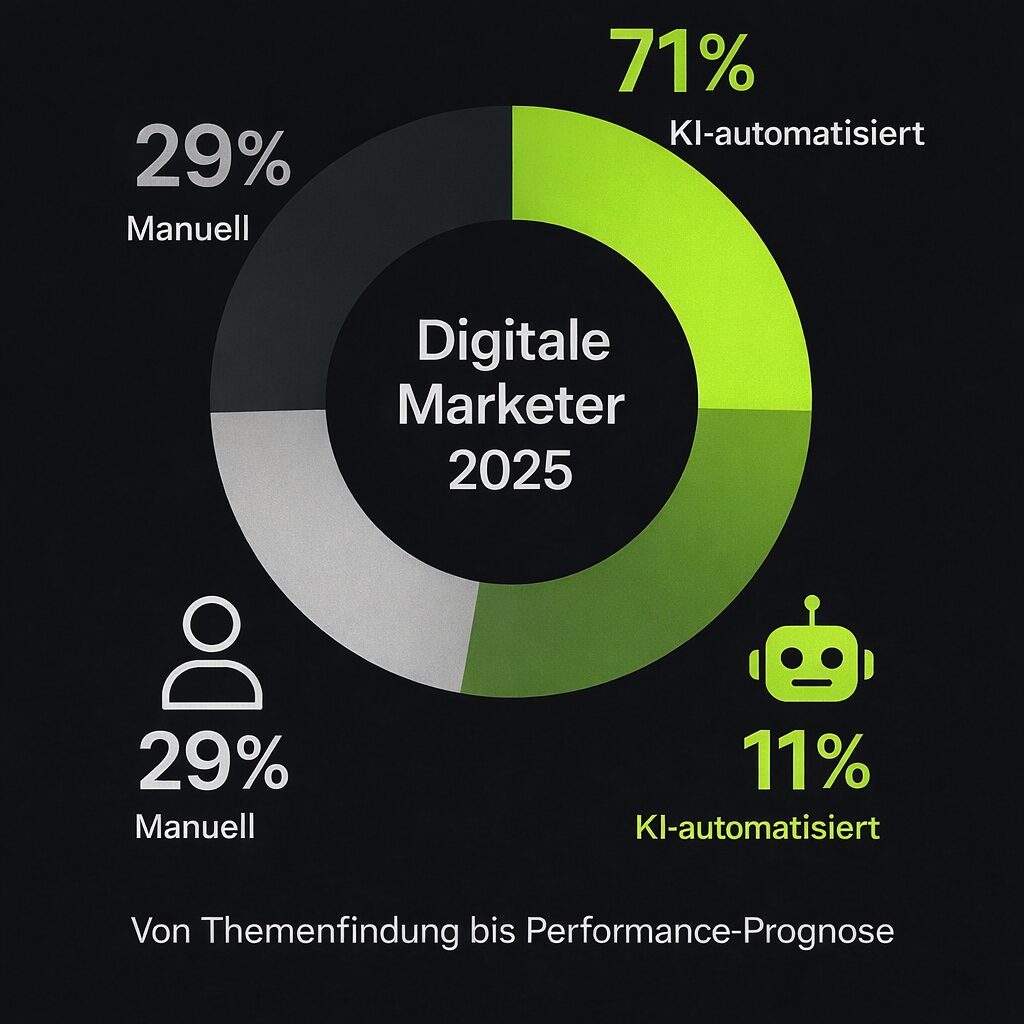
The better you understand these AI building blocks, the more accurately you can decide when to trust a forecasting model and when you need the human polish.
Which areas of application are there for AI in SEO?
AI delivers in every SEO discipline: keyword research, content, on-page, off-page, technical audits, data analysis and even user experience.
But the question is: which repetitive SEO tasks are eating your time that AI could take over?
Even though AI tools cannot yet replace an experienced SEO professional in every detail, they are already powerful enough to tighten workflows, reduce stress and save you hours.
Whether it is keyword clustering, generating meta tags automatically or uncovering technical errors, AI can now support almost every step of your SEO process and let you work faster, smarter and at greater scale.
Keyword research with AI
AI tools scan millions of search queries in seconds and hand you long-tail keywords, follow-up questions and semantic clusters that you would otherwise have to piece together over hours.
Especially useful: chatbots such as ChatGPT help you explore new industries or niches. When you enter a new market, a few prompts are enough to probe subtopics, customer questions and intent buckets, entirely without tool hopping.
One caveat: AI-generated keywords are only as good as your prompt. Write precise instructions and always validate the suggestions against real data such as search volume and competition.
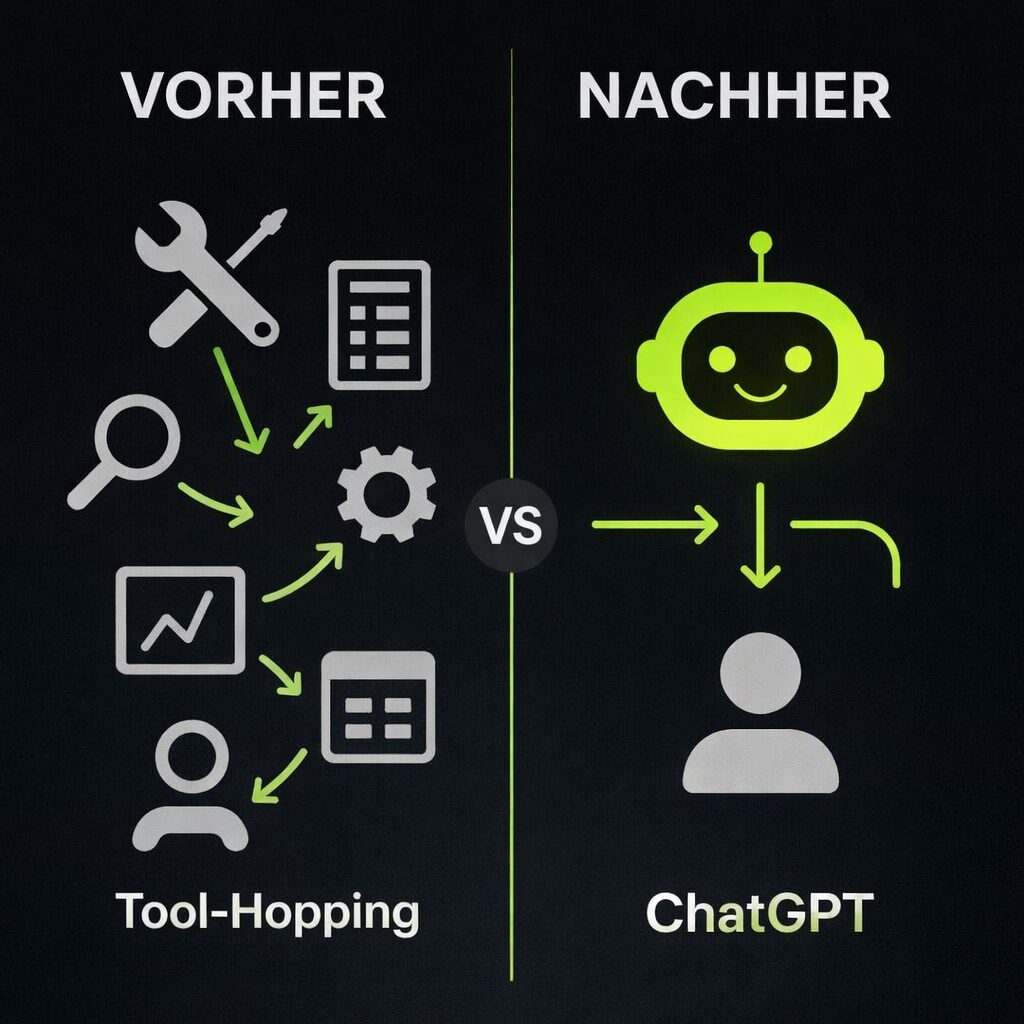
Our conclusion: AI does not replace a keyword strategy, it simply creates room for one more quickly. For creativity and prioritisation you still need your own brain.
Expert tip:
Use detailed prompts, for example: “List 20 commercial intent keywords for e-bikes in Europe”, and then check the search volume before you plan.
Content optimisation and generation
AI tools such as GPT-4 create meta descriptions, blog outlines and FAQ sections in seconds and help you scale content without starting from zero.
They are also excellent for rewriting existing text in terms of tone, clarity and length, which is ideal for different platforms.
But remember: search engines and AI systems such as Google AI Overviews favour content with expertise and trustworthiness. AI helps, but you have to shape the narrative yourself.
So that your content performs equally well in classic and AI-powered search, pay attention to:
- Strengthening EEAT signals: cite experts, add author bios and current references.
- Clear, structured content with bullet points, highlighted keywords and strong openings.
- Regularly updating older posts so they reflect 2025 trends and data.
- Building in FAQs with question words and concise answers.
64% of marketers use AI for content production, but 84% still rely on human editors to safeguard tone, expertise and brand consistency (Content Marketing Institute, 2025).
Pro tip: AI speeds up the process, but relevance, trust and clarity come from you.
On-page optimisation
On-page SEO consists of many repeatable tasks that AI tools can complete in seconds.
First step: generate snippets. Feed your existing page titles and descriptions into an LLM (for example GPT-4 or an SEO plugin) with clear instructions on keywords and tone. The AI produces optimised title tags and meta descriptions.
Expert tip: supply context, the main keyword, the target audience and the desired call to action, and check the snippets in a SERP simulator before you publish.
After that, AI can scan your site and recommend internal links in order to strengthen the site architecture.
For e-commerce and rich results, use AI to create schema markup automatically (products, recipes, events, FAQs and so on) and to keep it consistent, which makes you SGE-friendly and suitable for Google’s Shopping Graph.
Off-page optimisation and digital PR
Off-page SEO and digital PR are built on real relationships and high-quality links, and AI can take a lot of the groundwork off your hands.
AI tools can:
- Write personalised outreach emails in seconds. Provide the URL, the niche and the desired guest post angle, then refine the draft with details about the recipient.
- Identify link building opportunities by scanning industry blogs, forums and broken link resources.
- Generate topic ideas for guest posts at scale, matched to the prospect’s expertise and audience.
Expert tip: never send raw AI drafts. Personalise your approach: mention a recent post, cite data or a shared connection in order to create genuine interaction.
Technical SEO improvements
AI-powered tools do not just crawl your site faster, they also show the most effective fixes first, so that you do not get lost in a long list of problems.
With automated audits and machine learning prioritisation you spend less time troubleshooting and more time actually improving performance.
Focus on:
- Automated error detection: AI crawlers find broken links, 404s and orphan pages, so that you can fix critical issues quickly.
- Impact-based recommendations: models analyse crawl logs and performance metrics and show you which optimisations (for example reducing server response time or deferring non-critical JavaScript) deliver the most.
- Core Web Vitals monitoring: track LCP, FID and CLS in real time with alerts and concrete image, CSS or script adjustments in order to stay within Google’s thresholds.
- Schema validation and generation: automate the checking and creation of structured data (Product, Article, LocalBusiness and so on) in order to ensure error-free markup and rich results.
- Bot access controls: AI audits check robots.txt, firewall and security settings, so that essential crawlers such as Googlebot or GPTBot are not blocked.
65% of companies report better SEO results thanks to AI tools, including technical audits, performance optimisations and site-wide error detection (Semrush).
Pro tip: automate routine checks, but schedule regular manual reviews in order to catch the nuances that only a human sees.
UX improvements (for example chatbots)
One simple way to improve your user experience is AI chatbots. Thanks to large language models, these helpers can now:
- Answer FAQs instantly and guide visitors through your site
- Recommend products or services based on what is entered
- Pass complex questions on to human colleagues
This saves support resources and makes sure that visitors stay on your site for longer. At the same time you collect data, common questions, satisfaction scores and pain points, for your SEO and content strategy.
But chatbots are only the beginning. AI-powered UX tools can:
- Analyse session recordings and heatmaps in order to identify friction
- Run automated A/B tests for headlines, layouts and CTAs
- Predict user drop-off by modelling behaviour
Together these tools create a smoother, more intuitive user experience, which signals to search engines and AI assistants that your pages meet real needs.
Data analysis and insights
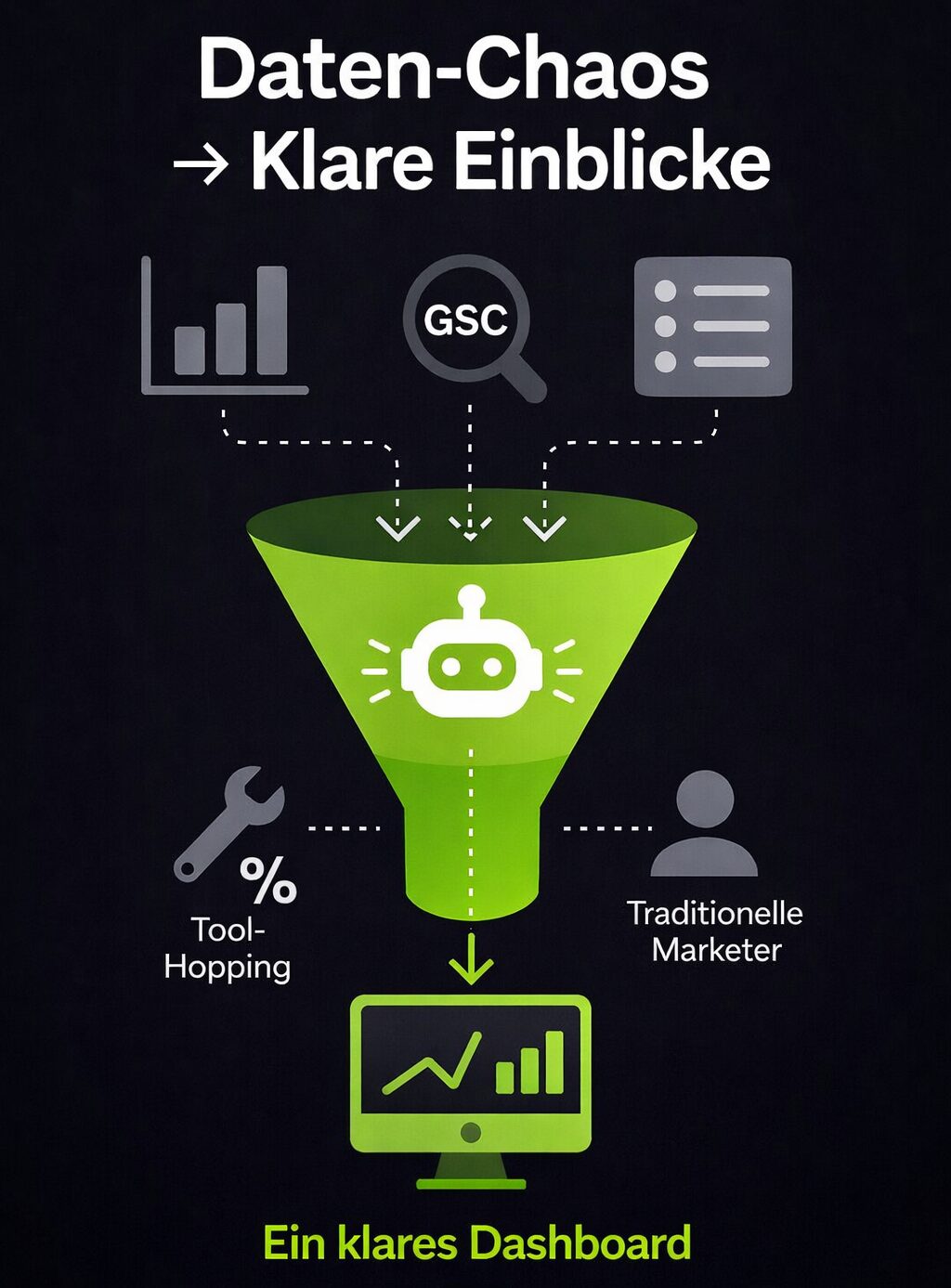
When you are drowning in spreadsheets, AI becomes your analytics sidekick: it consolidates Google Analytics, Search Console and ranking data into one clear dashboard and highlights what matters.
With AI-powered analysis you can:
- Break down organic traffic and user behaviour into concise summaries
- Detect anomalies such as traffic drops or unusual bounce rates and suggest possible causes
- Uncover content gaps by comparing your pages with top competitors
- Create keyword trend forecasts on the basis of historical data
- Generate performance reports automatically and free you from building charts
AI supplies the insights, your expertise turns them into strategic priorities that move your business forward.
Which tools and platforms are there for AI SEO?
There is no all-in-one tool. Choose your platforms according to what you need: content ideation, technical audits or link research.
- ChatGPT and LLMs: brainstorming, drafting and FAQs in conversation.
- Keyword and content tools (Frase, MarketMuse, Neuroflash): deep topic research and content briefs.
- On-page AI (Surfer SEO, Clearscope): data-driven recommendations for word count, headings and keyword density.
- Link analysis and link building (Linkio, Majestic): find authority sites, track anchor texts and forecast link impact.
- Technical SEO (DeepCrawl, Botify): automatic crawling, site health scoring and performance forecasts.
| Tool | Technology basis | Main functions | Best for |
|---|---|---|---|
| ChatGPT | GPT-3.5 / GPT-4 | Data processing, snippet drafts, research support | Fast content drafts and brainstorming |
| Neuroflash | GPT-4 | Off-page optimisation, data analysis, information retrieval | German-language SEO content |
| WordLift | Proprietary AI | Automated structured data, product graphs, analytics | Schema markup and knowledge graph generation |
| InLinks | Proprietary AI | Knowledge graphs, on-page analysis, internal linking | Intelligent internal linking and topic modelling |
| BrightEdge Insights | Deep learning and big data | Site-wide optimisation needs, AI-driven recommendations | Enterprise SEO strategy and insights |
| Keyword Insights | Proprietary AI | Keyword research, intent analysis, content brief generation | Deep keyword intent analysis and briefs |
How will AI influence the future of SEO?
Search is no longer just blue links, it is a hybrid ecosystem in which classic results sit alongside AI-powered answers. In order to stay competitive you have to optimise both for snippet-style answers (crisp and direct) and for classic rankings.
In the years ahead, search interfaces will blur the boundaries between search engines and AI assistants. Google AI Overviews, ChatGPT Search and similar features show summaries and recommendations first, before organic links appear.
Your content therefore has to deliver clear “answer blocks” that satisfy AI prompts and rank in the top 10 at the same time.
Personalisation becomes mandatory: AI models deliver results based on individual behaviour, location and previous interactions.
Brands that feed first-party data into these models and build tailored content journeys will stand out. Do not only chase generic keywords, invest in dynamic content that continually adapts to user intent.
Automation will scale: routine tasks such as technical audits, performance reports and A/B tests increasingly run autonomously. That lets you concentrate on strategic, high-impact work: campaigns that convince on an emotional and an ethical level.
On the subject of ethics, transparency and fairness will shape the regulatory environment. With the flood of AI-generated content, rules on labelling and on avoiding algorithmic bias are to be expected. Brands that use clear labels now and audit their AI workflows will avoid compliance problems later.
Our conclusion: the future of SEO does not lie in an either/or between AI and traditional tactics, but in an orchestrated combination of both worlds.
Ready for more revenue?
Book a free SEO and GEO audit

Find out in a free call how much revenue your website is leaving on the table, with no obligation and no agency waffle.