

Everything at a glance
- Be the answer, not just a link: GEO turns your content into cited snippets inside AI answers and bypasses the classic click barriers.
- Use live data: integrate real-time APIs and RAG so your insights stay current and immediately actionable.
- Increase your ROI: early adopters record 20 to 30% more AI traffic and up to 12% higher conversion rates, while SEA costs fall.
- Balance optimisation and authenticity: write for people first, then package the content for AI. Unique data and expert quotes make you stand out.
- SEO is not dead: make sure you have a good mix of SEO and GEO
Brands often throw advertising money out of the window, until GEO turns their content into instant answers. In March 2025, AI Overviews appeared in 13.14% of all US desktop searches, an increase of 102% since January.
That means your insights can move from hidden links to the instant answer and secure you the valuable zero-click moment on chat and voice platforms.
In this article I show you how to create concise, API-backed snippets that generative engines cannot resist, so every question becomes a micro conversion for your brand. Ready to be the answer everyone is looking for? Then let us get started.
Should I only invest in GEO and drop SEO?
No, you should not stop doing SEO and bet everything on GEO. Many self-appointed gurus claim that SEO is dead, but that is not true. Around 80% of GEO is based on classic SEO. Google itself said in a talk: GEO = SEO.
It is important to understand that anything which cannot be found on your website cannot be cited in LLMs such as ChatGPT either. These models only draw on information that already exists. That is exactly why GEO and SEO go hand in hand, and before we dive deeper into GEO it is essential to understand what SEO means.
- GEO is built 80% on classic SEO
- Only content on your website can appear in LLMs such as ChatGPT
- SEO and GEO complement each other and belong together
Expert tip:
People who want to sell you the idea that SEO is dead usually have no deep experience and are trying to sell you something through fear. Do not listen to those voices.
More on this topic: Is SEO dead?
Key reasons and benefits of investing in GEO
If you have ever lost a lead because nobody clicked beyond the AI answer, you know the problem. GEO turns the tables: your content becomes the answer, not just one option among many.
At its core, GEO combines clever content structure with real-time data retrieval. You write clear, crisp answers and feed them with APIs or knowledge base integrations so AI models always pull the latest insights.
The result? Your content becomes the go-to snippet in AI summaries.
Below you will find all the reasons why GEO matters for your business and why the investment pays off.
- AI-driven search
- Countering zero-click searches
- AI citations build trust
- Cross-platform AI reach
- A future-proof strategy
- Influencing your industry and purchases
AI-driven search
Do you feel like you are shouting into the void when people simply scroll past your links? Those days are numbered.
Nobody digs through ten blue links any more. Users ask their AI assistant a question and expect an instant, human-sounding answer. It is like shouting your expertise across a crowded café: only the clearest voices are heard.
The striking part: in March 2025, AI Overviews appeared in 13.14% of all search queries, up from just 6.49% in January 2025 (Semrush).
At the same time, around 21% of people use voice search every week, asking everything from “What will the weather be like?” to “How do I optimise my website for AI?” (Invoca).
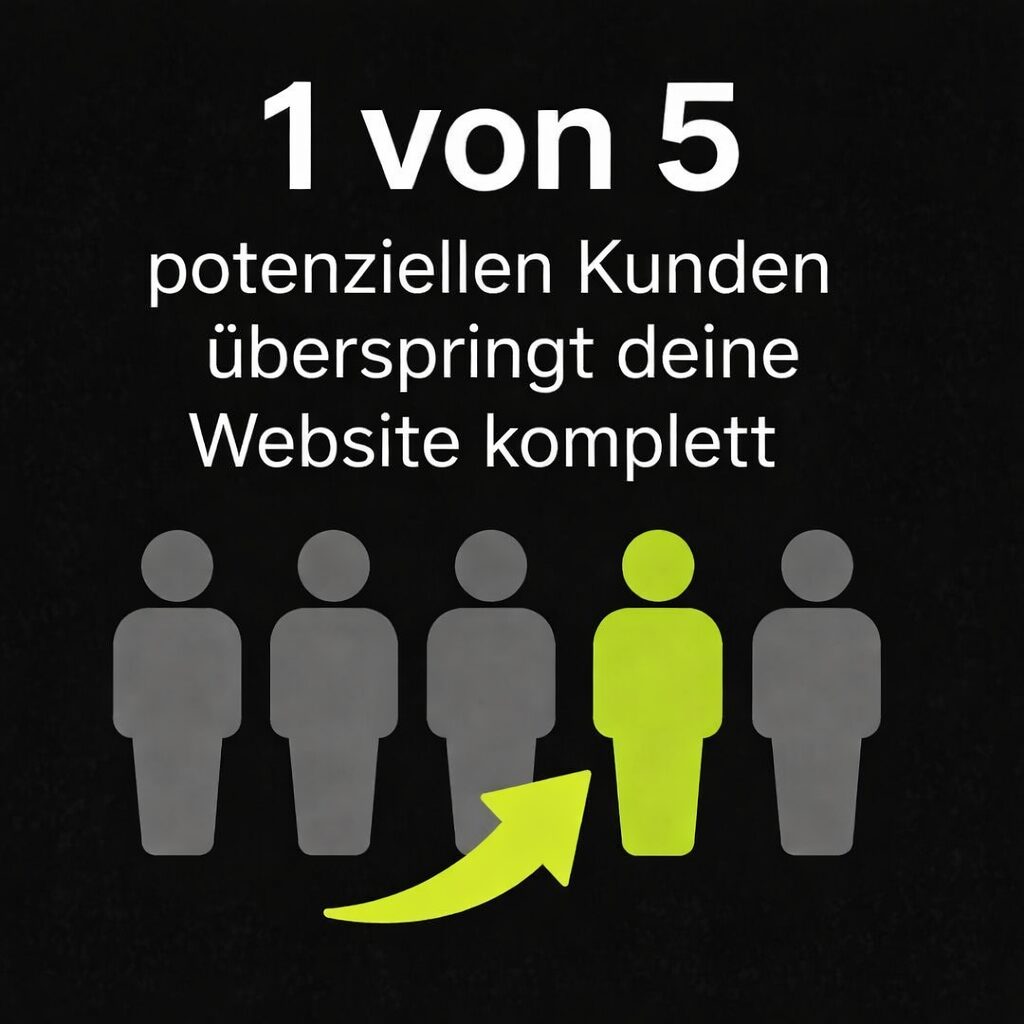
That means one in five potential customers skips your site entirely, unless you are optimised for this new environment.
If your answers only live on static web pages, you are invisible in the AI-fed conversation.
With chat-friendly content, crisp definitions, quick data bullets and clear source attributions, you speak the language of generative engines. Your insights are cited directly in AI answers and you are right in the middle of the decisive zero-click moment.
The future of visibility is no longer position 1, it is being the answer. Make your content conversational and you reach prospects at the very moment they ask. Otherwise you stay background noise.
Countering zero-click searches
Zero-click searches are everyday reality: most users no longer click through because they get the information directly on the results page.
In 2024, around 65% of all Google searches worldwide ended without a click, and on mobile devices the figure was above 75% (Briskon). If your content only sits behind a link, you miss three quarters of all touchpoints.
GEO lets you clear this hurdle. With structured answers in snack size, clear definitions, short fact bullets and marked sources, AI assistants can cite your content directly.
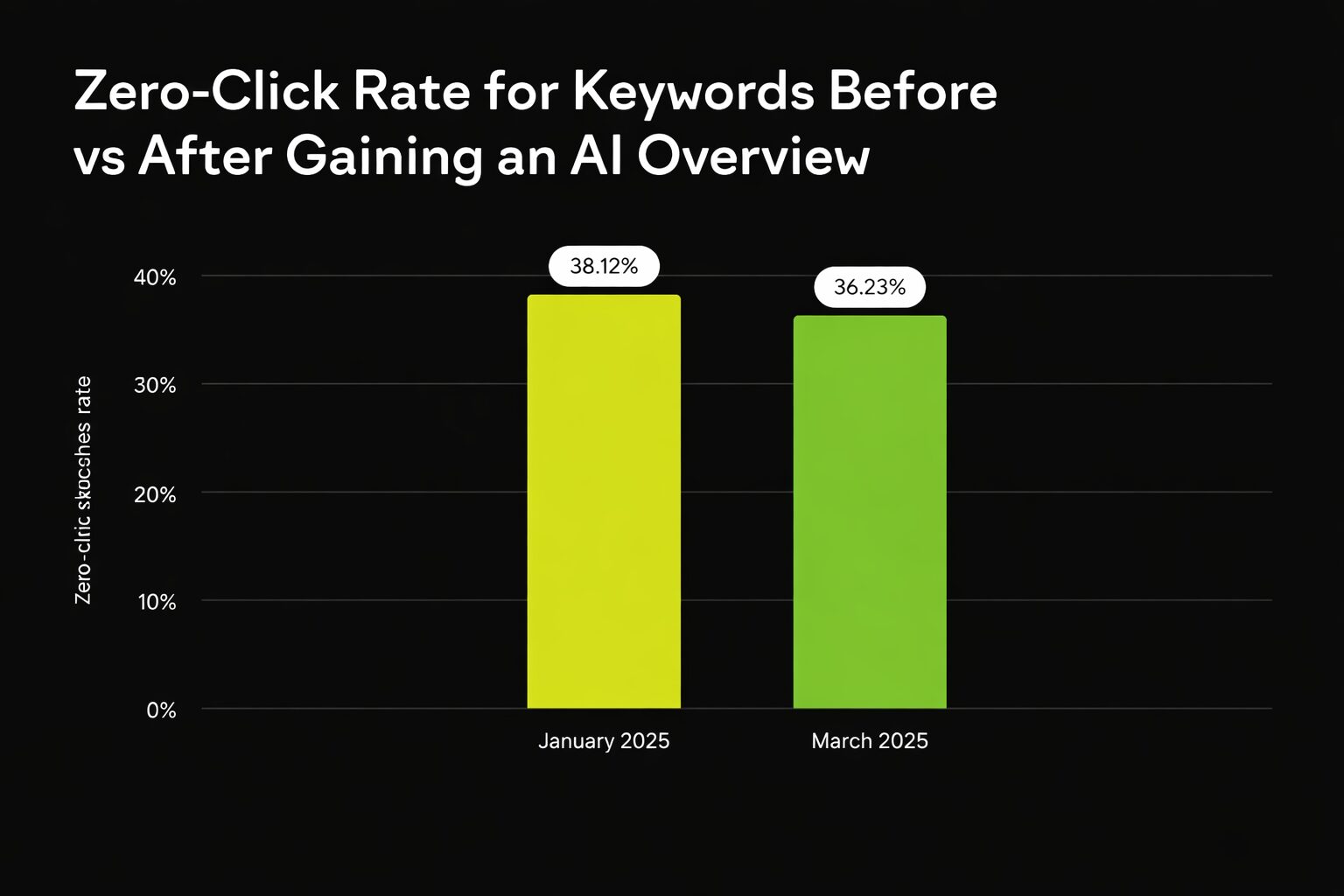
Even without a click, your brand gains visibility and trust in the interface itself. The no-click moment becomes a micro impression.
Instead of chasing falling click rates, GEO turns zero-click scenarios into brand wins. You are not just another link, you become the authority that chatbots and voice assistants cite.
The trick is simple: write for conversations, not for clicks, and you stay present no matter how the SERP changes.
AI citations build trust
When your insights are cited directly in an AI answer, it works like an enthusiastic recommendation: users immediately see you as a credible expert.
Retrieval-augmented generation (RAG) adds source references like footnotes and offers a clear path back to your authority.
Seer Interactive reports 40% higher visibility when content is optimised for AI Overviews, even though trust itself was not measured directly.
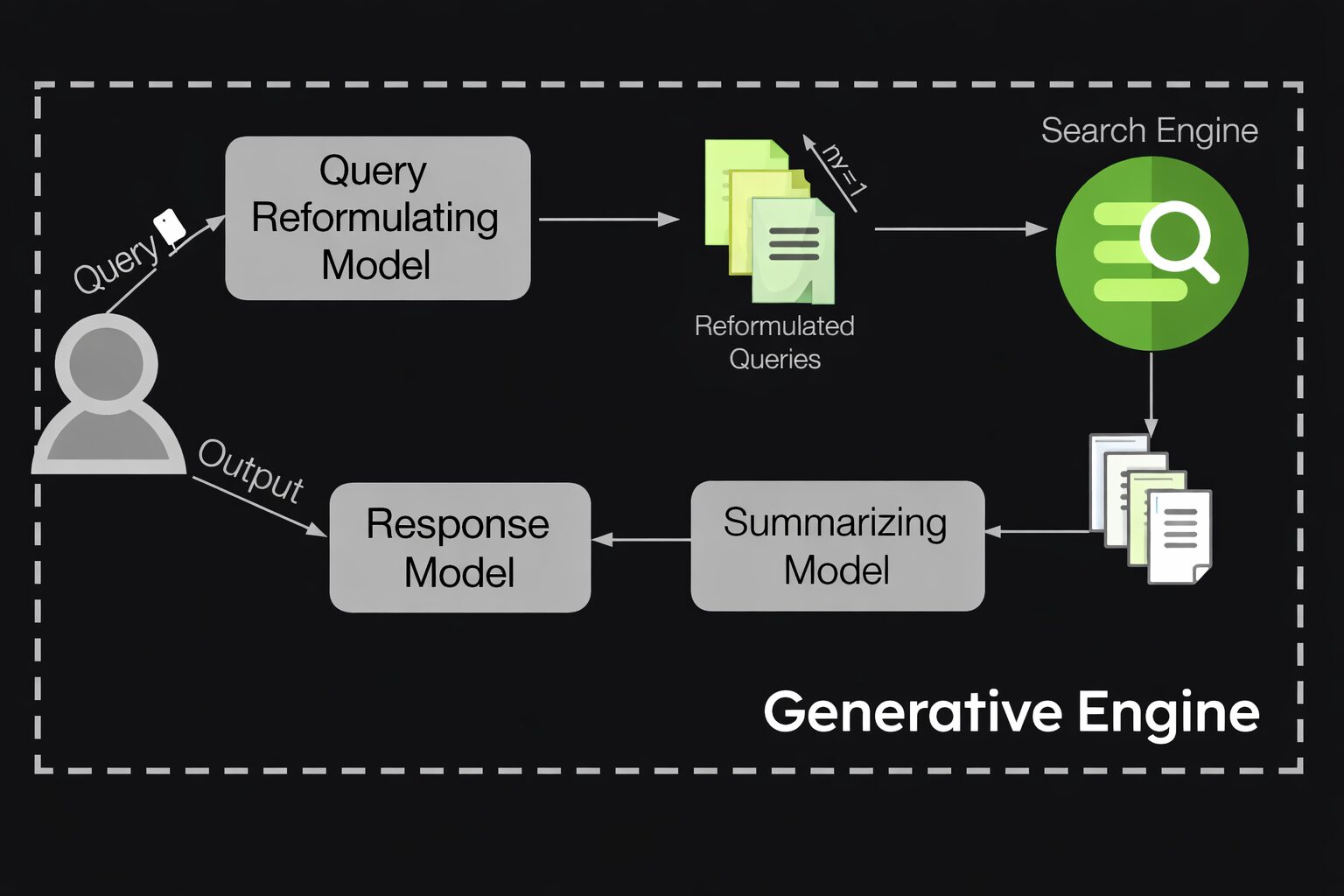
With clear headings, concise data call-outs and embedded references you make sure that generative engines pull exactly what strengthens your credibility.
Over time this builds a portfolio of trust signals: every citation consolidates your position as the go-to source.
In a world where accuracy matters more than ever, being the source that AI likes to cite takes you to thought leadership quickly.
Cross-platform AI reach
Imagine walking into the kitchen on a Sunday and hearing your latest tips through Alexa before you even open a browser.
Smart speakers are standard by now: around 100 million US adults (35% of the population aged 12 and over) own one in 2025 (Market.us Scoop).
Voice assistants do not stay at home: more than 154.3 million Americans use them in 2025, up 3.3% on the previous year, and by 2028 the figure is expected to reach 170.3 million (eMarketer).
Consumers are not the only ones relying on conversational AI. More than 987 million people interact with chatbots today, and enterprise usage grows by 34% in 2025 (Exploding Topics) (Big Sur AI).
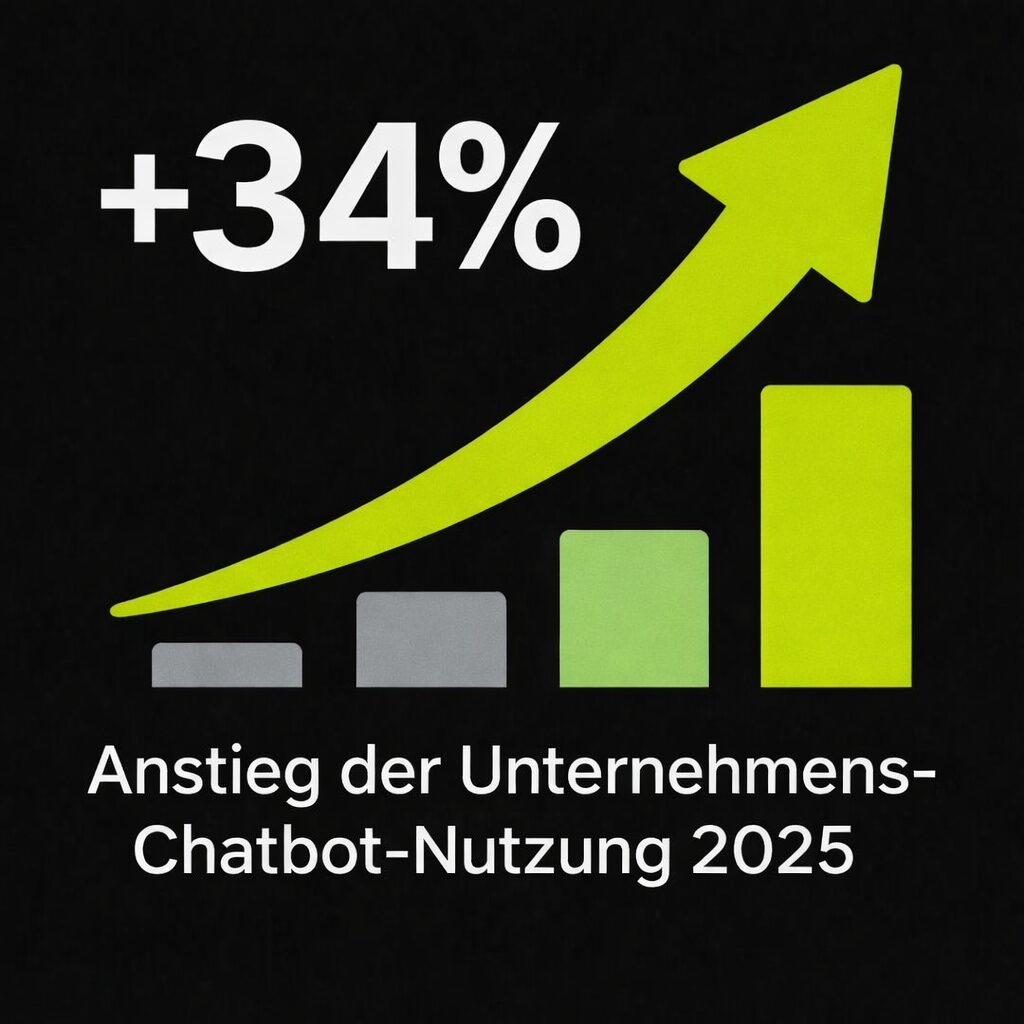
Smartphones dominate voice search: 56% of all voice queries come from a mobile phone (Digital Silk).
Inside companies, Amazon Q speeds up decisions by letting developers and analysts query data conversationally, without a single line of code.
Partnerships such as Pega and AWS show that companies are weaving AI assistants into every tech stack.
With GEO you make sure that your answers sound out across every device, without any additional advertising spend.
A future-proof strategy
The only thing that stays constant with AI is change: today’s top model is legacy tomorrow.
Your content must not cling to best practices that disappear with the next major update. Rely on expertise, crystal-clear structure and permanently fresh data.
Think of your online presence as a high-performance sailing boat: you cannot change the wind (algorithms), but you can set your sails (content) perfectly.
If you show genuine expertise, backed by verifiable facts and practical examples, AI will trust you after updates too.
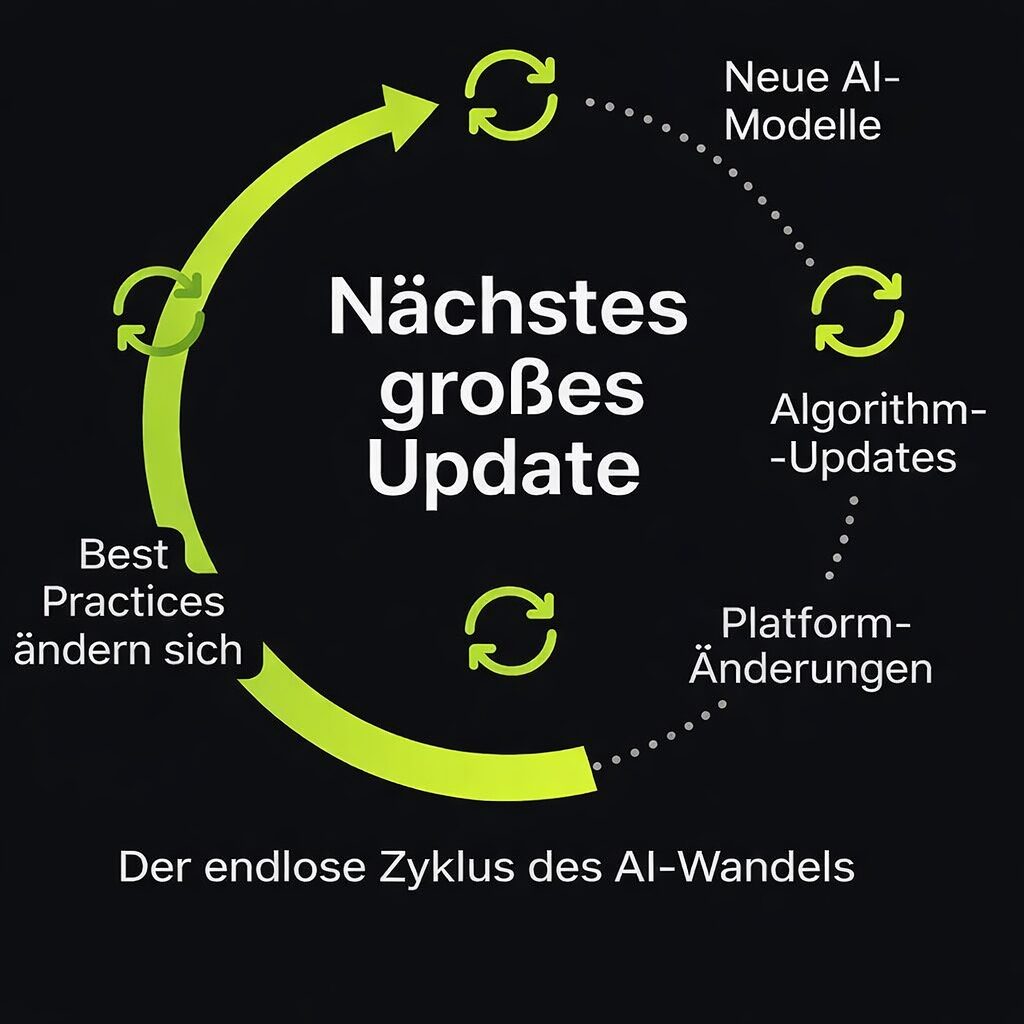
Clarity is your compass. Well-structured articles with unambiguous definition sections make navigation easier for people and machines alike.
AI will not stumble over jargon or convoluted sentences, it will highlight your core insights instead.
Fresh data is your wind shift: embed live feeds, dashboards or recent customer quotes. Generative engines love topicality, so every AI summary reflects the latest picture.
This is not a one-off check but a living process: update your cornerstone pages, figures, case studies and metadata regularly.
When a new model appears or a platform changes its prompts, your content is already fine-tuned and you stay ahead.
Influencing your industry and purchases
Imagine a large electronics retailer integrating generative AI. A customer asks for the “best energy-efficient TVs” and the AI recommends the model you sell.
It even names specs and prices. A casual question turns into a clear purchase impulse.
Companies that use AI-based SEO and personalisation achieve 38% more conversions than non-optimised campaigns.
In an Omnisend survey, 31% of consumers appreciate the faster buying process that AI assistants enable.
AI citations achieve more than immediate sales, they drive the industry conversation. When chatbots cite your insights, they back your point of view in every conversation.
That repetition anchors your expertise: one option among many becomes the go-to.
With a GEO strategy built on clear CTAs, comparisons and data-driven soundbites, you steer purchase decisions and define your category.
The business impact of GEO for large companies
When large companies weave GEO into their digital strategy, the effects are clear: more AI traffic, better conversion rates, smarter spending and unshakeable brand authority, all without additional advertising dollars.
GEO for enterprise organisations
Global spending on generative AI is expected to reach €554 billion in 2025, up 76.4% year on year (sequencr.ai).
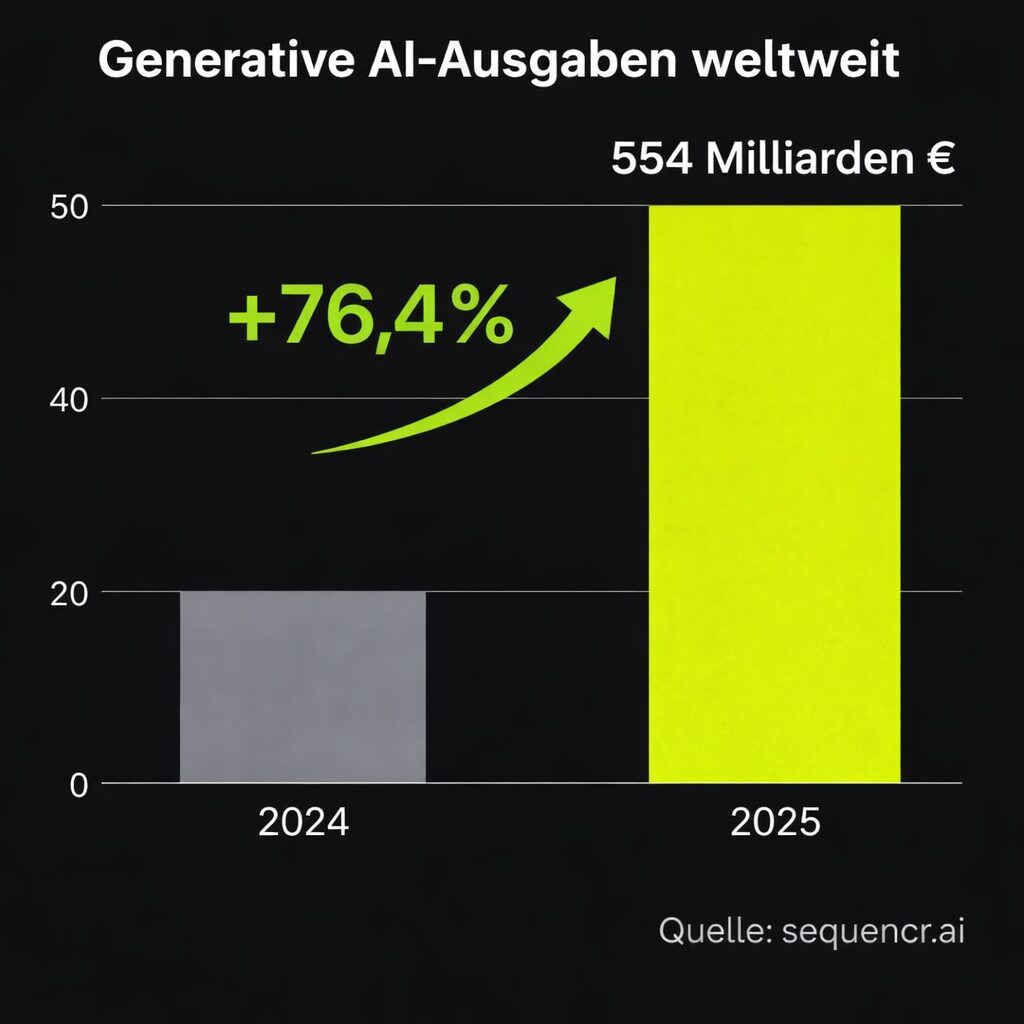
Companies first break their know-how down into snackable content, definitions, key figures and step-by-step insights, and tag all of it for the AI.
Then they connect the snippets to live data feeds or RAG pipelines so that generative engines always pull fresh figures.
Cues such as “According to YourBrand …” steer AI assistants towards your sources, and monitoring refines your visibility.
According to Deloitte, this pays off: companies achieve continuous ROI by integrating AI into marketing, service and operations.
GEO for B2B companies
Think of your B2B website as a tireless consultant, always ready to answer the complex questions of professional buyers.
Today 98% of AI traffic flows through ChatGPT (50%), Perplexity (30.7%) and Gemini (17.6%) (Ahrefs).
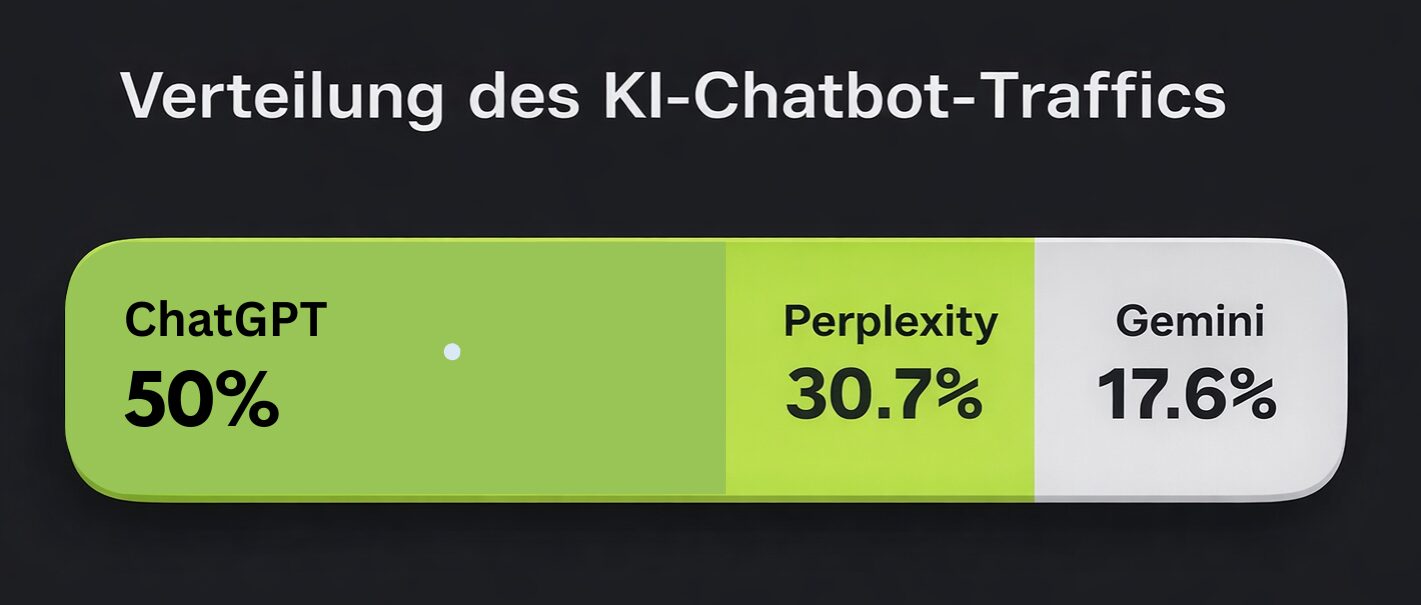
Financial services providers already see an ROI of 4.2x: precise data speeds up lead qualification and shortens sales cycles (AmplifAI).
Break your offerings into clear snippets, attach live data and use machine-readable tags such as FAQ schema so the AI delivers complete answers.
GEO for e-commerce
Tag your products with standardised data (product schema) and add short feature bullets so AI assistants display your offers immediately.
Feed in live stock levels and prices via APIs so the AI always shows current deals.
If someone asks for the “best running shoes under €100”, the AI pulls your snippet with price, key features and rating, and presents a purchase-ready recommendation.
According to an Adobe survey, 39% of consumers use generative AI for online shopping and 53% plan to do so this year (Adobe Blog).
AI traffic also delivers 23% higher conversions than organic search (WebFX).
GEO for marketing agencies and consultants
Gartner forecasts worldwide IT spending of roughly €4.67 trillion in 2025, up 7.9%, driven by generative AI and infrastructure (Gartner).
Agencies map typical client pain points and build AI-ready answer templates, linked to CRM, product or analytics data via API so that the AI always pulls correct information.
This lets agencies quickly launch branded AI assistants that generate leads and boost campaign performance.
Ready for more revenue?
Book a free SEO and GEO audit

Find out in a free call how much revenue your website is leaving on the table, with no obligation and no agency waffle.