

Everything at a glance
- AI Overviews: change how search engines display answers and reduce clicks to company websites.
- Companies: have to structure their content clearly and provide structured data so they appear in AI-generated summaries.
- EEAT, topicality and intent-based content: are decisive ranking signals for selection in AI Overviews.
- Cross-departmental collaboration: between SEO, content and development teams is essential.
- Long-term success: depends on agility and proactive adaptation to shifting search trends.
Search is turning into an answer-first ecosystem. On average, in March 2025 Google delivered an AI-generated summary for 18% of all search queries, redefining click behaviour and user expectations. These multi-paragraph overviews run to around 67 words and typically cite 3 sources, creating context and clarity before anyone clicks a link. Search Engine Land
For enterprise teams and project managers, this rewiring of the SERPs calls for a complete rethink of visibility, traffic and growth. Traditional SEO approaches such as keyword stuffing and backlink hunting do not guarantee a place in these AI Overviews. Instead you need snippet-ready content, reliable structured data and an agile workflow to secure your place at the top of answer-driven results.
In this guide we explain how AI Overviews work, examine their effects on user behaviour and outline the strategic adjustments that large-scale websites have to make in order to succeed in this new era.
What are AI Overviews and why do they matter?
At their core, AI Overviews are automated, AI-generated summaries displayed right at the top of the search results. Unlike classic featured snippets, they do not just summarise a single answer from one source.
Instead, they aggregate information from several websites, summarise it and present it directly in the search interface. AI Overviews change how search engines display answers, and their impact on enterprise SEO is enormous.
That means the search engine itself becomes the primary information provider instead of forwarding users to websites.
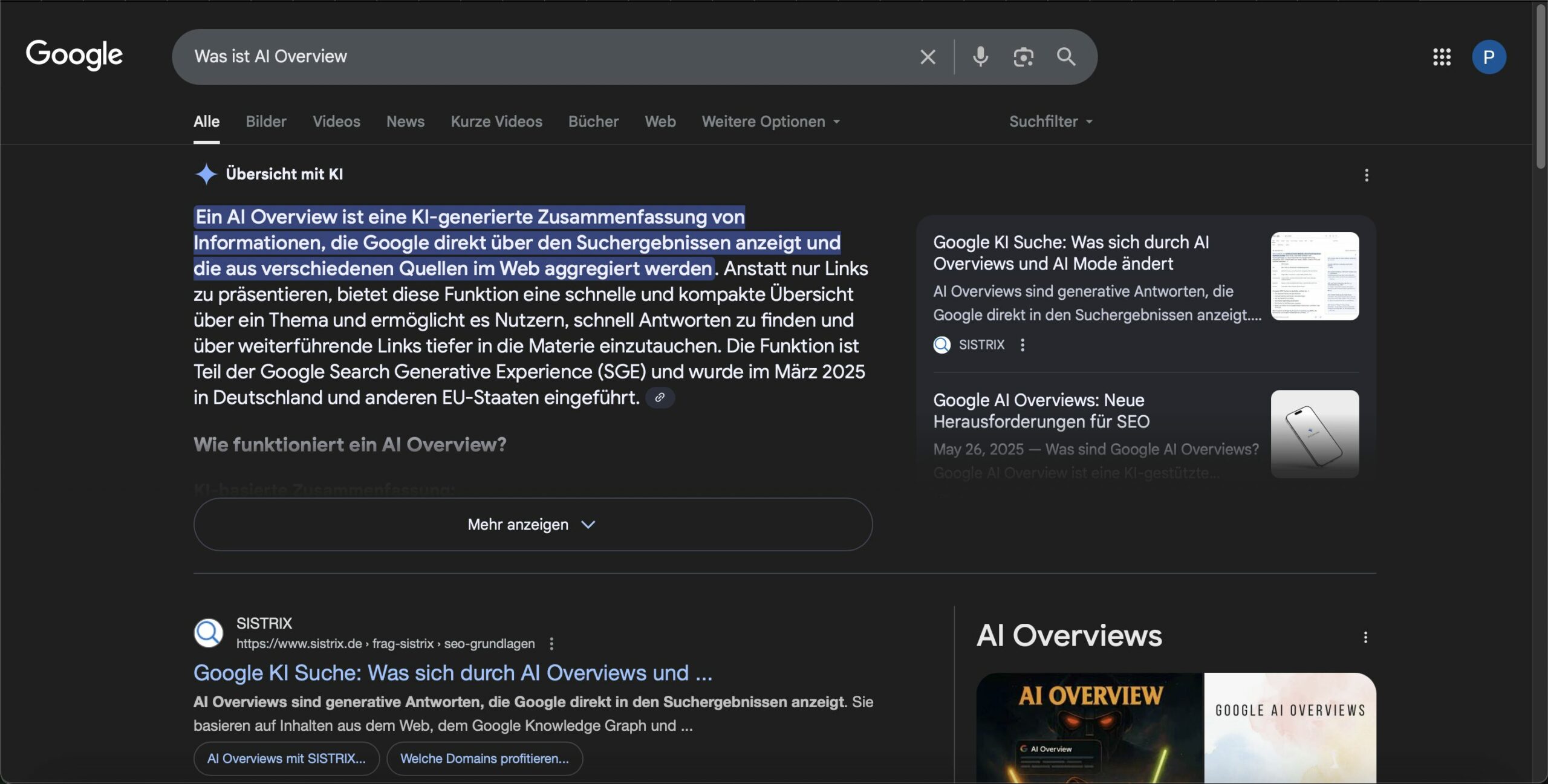
Definition and origins of AI-generated search summaries
Imagine seeing a search result that answers your question in two or three paragraphs, with no click at all.
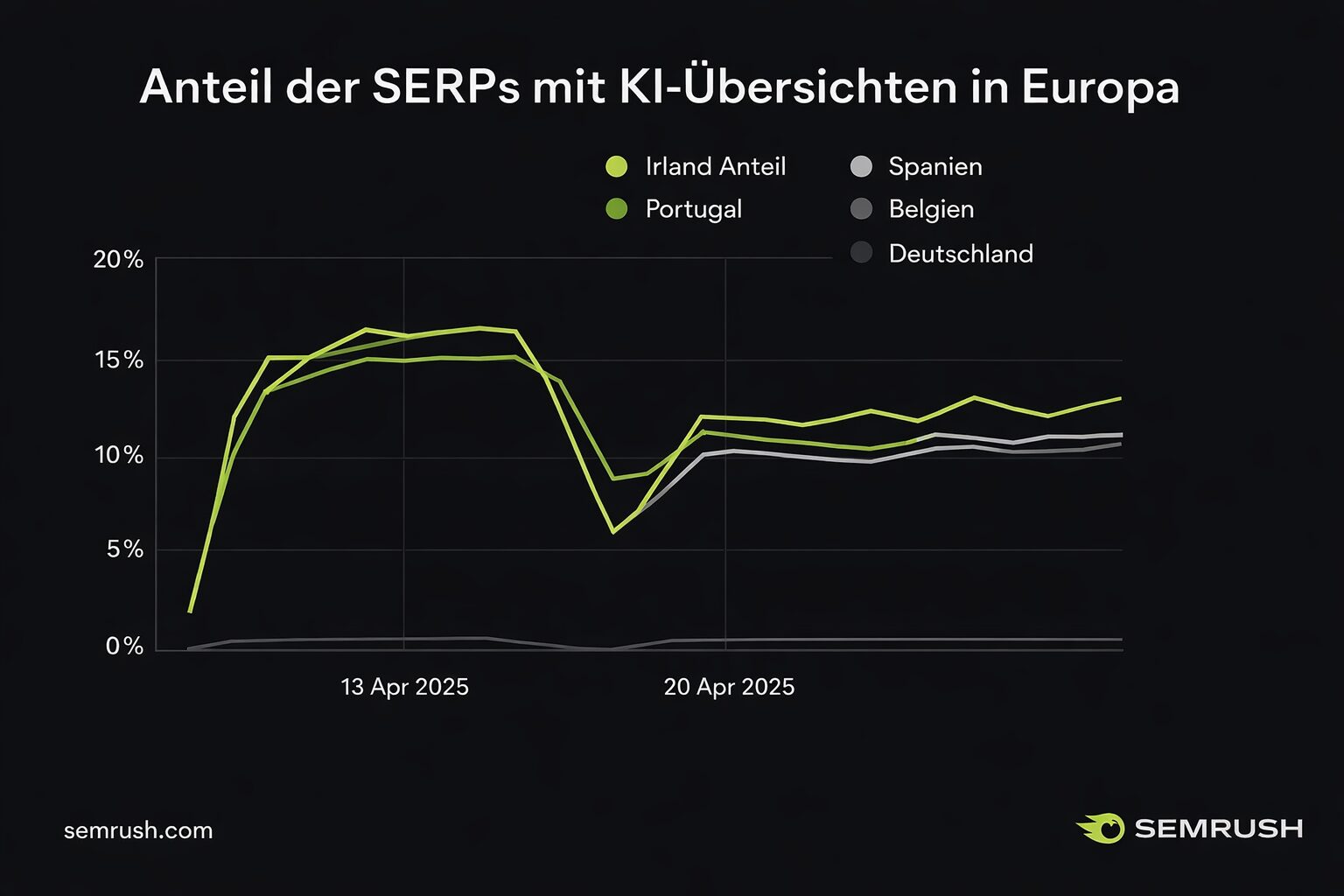
In European markets, AI Overviews now appear in up to 17.5% of desktop search results in Portugal (16.8% in Belgium), while in Germany they are still below 1%. (Semrush)
AI Overviews are AI-powered summaries that deliver direct answers right at the top of the search results, based on Google’s Gemini LLM.
Instead of a list of blue links, they parse, condense and combine the most relevant information, including images, related questions and source links, into a single coherent, readable text.
Key milestones in the rollout of AI Overviews
- 10 May 2023: at I/O, Google announces the Search Generative Experience (SGE) experiment and starts large-scale AI research for search. (Ahrefs)
- 25 May 2023: the waiting list for SGE testers opens and feedback is collected from hundreds of thousands of early adopters. (Ahrefs)
- Second half of 2023: SGE is extended via Search Labs to more than 120 countries and four further languages, the first global rollout. (blog.google)
- 14 May 2024: official renaming to AI Overviews and rollout to all US users. Hundreds of millions gain access, with the goal of more than one billion users by the end of the year. (Ahrefs)
Think of AI Overviews as an expert who skims dozens of articles and hands you the most important findings in an easy-to-understand summary, exactly when you need it.
What this means for you: master the basics of structured, snippet-ready content now in order to cover both traditional search traffic and the growing share of AI-driven queries.
💡 Expert tip: split your content into clear sections with concise headings, mini lists and a one-sentence summary at the start. This is exactly the format AI models prefer when extracting and displaying content.
Google’s role in introducing AI Overviews
Google initiated AI Overviews and anchored them right at the top of the SERPs.
That is a significant step in using AI for information retrieval. Instead of only delivering a list of rated links, Google now wants to provide the answer directly.
On the one hand, this gives companies the chance of considerable brand presence.
On the other hand, the AI summary often already satisfies the user’s need, so there are fewer clicks to the original websites.
Differences from classic featured snippets
While featured snippets highlight a single source, AI Overviews combine several sources and produce a summary of their own. The format is more extensive and takes up more space, which lowers the visibility of the organic listings below it. A top 3 ranking therefore loses importance.
Why project managers and enterprise SEOs should pay attention
On enterprise-size websites with thousands of pages, AI Overviews change the rules of the game. Rankings alone are no longer the yardstick for visibility.
Companies have to make sure their content does not just appear in search but is selected by AI models and included in summaries. That requires clear content, structured data and evidence of authority so that AI models recognise it easily.
AI Overviews now available in German-speaking markets too
Since 26 March 2025, AI Overviews have been available to signed-in users aged 18 and over in nine further European markets, among them Germany, Austria and Switzerland. (blog.google)
In Germany, early tests in March showed that AI summaries appeared in roughly half of all eligible queries, even before the full launch.
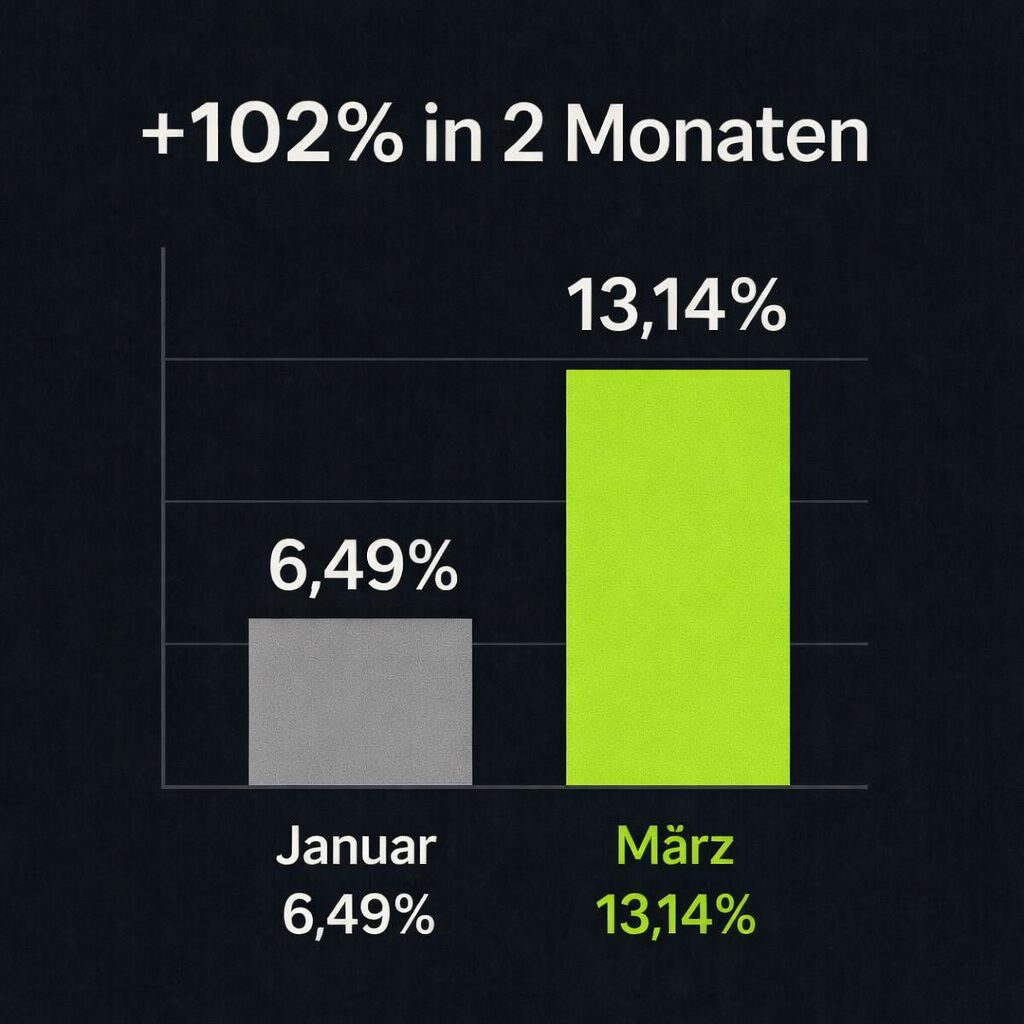
In the US, use of AI Overviews rose within two months of the rollout from 6.49% to 13.14% of all desktop searches, an increase of 102%. (Search Engine Land) Expect the DACH markets to follow a similar trend.
Where AI Overviews are available today
Here is the list of countries where AI Overviews are now live. (blog.google)
- Germany: German and English
- Austria: German and English
- Switzerland: German, English, French and Italian
- Italy: Italian and English
- Spain: Spanish and English
- Poland: Polish and English
- Portugal: Portuguese and English
- Ireland: English
- Belgium: English only at launch
Why this matters for your organic traffic
AI Overviews sit above the classic blue links. When Google delivers the answer directly, fewer users click through.
In markets with heavy AI Overview usage, organic visitor numbers to pages that are not cited fall by more than 20%, and the desktop CTR for “what/when/where/how” queries drops by 7.31 percentage points. (projx.de)
In return, cited content enjoys a premium SERP placement, but you still need strong call-to-action elements to turn AI-generated impressions into clicks.
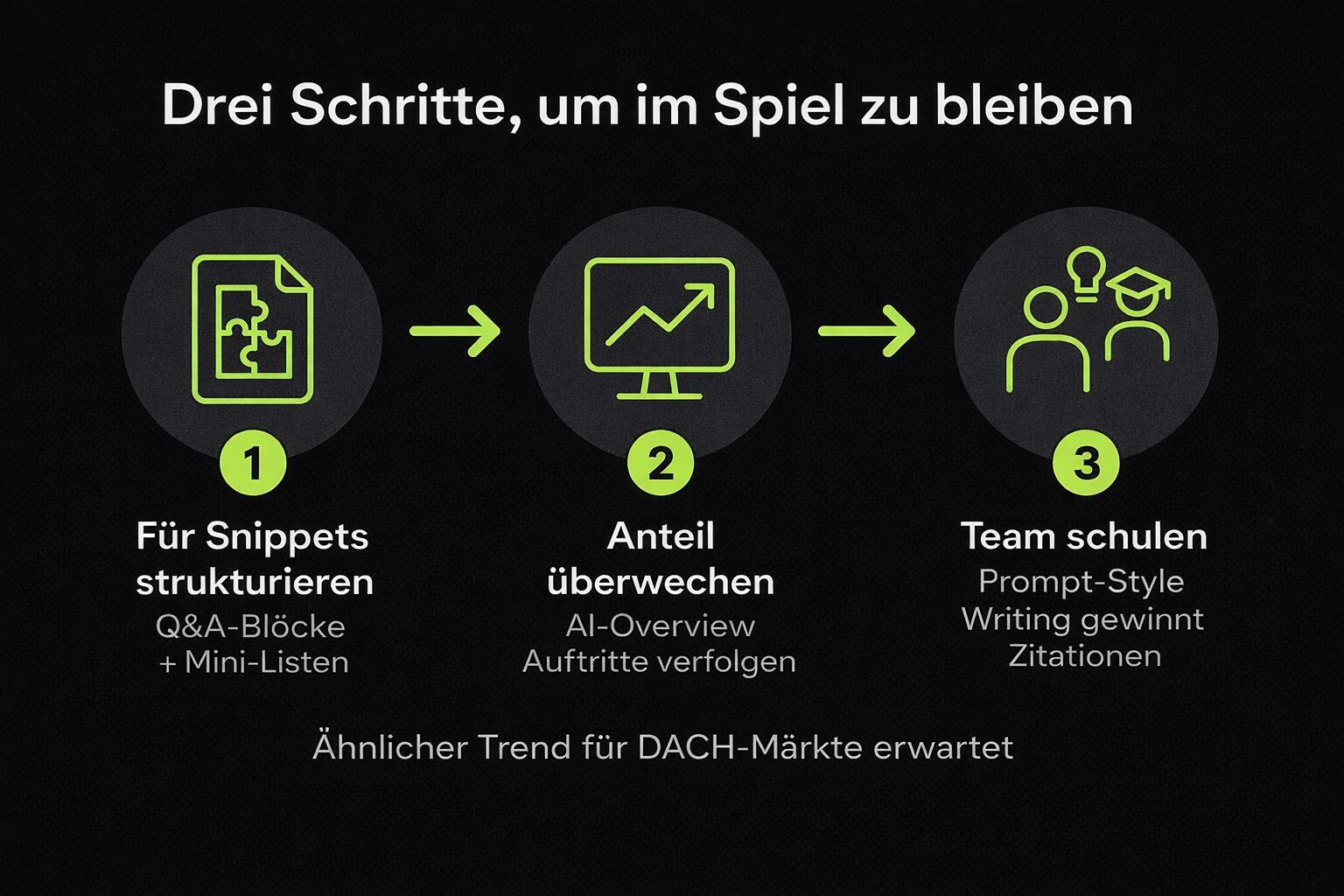
Three steps to stay in the game
- Structure for snippets: split pages into clear Q&A blocks, each with a one-sentence summary and a mini list of facts or steps. This chunked format matches perfectly how AI Overviews extract content.
- Monitor your share: use rank tracking tools to see which queries trigger AI Overviews and how often your URLs appear in the summaries each week.
- Train your team: coach writers and SEOs in prompt-style copywriting, meaning short answers, logical headings and inline sources, to win the AI citation.
How AI Overviews work: technology, data and ranking logic
AI Overviews are based on advanced natural language processing, machine learning and vast data sources. This technical understanding is crucial if you want to influence how your brand is presented.
Overview of the underlying technology (LLMs, NLP and machine learning)
At the heart of every AI Overview are large language models (LLMs), neural networks with billions of parameters trained on vast text corpora.
Google’s Gemini family, for example, started with a Nano variant (2 billion parameters) and a Pro variant (7 billion parameters), each optimised for different performance and resource profiles.
The natural language processing (NLP) layers interpret the search intent, recognise key entities and relationships and extract the most relevant passages.
Machine learning pipelines then refine how these models weight information, merge it and turn it into understandable, engaging summaries.
Which data sources feed AI Overviews (web content, structured data, user intent)
- Full-text web pages: crawled and indexed content from millions of domains.
- Structured data: Schema.org markup, product feeds, event listings and more.
- Knowledge Graph: entities and relationships from Google’s curated databases.
- User signals: click-through rate, time on page, search refinements and other behavioural metrics.
How Google selects content and combines it into AI answers
- Retrieval step: identifies top content and passages via dense semantic embeddings.
- Generation step: synthesises these candidates into a single narrative in which clarity and context come before verbatim quotation.
The role of EEAT and topicality in AI content selection
Google’s EEAT framework (expertise, authoritativeness, trustworthiness) underpins every ranking decision.
Topicality carries extra weight: pages updated within the last six months have significantly better chances of appearing in AI Overviews. Regular content reviews and updates are therefore indispensable.
How AI Overviews are changing search
AI Overviews embed answers directly in the search results and thereby reduce the need to click through to company pages.
Companies now have to optimise for being cited in AI summaries, using snippet-ready content, structured data and agile content workflows to secure visibility.
Decline in organic clicks and visibility
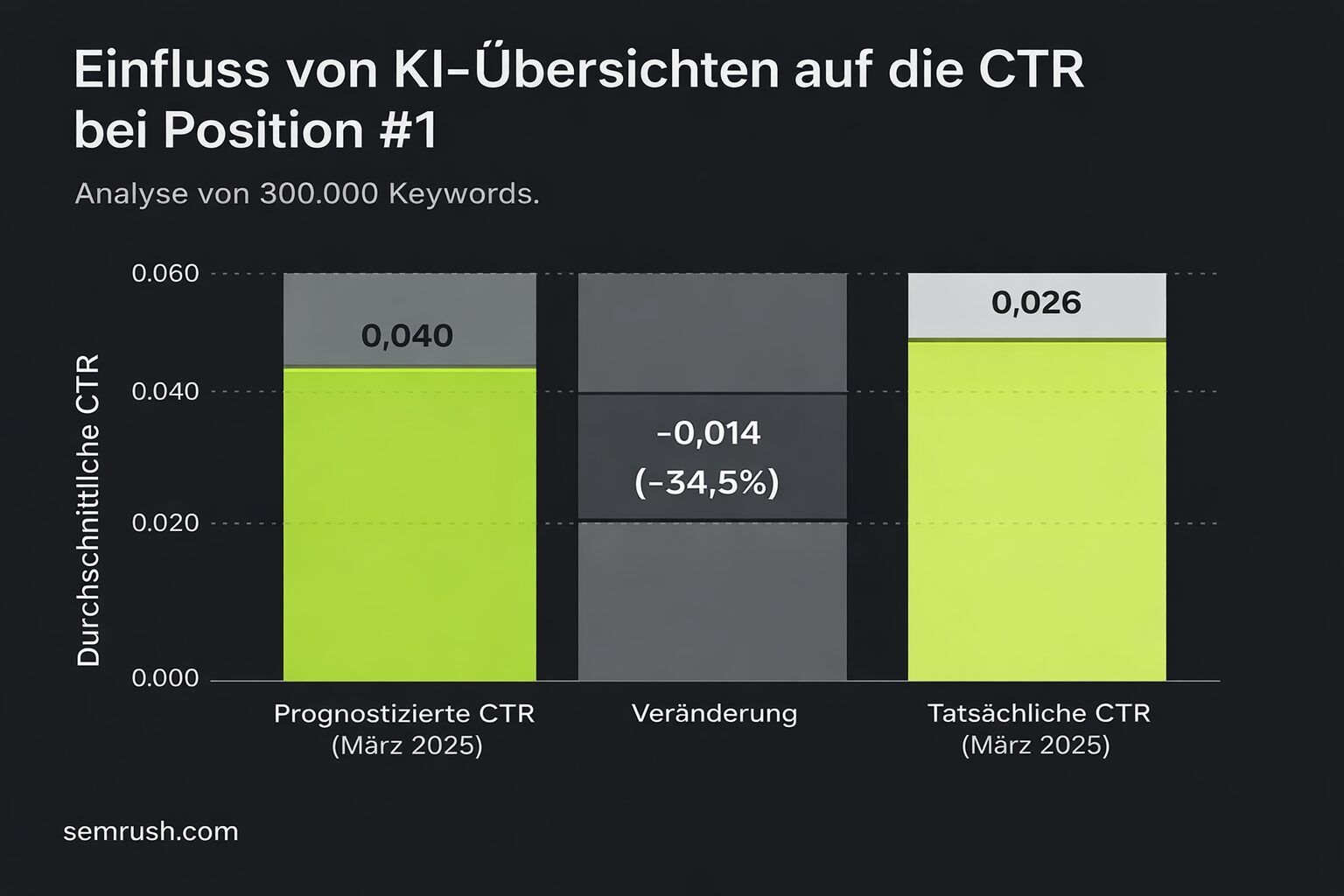
An Ahrefs analysis of 300,000 keywords shows that the click-through rate of the top organic result falls by 34.5% when an AI Overview is present. (Ahrefs)
Growing complexity in ranking and content exposure
Where it used to be about rankings and keyword focus, AI Overviews add another dimension.
Brands have to optimise for inclusion in AI summaries, not only for organic listings. That means broader semantic coverage, stronger connections between topics and clearer data signals.
Changes in user behaviour caused by AI-first SERPs
Users are getting used to AI-generated answers. As trust in AI Overviews grows, fewer and fewer users scroll beyond the summary to check different sources.
A UX study by Growth Memo found that the median scroll depth on AI Overviews is only 30% of the panel height, and that few users scroll beyond 75%. (Growth Memo)
Companies have to factor this behavioural change into their traffic forecasts and lead generation strategies.
Enterprise-specific challenges (content dilution, brand de-ranking)
Large organisations carry particular risks. AI Overviews can dilute your brand message by mixing it with competitor content.
Even for brand queries, traffic is not guaranteed when the AI delivers the answer without a click. That calls for proactive control over how your brand is presented.
How common are AI Overviews? A data-driven analysis
In the months after their debut, AI Overviews appear in 4.5% to 13.1% of all search queries, depending on the study. (Semrush)
- Early beta (May 2024): Botify data showed AI Overviews for 47% of 120,000 keywords in initial tests. (Growth Memo)
- Summer 2024 (August): SE Ranking recorded AI Overviews in 12.47% of desktop searches in controlled experiments. (SE Ranking)
- End of 2024 (December): SeoClarity found AI Overviews in only 4.5% of 120 million queries. (Growth Memo)
- Early 2025 (January to March): Semrush reported a rise from 6.49% in January to 13.14% in March, an increase of 102%. (Semrush)
Dependence on topic
| Industry | Frequency of AI Overviews | Source |
|---|---|---|
| Health | 23.0% | Growth Memo |
| Science | 20.1% | Growth Memo |
| Internet and telecoms | 11.7% | Advanced Web Ranking |
| Travel | 10.0% | Advanced Web Ranking |
| Electronics | 8.8% | Growth Memo |
| E-commerce (commercial) | < 1% | Growth Memo |
Desktop bias
| Device | Share of AI-driven referrals | Source |
|---|---|---|
| Desktop | Over 90% | Search Engine Land |
| Mobile | Under 10% | Search Engine Land |
Hype, adjustment and maturity
| Phase | AIO frequency | Notes | Source |
|---|---|---|---|
| Launch peak | 27% of tracked queries | First rise during the test phase | WIRED |
| Post-launch adjustment | ~11% | Scaled back to improve quality | The Verge |
| Q1 2025 global | 1.5 billion users per month | Steady expansion beyond testing | WIRED, The Verge |
Strategic SEO adjustments for companies
Create self-contained Q&A blocks with clear H2 and H3 headings, one-sentence summaries and lists or tables to mirror AI extraction patterns.
Use short paragraphs, keywords in bold and inline sources to signal authority and make the selection easier for the AI.
Optimising content for AI Overviews
Your content has to read like a compact briefing: clear, comprehensive and ready for AI citation.
Split topics into self-contained Q&A blocks with descriptive H2 and H3 headings, followed by a one-sentence summary and a mini list or table of the most important points.
- Create FAQs at the start of each section so AI models can extract answers directly.
- Use short paragraphs (2 to 3 lines) and keywords in bold to steer the AI’s attention.
- Build in inline citations or source links to underpin your authority.
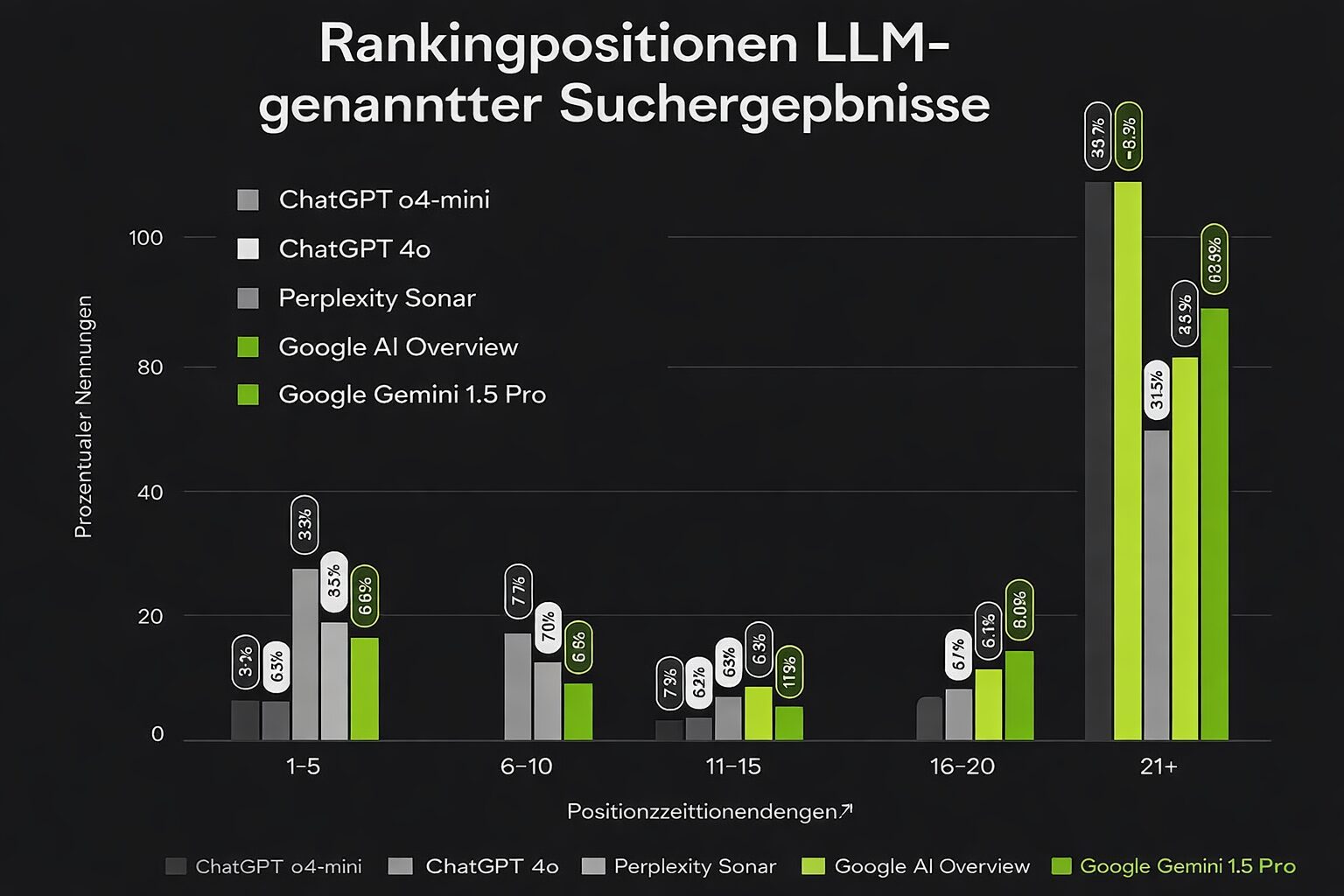
Contrary to common belief, you do not have to rank in the top 10 to be cited: Semrush found that 90% of citations in AI Overviews come from pages outside the top 20, which shows that structured expert content wins, regardless of organic placement.
Structuring information for semantic clarity and machine readability
Think of schema markup as GPS coordinates for the AI: it shows the model exactly what your content is and how it relates to other entities. The right structured data markup increases your chances of being parsed and displayed.
- Use FAQ, HowTo and Article schema to make the purpose of your content clear.
- Use OpenGraph and JSON-LD tags to enrich images and video snippets.
- Maintain a clear internal linking hierarchy so AI can follow your topics.
Long-tail keywords dominate AI summaries: 82% of all desktop AI Overviews are triggered by keywords with fewer than 1,000 searches per month. (Semrush)
Aligning content with intent clusters instead of keywords alone
AI models group queries more by search intent than by exact keywords. Organise your content along user journeys, awareness, evaluation and decision, to cover every facet and maximise your chances of being cited.
- Identify core topics and group related subtopics in a hub-and-spoke model.
- Create pillar pages that link to detailed articles on each sub-intent.
- Update content based on new questions and search trends.
Information-oriented queries trigger AI Overviews for 99.2% of keywords. (Ahrefs)
Transactional and navigational queries account for under 5%. (Semrush)
Using schema markup and zero-click optimisation
Beyond structured data, you should deliver value even when nobody clicks. Write snippets that answer the question directly, then draw readers to deeper content with “learn more” CTAs.
- Optimise meta descriptions and title tags so they complement your snippet-ready content.
- Place important statistics or definitions in the first 50 words to serve zero-click queries.
- Watch “People Also Ask” and “Related Searches” to identify new snippet opportunities.
With these tactics you do not just survive the AI Overview era, you claim the prime seat at the answer table.
Final thoughts: rethinking SEO as search evolves
Search is shifting from a discovery engine to an answer engine, and AI Overviews are at the centre of that shift.
Fewer clicks are inevitable, but purchase intent remains, as long as your content does not pass users on to competing chatbot checkouts. Instead of relying on on-page influence alone, you have to:
- Redefine success: track impressions from AI summaries and the share of your pages that appear in overviews.
- Optimise for micro engagement: start with concise answers that contain a clear call to action in the first sentence.
- Diversify touchpoints: use video snippets, newsletters and social media deep dives to win back attention beyond the SERPs.
- Build agile workflows: introduce weekly content sprints and real-time dashboards to update high-impact pages based on new AI trends.
This change is not a threat, it is an invitation. By adapting your KPIs, rethinking content formats and implementing continuous feedback loops, you do not just survive the AI Overview era, you thrive in it. Let us make your SEO future-proof together.
Ready for more revenue?
Book a free SEO and GEO audit

Find out in a free call how much revenue your website is leaving on the table, with no obligation and no agency waffle.