


Everything at a glance
- A content strategy turns SEO from reactive publishing into a scalable, goal-driven system.
- Clear goals, audiences and channels matter more than producing large volumes of content.
- Auditing existing content and building topic structures delivers faster and more sustainable SEO gains than publishing non-stop.
- Scalable SEO content needs planning, ownership and repeatable execution processes across teams.
- Long-term success depends on continuous optimisation, cross-team alignment and regular strategy updates.
Most companies do not fail at SEO because they lack content. They fail because their content has no direction.
Pages get published, blogs pile up, teams stay busy, and still rankings stall, traffic flatlines, and nobody can explain clearly what the content is actually supposed to achieve. Without a content strategy, SEO becomes a collection of isolated activities rather than a system that compounds.
A modern content strategy brings order to this chaos. It aligns search demand with business goals, connects teams through a shared framework and turns content into a long-term growth asset rather than an ongoing maintenance problem. In large organisations in particular, strategy is what separates scalable SEO success from permanent firefighting.
This guide shows how to build a content strategy in five clear phases: practical, scalable and designed for long-term SEO impact rather than short-lived wins.
What is a content strategy and why does it matter for SEO?
A content strategy is the structured planning, creation and management of content in order to achieve concrete SEO and business goals.
It gives SEO direction by connecting search demand, business goals and execution. Instead of publishing content ad hoc, it defines what gets created, why it exists, who it is for and how it is maintained over time. This turns SEO from a reactive task into a scalable system in which every content asset supports visibility, authority and long-term growth rather than standing on its own.
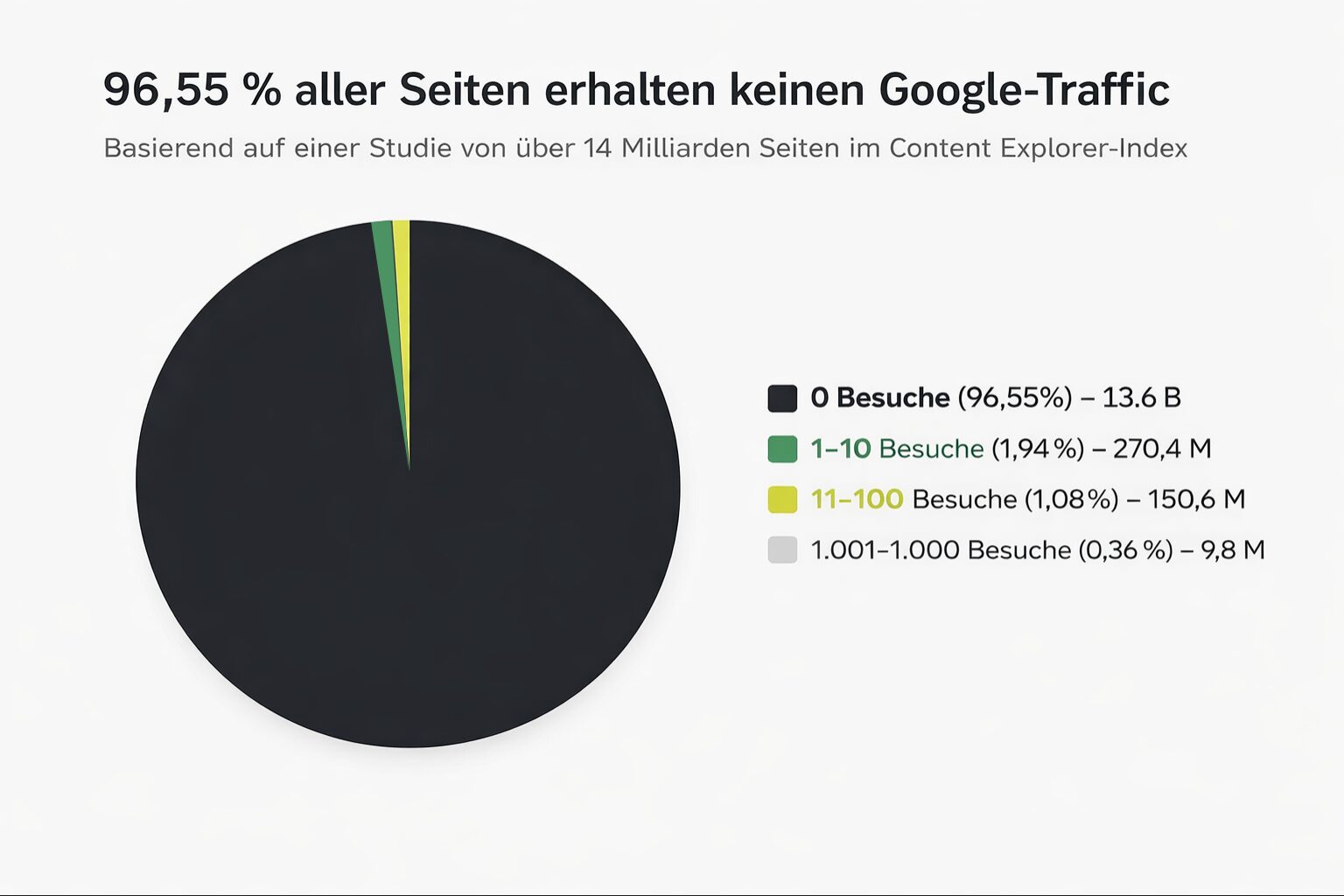
According to Ahrefs, 96.55% of all pages receive no organic traffic from Google, often because they were created without a clear topic strategy, search intent or demand. (Ahrefs)
What is the difference between content strategy and content marketing?
Content strategy defines the why, what and how behind content. It answers questions such as: which topics matter? Which audiences are we addressing?
How does content support SEO and business goals? Content marketing, by contrast, focuses on execution and promotion: publishing content, distributing it and amplifying it across channels.
Strategy comes first. Marketing puts it into practice. Without strategy, content marketing turns into noise and short-lived campaigns. Without marketing, even the best strategy stays theoretical and never reaches its audience.
What are the benefits of a content strategy for companies?
A clearly defined content strategy brings order to SEO and content work, especially in larger organisations where several teams are involved. Instead of reacting to trends or individual keyword ideas, companies work within a shared framework.
The most important benefits are:
- Better search rankings, through a focus on relevant topics and search intent rather than isolated keywords
- Less wasted effort, through clear priorities, ownership and the avoidance of duplicate or competing content
- Better alignment across teams, because SEO, content, marketing and stakeholders work from the same playbook
- Clearer measurability and accountability, which makes SEO results easier to explain, justify and scale at management or board level
Most importantly: a content strategy turns SEO from a collection of individual tasks into a plannable, goal-driven system.
How do you develop a content strategy step by step?
You develop a content strategy by following a structured process that turns SEO from a reactive activity into a repeatable system aligned with business goals.
A clear step-by-step approach creates alignment across teams, anchors SEO in daily workflows and makes the strategy scalable over time.
Semrush reports that 68% of companies record a higher ROI from content marketing and SEO when they use AI. (Semrush)
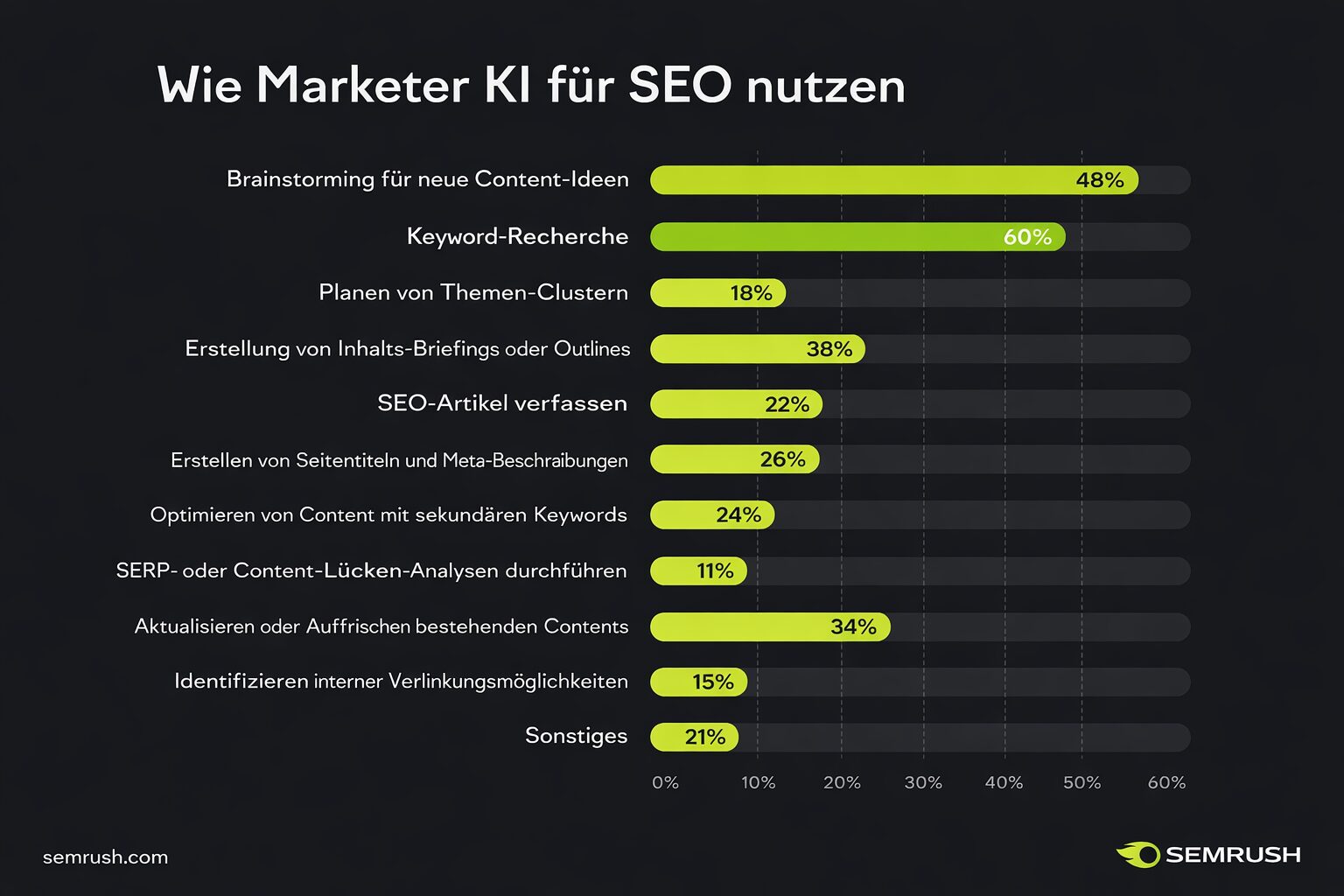
At a high level, the process follows these core steps:
- Define clear business and SEO goals, audiences and success metrics
- Analyse existing content and the competitive landscape
- Map topics and keywords along the customer journey and search intent
- Plan ownership, formats and timelines for execution
- Execute, measure results and optimise continuously
Content strategy is cyclical, not linear. Every iteration builds on better data, clearer priorities and stronger SEO impact.
What does a complete content strategy include?
A complete content strategy goes far beyond topic ideas or publishing plans. It defines the framework that guides all content decisions over time and across teams.
At its core, a complete content strategy includes:
- Business and SEO goals, clearly defined and measurable
- Audiences and personas, based on real search behaviour and needs
- Channels and touchpoints, with the website as the central SEO hub
- Topic frameworks, including pillars, clusters and keyword priorities
- Editorial guidelines and governance rules, to ensure consistency
- KPIs and success metrics, tied to visibility, engagement and outcomes
- Maintenance and update cycles, to keep content relevant in the long run
Together, these elements answer three fundamental questions: what should we create? Why does it matter? And how do we know whether it works?
Which roles and responsibilities are needed?
Even the best strategy fails without clear ownership. In larger organisations, unclear responsibilities are one of the most common reasons why content initiatives stall or underperform.
Successful content strategies define clearly who is responsible for what, including:
- SEO owners, who define requirements, priorities and performance benchmarks
- Content teams, responsible for creation, updates and quality
- Subject matter experts, who ensure accuracy and depth
- Development or IT teams, who support technical SEO and implementation
- Stakeholders and decision makers, who align strategy with business goals
Clear roles reduce bottlenecks, avoid duplicate work and ensure that content moves efficiently from planning to publication and optimisation.
Step 1: what are your goals, audiences and channels?
This is where everything starts. If you do not know what you want to achieve, who you are creating content for and where that content should live, SEO quickly turns into guesswork.
Your goals set the direction. Your audiences define what relevance actually means. And your channels decide whether your content has a genuine chance to compound over time.
In larger organisations in particular, aligning these three points early prevents wasted effort, conflicting priorities and content that looks good on paper but never performs in search.
According to Backlinko, the top three results in Google together receive 54.4% of all organic clicks. That is why it is crucial to structure content so that it matches search intent, relevance and user needs as closely as possible. (Backlinko)

Goals and purpose
Every content strategy starts with a clear purpose. Content can support different goals depending on a company’s maturity, market position and priorities. SEO works best when goals are realistic, specific and measurable.
Typical content goals are:
- Increase organic visibility and brand awareness
- Bring qualified traffic to core pages
- Support demand generation and lead acquisition
- Improve conversion rates on existing traffic
- Strengthen authority and trust within a niche
Not every piece of content has to achieve everything at once. Defining one primary goal per initiative helps avoid conflicting expectations and unclear success measurement.
Define your audiences and buyer personas
Goals and audiences belong together, from topics through depth to format. Strong content strategies use clear, data-driven buyer personas instead of broad assumptions.
When you define personas, focus on:
- What triggers their searches and questions
- Which doubts or objections they want resolved
- How much prior knowledge they already have
- Which formats and which depth suit their situation
- What builds trust or causes hesitation
Base personas on real data such as search behaviour, analytics, customer conversations or CRM insights, and update them when behaviour changes.
Determine your communication channels
Your audience strongly influences which channels make sense. Not every channel deserves the same attention, and not every platform supports long-term SEO growth.
For most organisations, the website remains the central hub of the content strategy. Other channels should support and amplify this core rather than compete with it.
When you select channels, focus on questions such as:
- Where do users actively look for solutions or information?
- Which channels let you reuse or adapt content efficiently?
- Where can visibility realistically grow and compound over time?
Define goals for content pieces and metrics
Once the overarching goals are clear, every piece of content needs its own purpose and clear success criteria. Different content types fulfil different roles in the funnel and should not be measured with the same KPIs.
Depending on the goal, relevant metrics can be:
- Organic rankings and keyword visibility
- Click-through rate from the search results
- Engagement signals such as time on page or scroll depth
- Assisted or direct conversions
- Backlinks and mentions from relevant sources
Especially at the beginning, it helps to assign every piece of content to a larger goal, for example awareness, consideration or conversion. That makes performance easier to interpret and easier to optimise over time.
Choose your CMS and your most important tools
Your CMS and your tool stack directly influence how scalable and maintainable your content strategy is. The system should support collaboration, governance and SEO requirements without creating friction.
Important considerations are:
- Ease of content creation and editing
- Control over technical SEO elements
- Workflow and approval capabilities
- Integration with analytics, SEO and CRM tools
- Long-term flexibility as the content portfolio grows
Step 2: which content do you already have?
You need to know exactly which content already exists before you create anything new. Most enterprise websites have accumulated content over years, created by different teams with different goals.
A content audit brings clarity by showing what performs, what competes with itself and what no longer delivers value. This step often produces the fastest SEO wins, because improving existing content is usually more effective than publishing new pages.
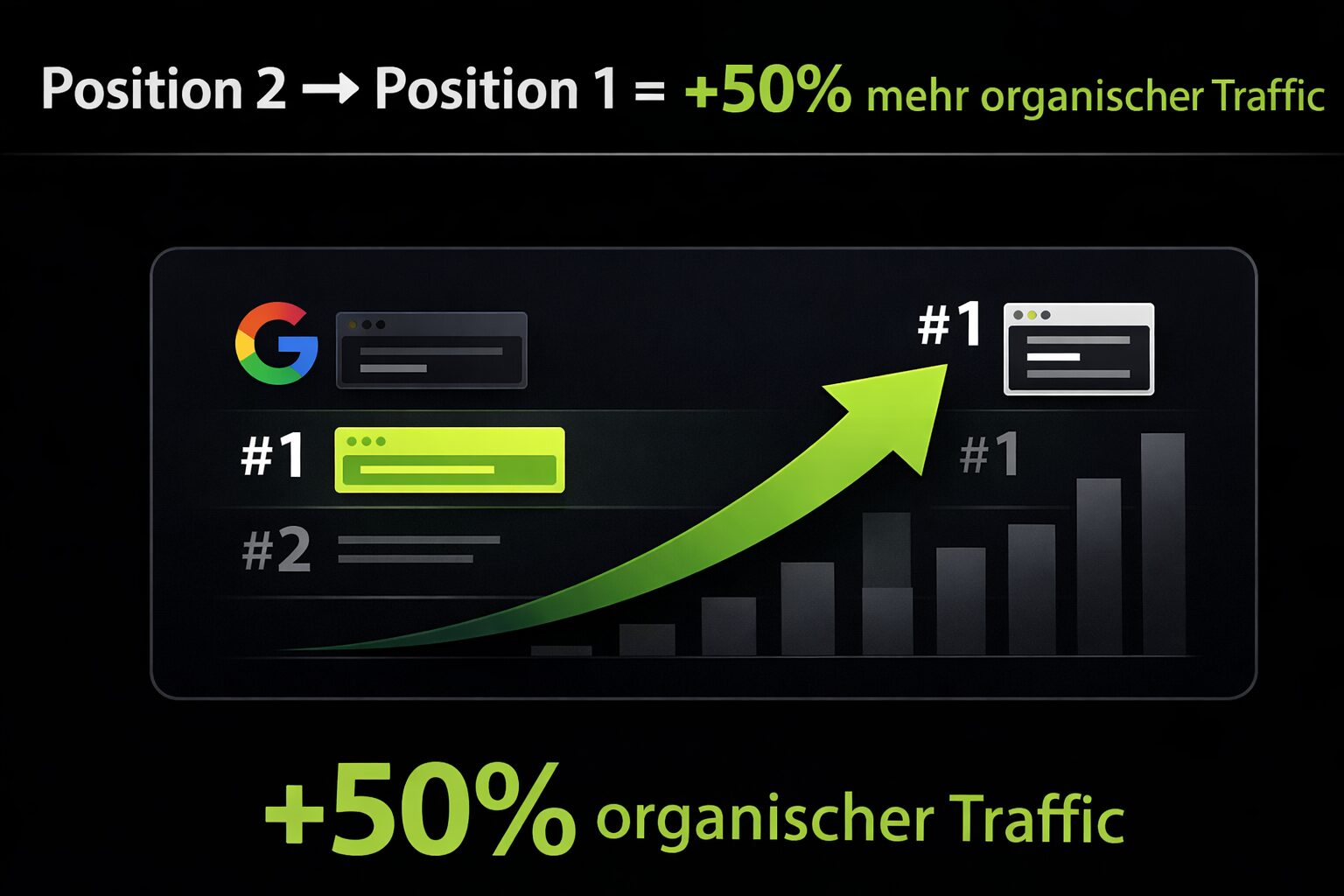
Semrush reports that even small ranking improvements can have a large effect: moving from position 2 to position 1 leads to 50% more organic traffic on average. That is why it is often more worthwhile to update and improve existing content rather than only publishing new pages. (Semrush)
Run a content audit
The first step is to create a complete inventory of your content. Transparency matters more than perfection at this stage. You have to know what exists before you can decide what to do with it.
A basic content audit typically covers:
- All indexable URLs and content formats
- Content type (blog, landing page, guide, resource and so on)
- Ownership and responsible teams
- Target topics or keywords
- Current status (active, outdated, duplicated, unclear purpose)
In enterprise environments, this step often uncovers content that nobody actively owns any more. Spotting these ownership gaps is just as important as evaluating the content itself.
Run a gap analysis
Once you know which content exists, the next step is to understand what is missing or underrepresented. A gap analysis compares your current content with search demand and competitor coverage.
Key questions are:
- Which relevant topics are not covered at all?
- Where is the coverage too superficial or outdated?
- Are several pages competing for the same keywords?
- Where do competitors rank with stronger or more complete content?
A gap analysis is not only about adding new topics. In many cases, consolidating, expanding or realigning existing pages delivers stronger results than publishing new ones.
Audit performance and SEO relevance
The final step is to assess how well your content actually performs. Decisions should be based on data, not on assumptions or historical attachment.
Relevant evaluation criteria are:
- Organic traffic and visibility trends
- Keyword rankings and search intent fit
- Backlinks and internal linking strength
- Conversion or assisted conversion impact
- Engagement signals such as dwell time or bounce rate
Based on this analysis, every piece of content should fall into one of four actions:
- Improve: upgrade content with strong potential but weak execution
- Merge: combine overlapping or competing pages
- Remove: delete outdated or irrelevant content with no strategic value
- Protect: safeguard high-performing assets that already deliver results
A content audit is not a one-off exercise. It should be repeated regularly, at least once or twice a year, and always before major changes such as a website relaunch or a structural overhaul.
Step 3: how do you find the right topics and keywords?
You find the right topics and keywords by focusing on relevance and structure rather than volume.
Instead of chasing individual keywords, a strong content strategy aims to cover complete topic areas that are relevant to your audience and your business.
Effective topic research connects real search demand with business value, so your content can realistically rank, attract qualified traffic and support conversions. Topic clusters turn individual pages into a coherent system and signal authority to search engines.
According to Ahrefs, the average number one page in Google also ranks in the top 10 for almost 1,000 other relevant keywords. This shows why it is often more effective to cover topic areas and keyword clusters completely rather than targeting individual keywords in isolation. (Ahrefs)
Collect content topics
Topic discovery starts with understanding real questions, pain points and use cases. This is not a blank-slate exercise. Most core topics already emerge from earlier steps, especially from audience definition and the content audit.
Useful sources for collecting topics are:
- Frequent questions from customers, sales teams or support teams
- Internal documentation, product explanations or training materials
- SERPs, including autocomplete suggestions and related searches
- Recurring themes in industry discussions or competitor content
The aim at this stage is breadth, not precision. A large collection of potential topics provides the raw material for structured prioritisation later.
Carry out keyword research
Once topics are defined, keyword research translates them into concrete search demand. This step validates assumptions with data and helps separate ideas that sound relevant from topics people actually search for.
Effective keyword research evaluates:
- Search volume, to understand demand
- Search intent, to determine which content type is expected
- Competitive intensity, to assess how realistic ranking is
- Relevance, to ensure alignment with business goals
In enterprise environments, keyword research is rarely quick. It takes time, iteration and tools, but it is essential for making well-founded content decisions and avoiding wasted effort.
Map content to funnel stages
Not all keywords serve the same purpose. Some queries show early exploration, others signal active comparison or readiness to act. Mapping keywords to funnel stages helps ensure the right content appears at the right moment.
Typical stages are:
- Awareness, where users look for understanding or definitions
- Consideration, where options and solutions are compared
- Decision, where users look for proof, trust signals or next steps
This mapping influences content format, depth, structure and calls to action. It also prevents intent mismatch, which is a common reason why pages do not perform.
Define content pillars and clusters
Content pillars and clusters form the structural backbone of a scalable SEO strategy. Pillar pages cover broad, high-level topics, while cluster pages treat specific subtopics in depth.
This approach offers several benefits:
- Clear topic focus for users and search engines
- Strong internal linking structures
- Less keyword cannibalisation
- Easier expansion over time
Pillars anchor authority. Clusters extend relevance. Together they let you scale large content portfolios without losing clarity, consistency or SEO performance.
Step 4: how do you plan and structure your content for the long term?
You plan and structure content for the long term by building clear systems that turn ideas into consistent execution.
A structured content plan makes sure priorities do not get lost in day-to-day work, helps teams coordinate and prevents reactive publishing. Long-term planning creates consistency and predictability, which are essential for sustainable SEO growth and for building momentum instead of constantly starting over.
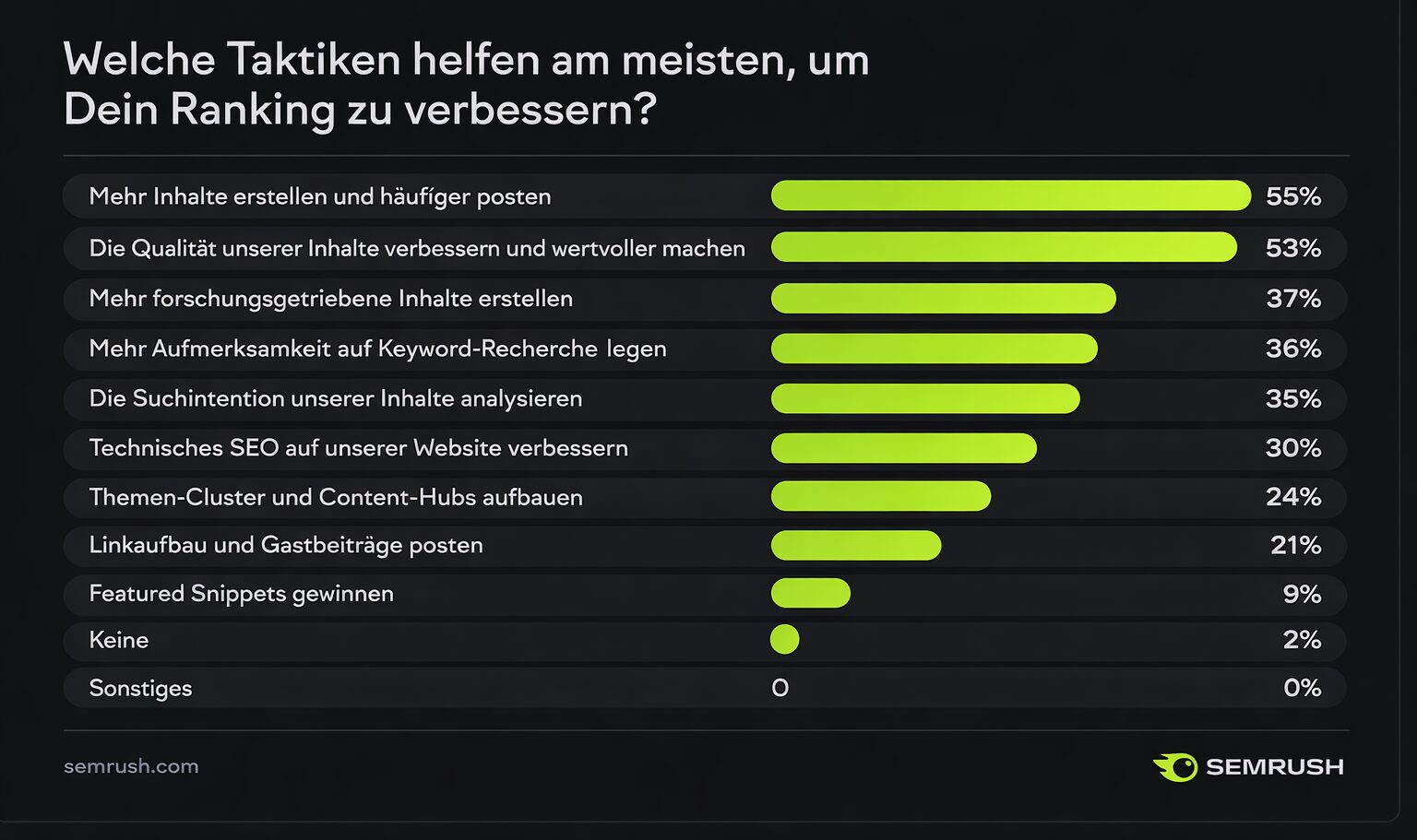
Semrush reports that 55% of marketers say more content and more frequent publishing had the biggest influence on better rankings. (Semrush)
Develop an editorial calendar
An editorial calendar is the central coordination tool for content execution. It creates visibility across teams and ensures that planning, creation and optimisation follow a shared direction. In enterprise environments, a single source of truth is decisive.
A practical editorial calendar typically includes:
- Planned topics and their associated URLs
- Primary and secondary keywords
- Content formats and page types
- Topic groups or clusters for internal linking
- Prioritisation
- Responsible owners or teams
- Timelines, deadlines or publishing windows
- Current status (planned, in progress, published, updated)
The aim is clarity, not complexity. Overly detailed plans often slow teams down. A lean structure that everyone understands works best and can evolve over time.
Define publishing frequency and responsibilities
Consistency matters more than volume. Publishing frequently without maintaining quality or follow-through rarely leads to long-term SEO gains.
When you define publishing frequency, consider:
- Available internal and external resources
- Review and approval workflows
- Technical and SEO dependencies
- Capacity for ongoing updates and maintenance
Clear ownership is just as important. Every piece of content should have a responsible owner, including after publication. This prevents situations where content goes stale because nobody feels responsible.
Prioritise evergreen versus campaign content
Not all content serves the same purpose. A sustainable content strategy balances long-term assets with short-term initiatives.
Evergreen content:
- Targets stable, recurring search demand
- Builds authority and rankings over time
- Delivers compounding SEO value
Campaign-driven content:
- Supports launches, promotions or time-bound initiatives
- Creates short-term visibility or engagement
- Often relies on distribution outside SEO
Prioritising evergreen content provides a strong foundation, while campaign content brings flexibility and responsiveness. The key is knowing which role each piece plays within the overall strategy.
Step 5: how do you execute and scale your content production?
You execute and scale content production by building systems instead of relying on individual effort.
Clear processes, governance and feedback loops make SEO content easy to create, review, publish and improve without losing quality.
In enterprise environments, scalable execution depends on removing friction from workflows so content can be produced and optimised consistently rather than failing because of complexity or ad hoc coordination.
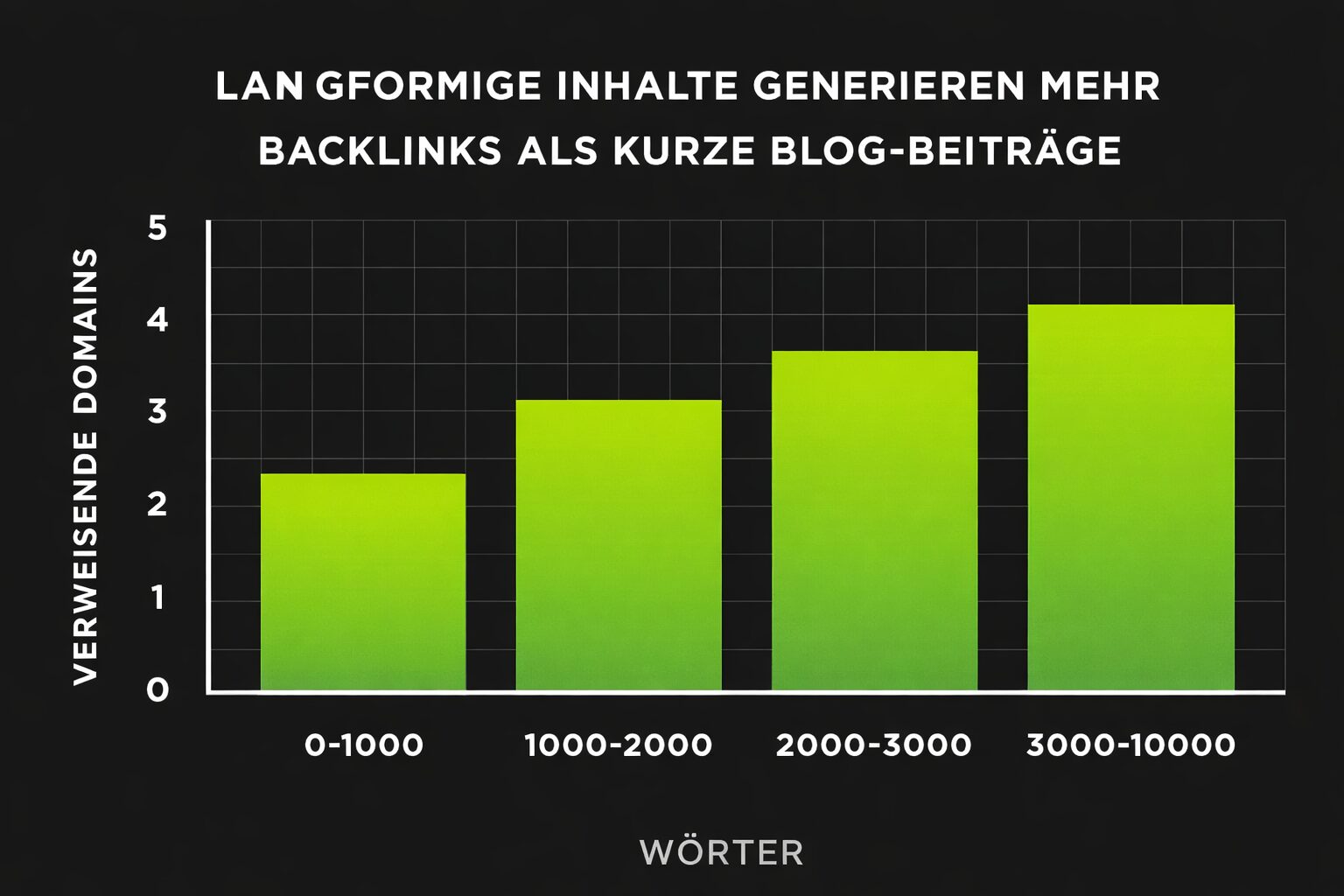
According to Backlinko (2025), long-form, well-structured content generates 77% more backlinks than short, unstructured pages. (Backlinko)
Create and publish content
Content creation should always start with demand, not with generic rules or trends. Instead of following blanket recommendations such as word count targets or format preferences, focus on what users are really searching for and what they expect.
Effective content creation is supported by clear briefs. Strong briefs typically define:
- Target audience and search intent
- Primary topic and supporting subtopics
- Key messages and expected depth
- SEO requirements such as internal links or references
- Content format and structural guidelines
Clear briefs reduce revisions, speed up production and create consistency across teams and contributors.
Content governance: briefs, approvals and guidelines
Governance is essential for scaling without losing quality or brand consistency. The more people contribute to content, the more important shared rules become, as opposed to individual experience.
Good content governance includes:
- Editorial and SEO guidelines
- Defined review and approval processes
- Clear ownership at every stage
- Quality standards that apply across formats
Governance does not slow teams down when it is done properly. It removes uncertainty, reduces friction and makes expectations clear from the start.
Distribute content across SEO, social and newsletters
SEO is the foundation of long-term visibility, but it should not be the only distribution channel. Content strategy also involves deciding how content is reused and amplified across owned and earned channels.
Effective distribution often includes:
- Publishing optimised content on the website
- Repurposing key insights for social media
- Sharing relevant content through newsletters or internal channels
- Supporting link acquisition through proactive outreach
Distribution should be planned up front. If nobody is responsible for promotion, even strong content will underperform.
Analyse and optimise against KPIs
Measurement closes the loop between strategy and execution. Analytics should focus on metrics that show real progress towards defined goals, not on vanity metrics.
Depending on the goal, relevant KPIs can be:
- Organic traffic and visibility growth
- Rankings for priority topics
- Engagement and intent alignment
- Assisted or direct conversions
- Backlinks and internal link performance
Clear benchmarks make it easier to evaluate performance and decide what should be improved, expanded or stopped.
Update and repurpose existing content
Execution does not end at publication. Regular updates and revisions are essential for sustainable SEO performance. In many cases, improving existing content delivers stronger results than creating new pages.
Updating content can involve:
- Expanding or sharpening sections
- Adapting content to updated search intent
- Improving structure, internal linking or visuals
- Repurposing strong content for additional channels
Continuous optimisation turns content production into a continuous improvement cycle rather than a one-off task.
Which types of content should you include in your strategy?
You should include content formats that match user intent and support your SEO and business goals.
A strong content strategy balances depth, reach and engagement instead of betting on a single format or chasing trends. A mix of formats increases visibility across touchpoints and helps you meet users at different stages of their decision process. Most importantly, every format should answer real questions and deliver long-term SEO value.
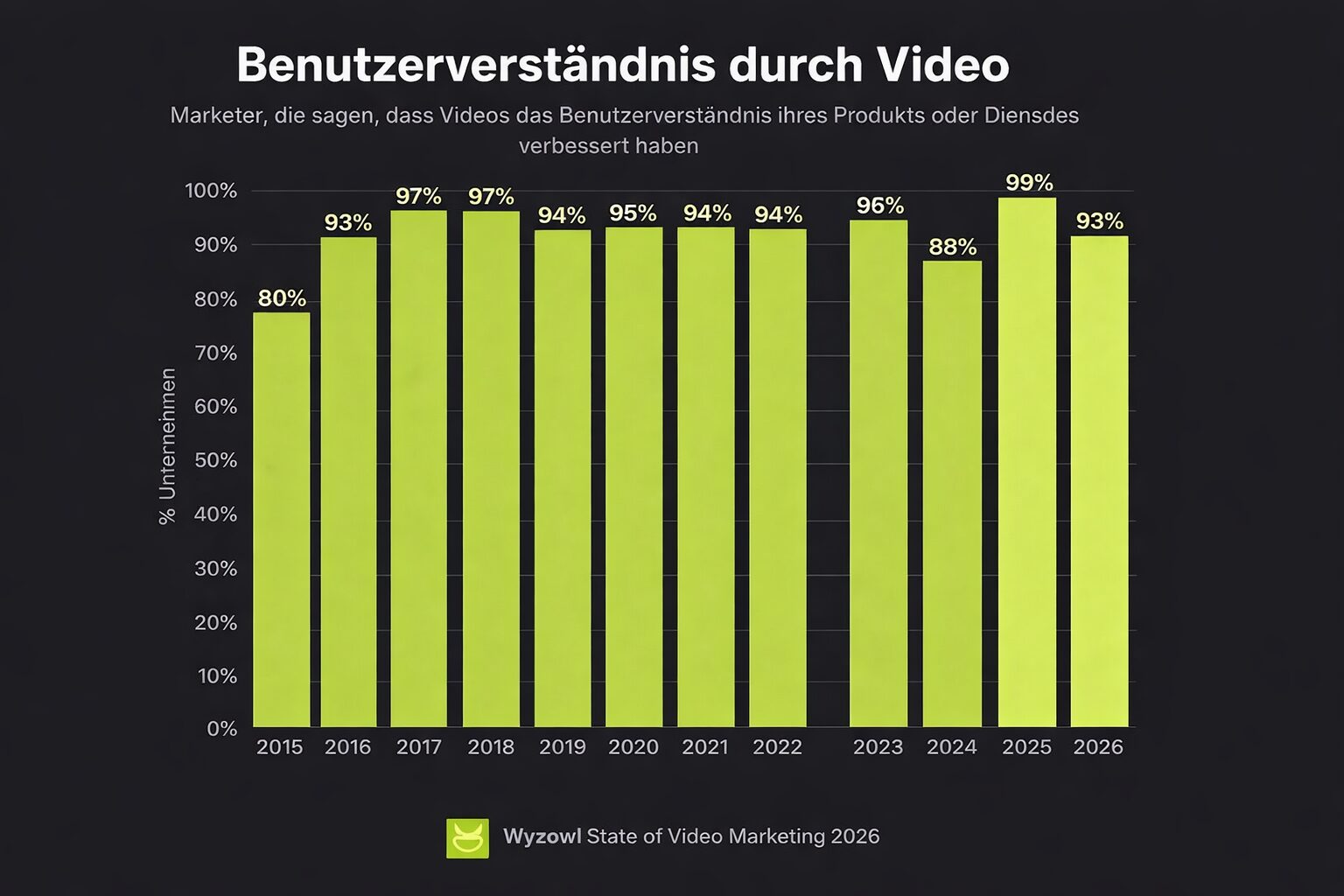
According to Wyzowl, 93% of video marketers say video has helped improve users’ understanding of their product or service. (Wyzowl)
What makes content high quality?
High-quality content is not defined by length or complexity. It is defined by usefulness. From an SEO and a user perspective, good content consistently delivers value and clarity.
When you combine personas with the buyer’s journey (awareness, consideration, decision), you recognise patterns in what people search for at each stage, and that tells you which intent types to target with which content.
- Awareness: informational keywords
- Consideration: commercial and comparison keywords
- Decision: transactional keywords
This alignment ensures your content speaks to exactly what each user type wants at the moment they search.
Core characteristics of high-quality content are:
- A clear purpose, addressing a concrete question, problem or need
- Relevance, aligned with search intent and audience expectations
- Logical structure, which makes information easy to scan and understand
- Accuracy and trust, with transparent authorship and reliable sources
- Longevity, staying useful beyond short-lived trends or news cycles
Poor content often fails not because it is wrong, but because it says very little despite using many words. Avoid vague statements, generic tips or filler text created only in order to “have content”. Every section should earn its place.
A simple test helps: if removing a paragraph does not change what the page says, it probably adds no value.
Content formats: blogs, videos, whitepapers, infographics, podcasts
Different formats support different goals and stages of the customer journey. A balanced strategy uses several formats while maintaining a strong SEO foundation.
Common content formats and their strengths are:
- Blog articles and guides, for search visibility, education and authority
- Videos, for explanations, demos and engagement
- Whitepapers and reports, for depth, thought leadership and lead generation
- Infographics, to summarise complex information visually
- Podcasts, for brand building and long-form discussion
The key is scalability. Formats should be chosen not only for impact, but also for how easily they can be produced, updated and reused over time.
How do you build a content strategy for social media?
Social media plays a supporting role within a content strategy. It helps extend reach, amplify messages and engage audiences, but it does not replace SEO-driven content.
A sustainable approach treats social channels as an amplification layer:
- Core content is created for the website first
- Key insights are adapted for social platforms
- Formats and messaging are adjusted per channel
- Performance is measured against clear goals
SEO builds long-term equity. Social media accelerates distribution. Combined, the two channels reinforce each other instead of competing for resources.
What else should large companies consider when building a content strategy?
Enterprise environments bring a layer of complexity that goes far beyond topics, keywords and calendars. Content strategy in large organisations has to account for people, systems, decision paths and internal dynamics. SEO cannot work in isolation. Without alignment and integration, even well-designed strategies struggle to gain traction.
Large companies succeed when content strategy is understood, supported and operationalised across teams. That requires clear ownership, cross-functional collaboration and reliable data flow between marketing, sales and leadership.
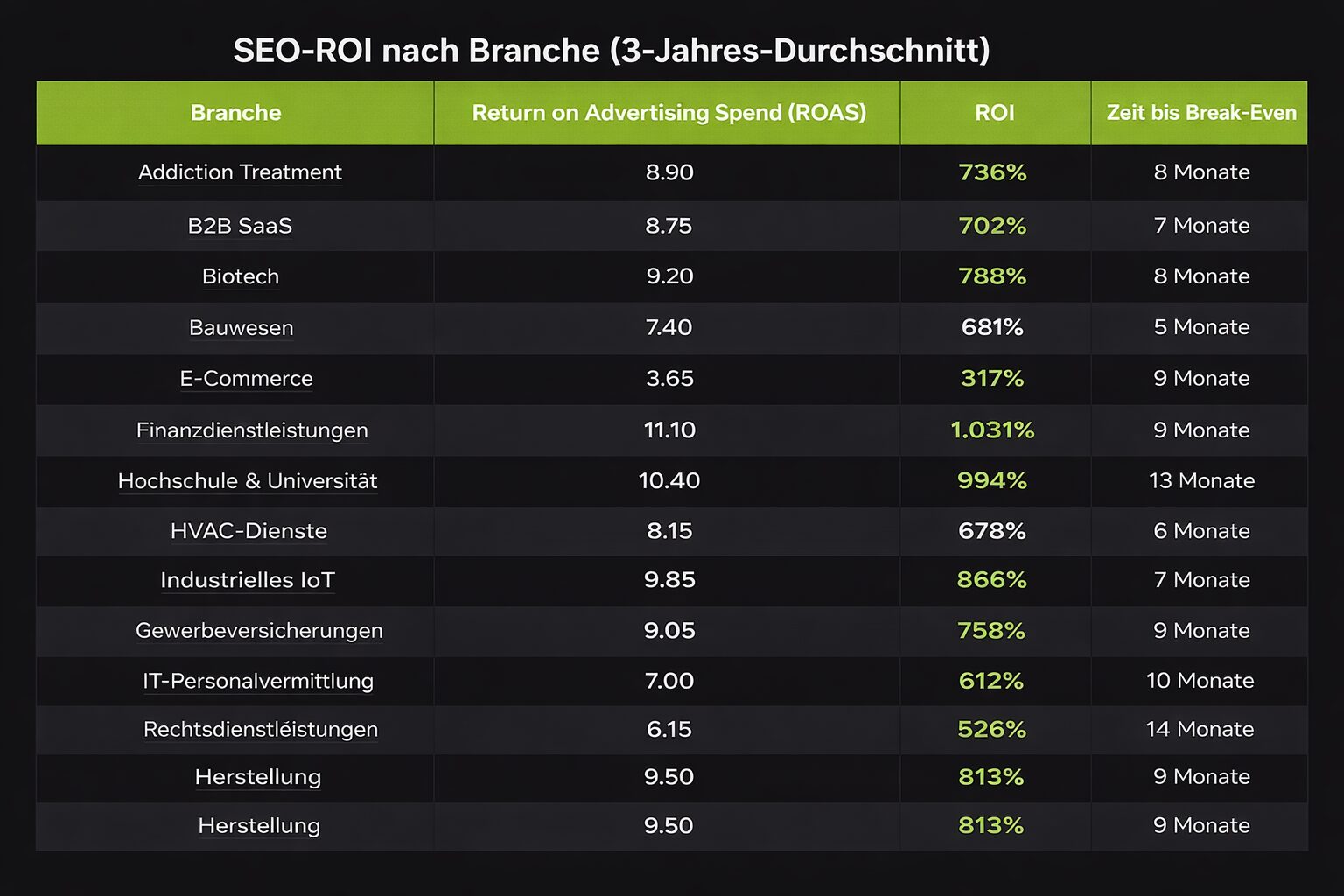
According to Ahrefs, B2B SaaS SEO shows an average ROI of around 702% over three years, with break-even after roughly seven months. This shows how important it is not to view SEO in isolation, but to connect it closely with CRM, sales and revenue data. (Ahrefs)
Stakeholder buy-in
A content strategy only works if it is supported by the people who are supposed to contribute to it. In large organisations, content is rarely produced by marketing alone. Sales, customer service, product teams and subject matter experts all play a role.
To secure buy-in, companies should:
- Communicate the purpose and business impact of the strategy clearly
- Define expectations, responsibilities and success metrics
- Involve key stakeholders early through workshops or alignment sessions
- Establish shared goals rather than isolated department targets
When stakeholders understand how content supports their own goals, friction drops and execution speeds up.
Integration with sales and CRM
Content strategy becomes considerably more effective when it is connected to sales processes and customer data. SEO insights show what prospects care about, how they search and which objections they want resolved, information that is valuable well beyond marketing.
Effective integration includes:
- Using search data to improve sales messaging and enablement
- Building content into sales workflows, for example follow-ups or preparation
- Tracking how organic traffic contributes to leads, opportunities and revenue
- Feeding CRM insights back into content planning and prioritisation
This alignment turns content into a shared asset across the customer journey rather than an isolated marketing initiative.
AI-supported content strategy: how does it work?
AI can support a content strategy, but it does not replace one. In enterprise environments, AI is most valuable as an enabler of scale, efficiency and consistency.
Typical AI use cases are:
- Topic research and clustering at scale
- Content brief creation and optimisation support
- Performance analysis and pattern detection
- Content update and repurposing suggestions
Strategy, prioritisation and quality judgement remain human responsibilities. AI works best when it is embedded in a clear framework and steered by defined goals, rather than used as a shortcut for decisions.
How often should you update your content strategy?
A content strategy is never finished. Markets evolve, search behaviour changes and competitors adapt. Regular updates are essential to keep content relevant and competitive, without constantly reinventing the entire approach.
Semrush (2026) shows that websites which refresh their content strategy at least annually grow organic traffic 23% faster than those that do not. (Semrush)
In practice, most organisations plan their content strategy on a one-year horizon, especially when they are building long-term visibility through topic clusters and evergreen content. At the same time, waiting a full year is often too slow. A quarterly review cycle lets teams evaluate rankings, traffic trends and performance signals, and adjust priorities where needed.
Signs that a strategy needs an update include sustained ranking or traffic declines, shifted business goals, changes in search intent or new competitors gaining visibility. Future-proofing a content strategy means building flexible systems and review routines so that adjustments become part of normal operations rather than disruptive restarts.
Ready for more revenue?
Book a free SEO and GEO audit

Find out in a free call how much revenue your website is leaving on the table, with no obligation and no agency waffle.