

Everything at a glance
- Define clear, valuable goals: for example generating qualified leads, goals that match the agency’s strengths, instead of chasing vague visibility metrics.
- Narrow down your search: pick 3 to 5 agencies, study their case studies, request a mini SEO outline and ask targeted questions about their approach and reporting.
- Budget: at least 1,500 € per month, and expect top agencies to invest dozens of hours in audits, keyword research, content planning and technical optimisations.
- Watch out for: warning signs such as a guaranteed number 1 position, secret “hacks”, automated all-in-one promises and long lock-in contracts with minimal deliverables.
Do you want to be number 1 on Google? You are not alone in that. But be careful, finding the right SEO agency is harder than cracking page 1. In a sea of “guaranteed rankings” and buzzword pitches, the search for a genuine partner feels like panning for gold with a plastic spoon.
The first result on Google receives roughly 27.6 % of all clicks, which shows how decisive top positions are.
In this guide you will learn how to avoid the biggest traps, what to ask in the first conversation and how to tell genuine strategy from recycled nonsense. Whether you are looking for massive traffic, better leads or long-term brand authority, this is how you find the SEO agency that really moves you forward.
How to choose an SEO agency
Before you look for an SEO agency, you need to know what you want. If your goal is not clear, misunderstandings and delays are likely.
Everyone who wants to find a good SEO agency is looking for these points:
- Expertise
- Reliability
- Creativity
- Professionalism
- Continuous training
- Sustainable working methods
That sounds simple, but it is not. It is extremely hard to find agencies that genuinely meet all the criteria.
Doing SEO half-heartedly gets you nowhere. You have to operate at the highest level. Mediocrity is money thrown away.
Make sure your website is in safe hands, because you are handing the agency a lot of data and delegating PR work. Choose carefully.
“Why not simply a full-service agency?” Quite simply: SEO demands specialisation. And if your goal is to be right at the top, you must not settle for less.
Define clear goals
You need a yardstick in order to assess quality. Define early on which KPIs apply.
With clear goals you can recognise during the evaluation who really fits. The SEO agency’s job is to create a plan that delivers results.
A simple set of do’s and don’ts:
- Valuable goal: “Qualified visitors from Fortune 500 CEOs who download our white paper.”
- Low-value goal: “Increasing our generic visibility index.”
When your goals are clear, whether leads, downloads or revenue, you can align them perfectly with the agency.
Narrowing down your agency selection
Look for 3 to 5 agencies that suit you. Check their reputation and their website.
Many SEO firms show their work transparently. Then proceed as follows:
- Send an email: provide all the information about your goals and challenges.
- Book two calls: a first introduction, then a detailed deep dive.
- Review case studies: what went well, what did not, and why?
- Request a mini SEO outline: that way you see their concrete approach.
Smart questions:
- Do you advise more, or do you implement more?
- Who writes our content, and does that always stay the same?
- How does your team stay up to date with SEO changes?
- What does your game plan for our project look like?
- What happens if the strategy does not work?
- How often do we meet, and what is included in the reporting?
- How much work is left on our side?
- Which link building tactics do you use, and why?
Decisive factors
Working style and compatibility matter, but you should also clarify these points:
Price
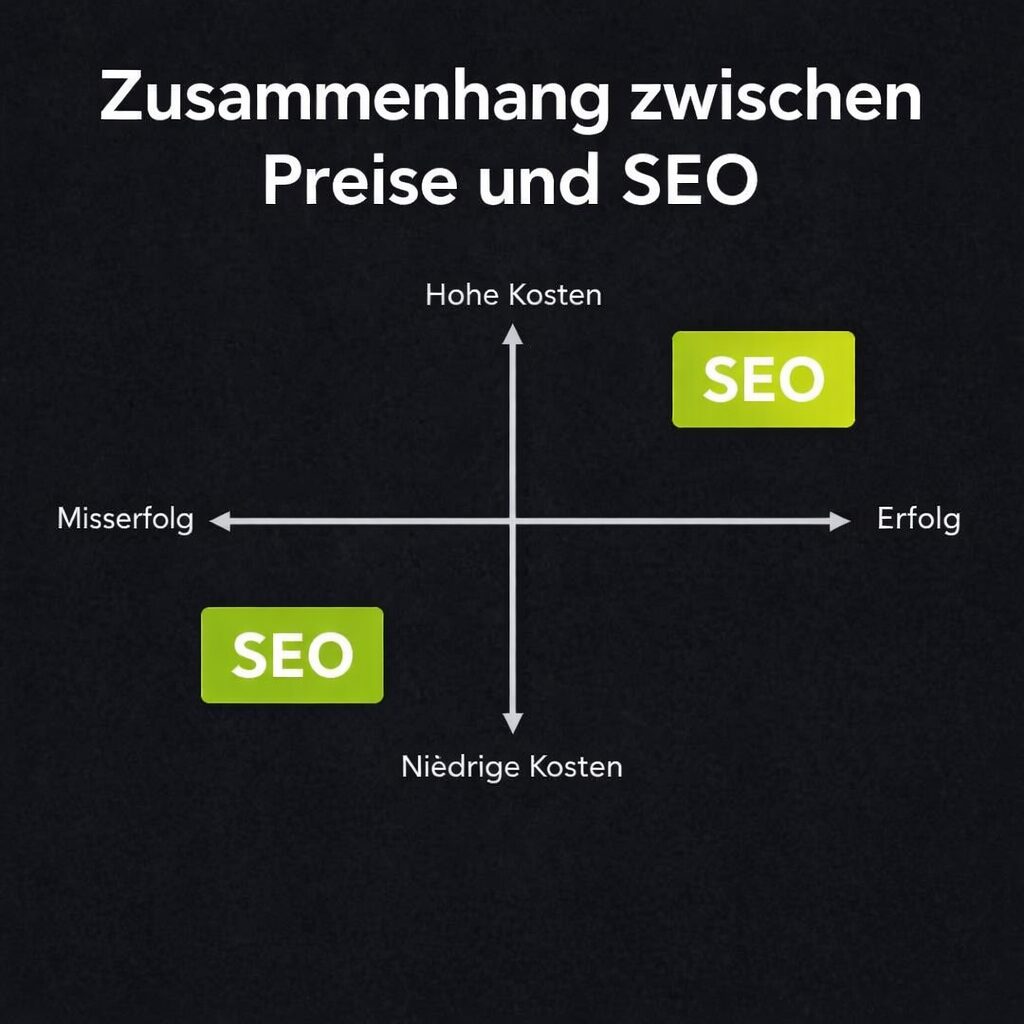
Cheap does not mean good. Below 1,000 € per month you will usually not get top results.
What Does SEO Really Cost? ➤ All the Facts and Pricing Models
If you want to check whether the budget fits, you can break down the working hours:
- Guide including content design: at least 6 hours
- Keyword research and site structure: at least 20 hours
- Full SEO audit: at least 20 hours
Current hourly rates in the DACH region are currently between 100 € and 200 €.
Way of working
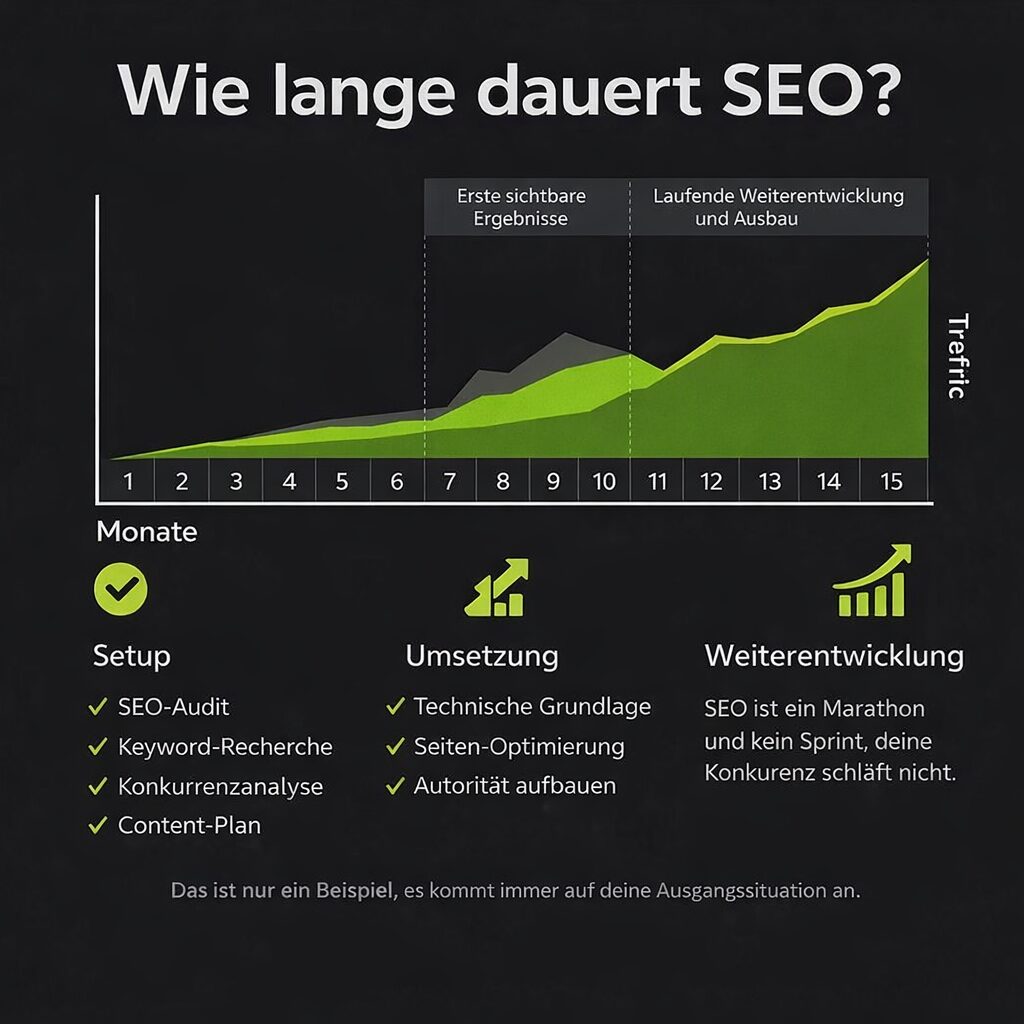
Organic traffic is the biggest source of clicks online. But it does not happen overnight. SEO is a marathon, not a sprint.
Black hat tricks may work in the short term, but in the long run they lead to penalties and ranking losses.
Implementation
Implementing SEO and content yourself often feels overwhelming. Experienced partners know which problem areas have to be tackled first.
People often overlook commercial pages (“money pages”), which need just as much attention as blogs in order to earn high-quality links.
The best solution: commission an agency that gets stuck in and at the same time shows you how it is done.
Communication
Some clients want a detailed plan and then give a free hand. Others want to sign off on every step. Find your style.
Ask yourself:
- Do you want an expert who builds you a roadmap and implements it?
- Or would you rather have endless consulting, even if hardly anything gets implemented?
Experience shows that ideas on a whiteboard achieve nothing. We implement.
What you should avoid
Save yourself time and money by steering clear of these traps:
- Blindly trusting “top 100” lists. Rankings change constantly.
- Ignore promises of secret tricks that look too good to be true.
- Seeing SEO as a one-time cure instead of an ongoing strategy.
Trusting top 100 lists
Static best-of lists are deceptive. Algorithms change, competitors adapt. Top of the list yesterday, gone today.
Avoiding secret tricks
Anyone promising number 1 overnight is not to be trusted. Best practices pay off over the long term.
- Customer focus: give users exactly what they are looking for.
- Smooth experience: make every page intuitive and quick to find.
- Help Google: structure things so that Googlebot finds all your important pages.
- More than search: use email, social and ads in parallel.
SEO is not witchcraft, it is a clear process:
- Crawlability and indexability: make sure Googlebot finds and indexes your pages.
- HTTPS and speed: a secure connection and fast loading times.
- Choosing keywords: use several tools, not just the Google Planner.
- Serving user needs: no filler text, but real answers.
- Earning backlinks: build high-quality links from relevant sites.
SEO is not a cure-all
SEO depends on your brand reputation, product quality and awareness. Without good content, half the success is missing.
Small business, small budget
If you do not have a retainer budget, book individual SEO packages or hours for targeted help.
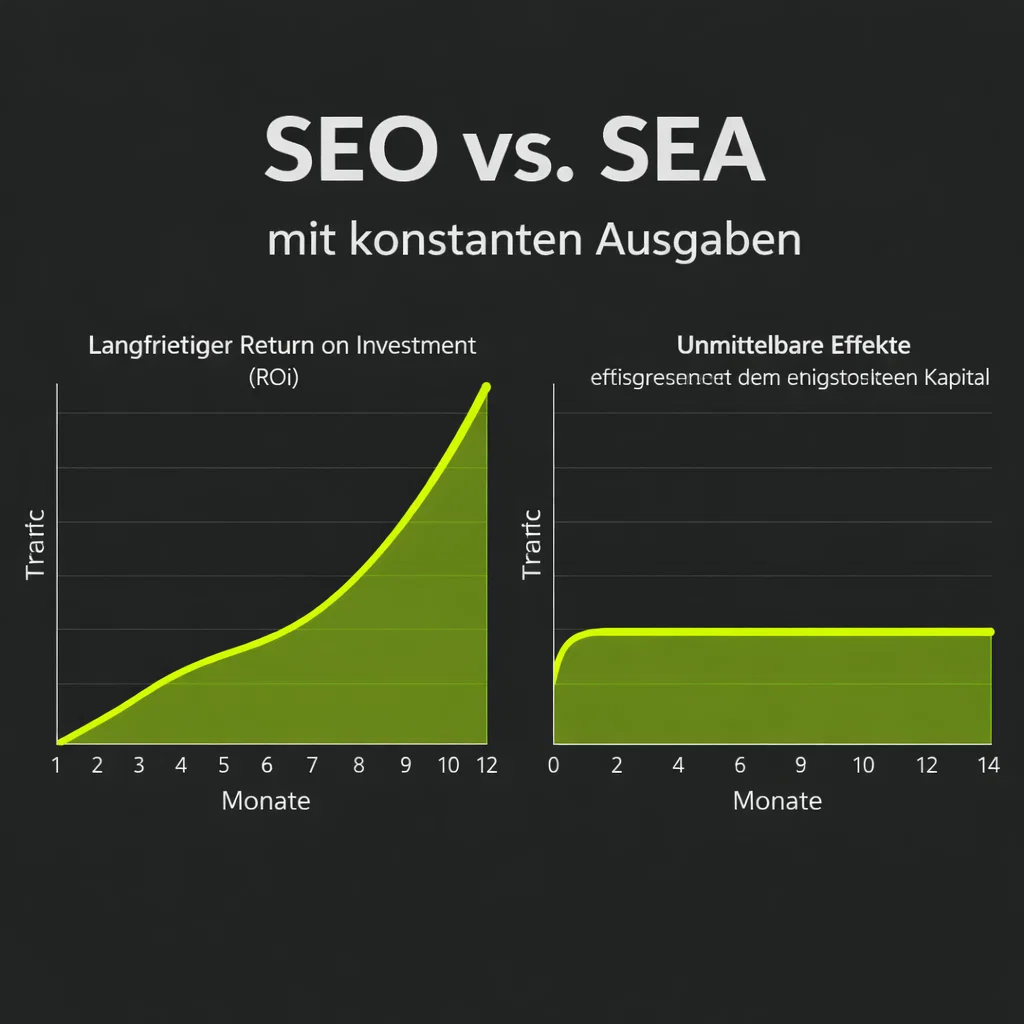
- Quick wins? Start with Google Ads.
- Long term: add an SEO strategy.
Ads and SEO complement each other perfectly.
What does an SEO agency do?
An SEO agency thinks about search optimisation holistically: you need expertise, authority and trust for optimal user satisfaction.
Tactics such as link building and on-page optimisation are part of it, but the real breakthrough comes from a coordinated overall strategy.
On-page covers only half of it, the other half is:
- A strong, recognisable brand
- A good reputation for your website and company
- Product and service quality
- User experience
- Previous interactions with your brand
- Presence on Google platforms (for example YouTube)
Thorough audit and performance tracking
First we check everything on site and off site in order to see where you stand. Your strategy emerges from the audit, keyword research and competitor check.
In the first month:
- Plan keywords and structure: define every page and URL clearly.
- Carry out an SEO audit: identify the biggest optimisation levers.
- Analyse the competition: recognise your strongest competitors and overtake them.
- Check UX: evaluate pages for usability (wireframes and mockups where needed).
- Monitor rankings non-stop: keep an eye on key keywords.
- Set up monitoring and reporting: website health and individual reports.
That way we always know what has to be optimised first in order to achieve the greatest possible effect.
Fine-tuning and staying on the ball
Even small obstacles can block your visibility on Google. A top partner monitors continuously and adapts when search algorithms change.
Finding your top keywords
The right search terms decide between success and failure. Do not rely on the Google Planner alone, use several tools.
That way you cover all the phases of the customer journey and increase visibility and conversions.
Competitive analysis
We examine who holds the leading positions in the market and where you stand.
With these insights we plan budget and effort so that you climb upwards step by step.
Content marketing with an SEO focus
Without strong content there are no SEO results. A genuine SEO agency needs a content team.
Google is getting better and better at understanding user intent. You have to align your content with that.
It is not only about placing keywords, but about structuring content so that it answers questions clearly and completely.
Blogging regularly on a part-time basis is not enough for top rankings. Outsourcing content creation can make the difference.
Technical consulting
Large websites usually have their IT teams fix things themselves. The agency advises, reviews the implementation and observes the effects.
Typical technical SEO problem areas:
- Crawlability and indexability: Googlebot has to find every important page.
- URL management: clear, consistent URLs without parameter chaos.
- Duplicate content: do not publish content more than once, in order to avoid ranking losses.
- Page speed: slow pages frustrate users and Google.
- Core Web Vitals: optimise loading time and interactivity for better rankings.
Link building
Without strong backlinks, SEO is like a car without fuel. Google relies on authority.
Common tactics:
- Guest articles: write for relevant sites and reach their audience.
- Content seeding: share top content so that it gets linked to.
- Premium directories: presence in recognised industry directories.
- Linkable assets: infographics, tools or studies that others reference.
- Link reclamation: find unlinked mentions and ask for the backlink.
Warning signs
Apart from knowing what you want from an SEO agency, the next thing you should know is what you do not want. Many signs point to dubious providers, and recognising them saves you a lot of trouble.
- “We guarantee to get you to number 1 on Google.” No reputable agency can promise a permanent number 1 position. Algorithms and competitors are too unpredictable.
- “We will submit you to every search engine.” Google covers over 90 % of all search queries, and other engines are usually a waste of time and budget.
- “One quick fix and your rankings will explode.” SEO is an ongoing process. A short-term traffic spike is not enough for sustainable success.
- “Our backlinks come from exclusive, secret networks.” Private blog networks (PBNs) or “secret” link sources are a major risk. If Google exposes the network, you not only lose rankings, you also risk penalties.
- “Trust us completely, we know what is best for your brand.” If the agency does not involve you in reports or keyword decisions, it does not see you as a genuine partner.
- “Our automated system does everything for you.” There is no “set and forget” in SEO. Automated directory entries or spam comments harm you in the long run.
- “We have an ex-Google insider for algorithm updates.” Even former employees have no real-time secrets. Claims like this are pure marketing.
- “Our reporting? Once a quarter is surely enough.” A lack of transparency is a huge warning sign. You should receive regular updates, data and clear KPIs. Otherwise you never know what is happening with your budget.
- “Sign a 10-year contract and sit back.” Long lock-ins with few deliverables mean you are paying for idle time, not for results.
- “As an official Google Partner we can change your rankings at will.” “Google Partner” refers only to Ads or Analytics certifications. No programme influences the organic results.
- “We work with big brands X, Y and Z, so you should too.” Glossy references are of no use if the case studies do not match your industry. Always check carefully.
- “You do not need access to your own Google account.” Be careful if you are denied access to Google Search Console, Analytics or Ads. That is your data and your business, and no agency may control it alone.
- “Content? For that we just use AI automatically, it saves time.” Automatically generated content without human oversight sounds efficient, but it is extremely generic, unreadable, superficial and without specialist knowledge, and it is even damaging to your brand. SEO content needs sensitivity and genuine expertise. Google penalises poor spam content.
Ready for more revenue?
Book a free SEO and GEO audit

Find out in a free call how much revenue your website is leaving on the table, with no obligation and no agency waffle.