


Everything at a glance
- Off-page optimisation builds authority signals, links, mentions and reviews, that help you win in competitive rankings.
- Quality > quantity: pursue editorial, relevant links through linkable assets, broken link building and digital PR; avoid manipulative patterns.
- Distribute links deep to the pages that are supposed to rank; keep anchor texts natural and varied; expect link fluctuation and keep publishing to replace lost links.
- Use Ahrefs and Semrush to analyse, monitor and prospect; combine that with a simple outreach pipeline and alerts for brand mentions.
- You can start DIY, but in competitive markets an expert speeds up results and protects your brand from risky link sources. (The traffic share of organic search shows why that investment pays off.)
Picture this: your perfect customer is searching right now, and the results they see are decided by reputation, not only by keywords. This is exactly where off-page optimisation wins. It is the art of getting other trustworthy websites, voices and communities to vouch for you, so that Google (and people) treat your brand as the obvious choice.
SEO is not a hack; it is a flywheel. Create something worth citing, get it in front of the right places, receive real mentions and links, and watch authority build up. In a landscape full of AI summaries and endless content, brands that earn genuine recommendations still rise fastest, because the web remains a recommendation system. Google still sends 210× more traffic than the leading AI tools combined. (Ahrefs)
If you want more visibility without rebuilding your entire website, this guide shows you how off-page strategy, links, digital PR, influencer signals and brand mentions, turns quiet pages into visible pages. Let us make your brand the one people find, trust and choose.
What does off-page optimisation mean?
Off-page optimisation covers all the measures outside your website that build trust and authority, so that Google can recommend you with a clear conscience. It is about links, yes, but also about brand mentions, reviews and digital PR.
You are shaping reputation at scale: who talks about you, who cites you and who is prepared to vouch for you.
At its core, off-page optimisation is about earning trust signals that search engines (and people) can verify. Backlinks remain the most visible of these signals, but reputable mentions and citations count too, particularly as search keeps evolving. Semrush and SISTRIX put it simply: off-page builds reputation, on-page proves relevance and usability.
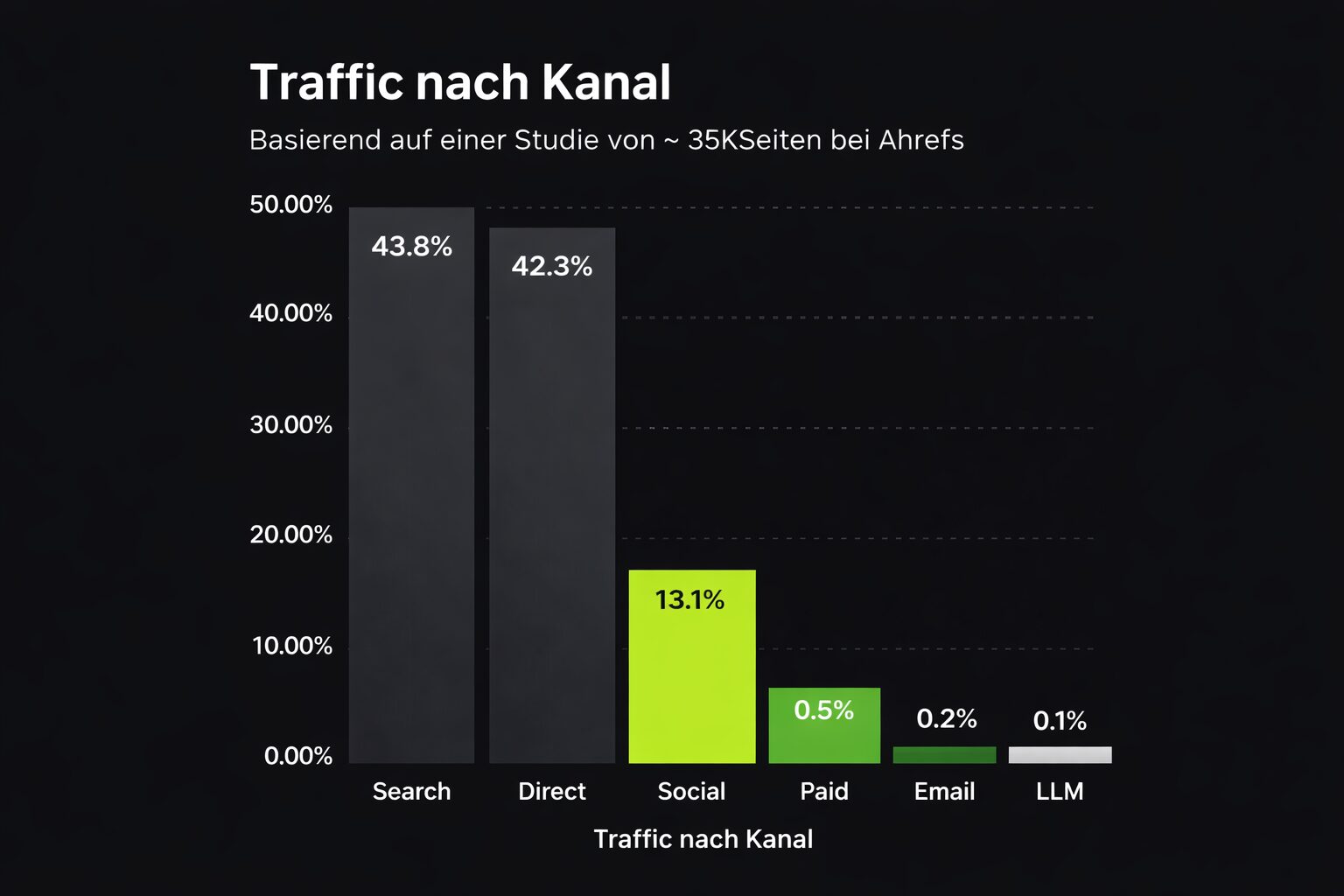
Search is still the number one traffic source. Across around 35k websites, search accounted for 43.8 % of all referral traffic, well ahead of AI tools and social. (Source: Ahrefs, 2025.) (Ahrefs)
Off-page vs on-page SEO
On-page happens on your domain: content, internal links, technical fine-tuning. Off-page happens outside your domain: who links to you, who cites you, who reviews you. Both matter and should reinforce each other.
| Aspect | On-page SEO | Off-page SEO |
|---|---|---|
| Main focus | Content, structure, internal links, technical hygiene | Backlinks, brand mentions, reviews, PR |
| Where it happens | Your website | Other websites and platforms |
| Control | High (you implement it) | Low to medium (others decide) |
| Most important tactics | Topic mapping, metadata, schema, UX/speed | Digital PR, linkable assets, outreach, citations |
| Main signals | Intent match, content depth, CWV, internal link graph | Link quality and relevance, publisher authority, naturalness of anchor texts |
| Measurement | Page rankings, CTR, engagement, index coverage | Referring domains, referral traffic, brand and search lift |
| How they complement each other | Strong on-page makes pages worth citing | Strong off-page increases the ranking ability of those pages |
Why off-page optimisation matters for rankings
Because authority is what tips the balance. When trustworthy websites vouch for you, rankings rise, clicks follow and revenue feels it.
Off-page optimisation puts you into the conversations and SERPs where demand already exists.
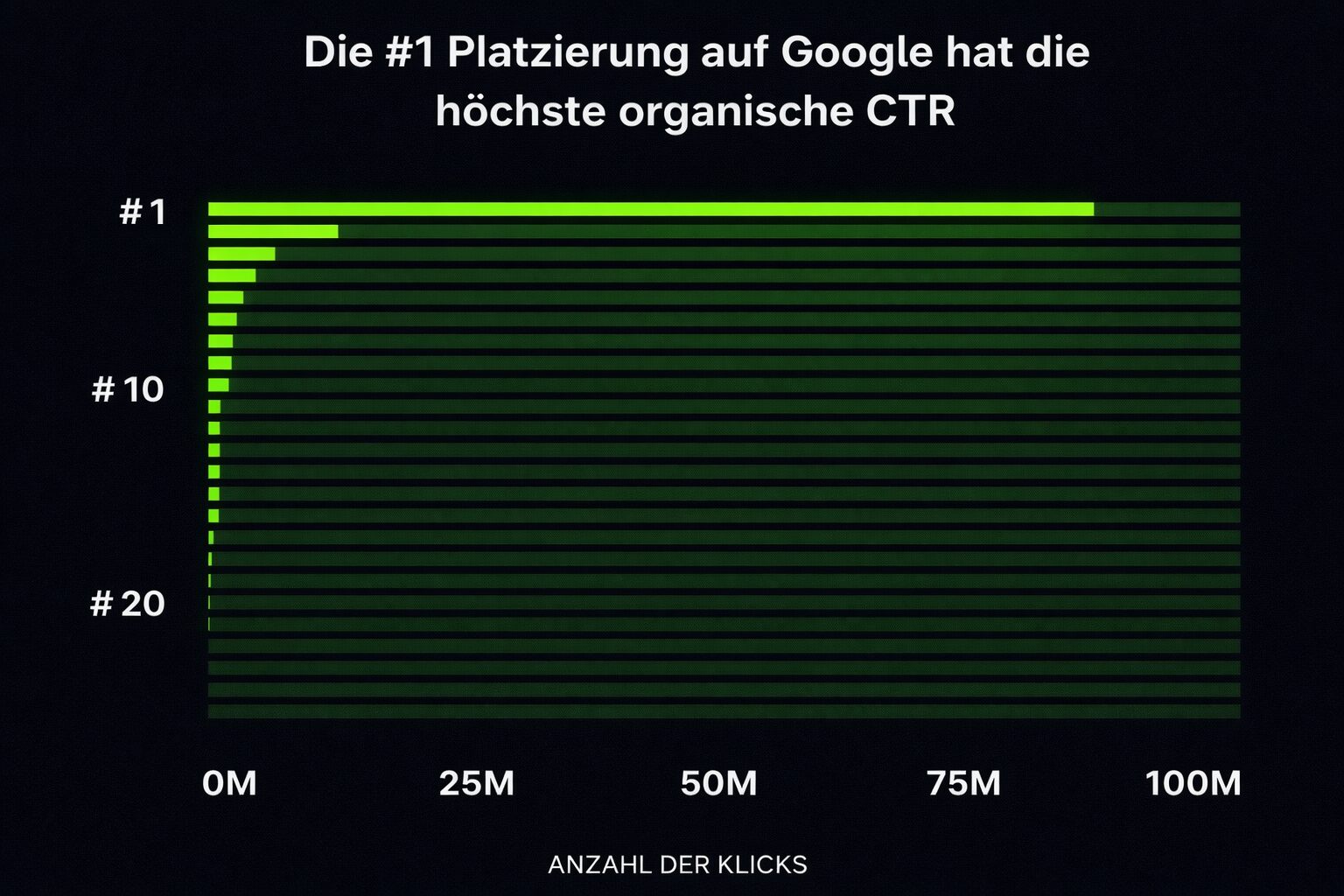
Google wants to show results that are useful and trustworthy. That is why authority, often expressed through backlinks and brand signals, helps you win competitive terms. The reality is simple: clicks concentrate at the top, and authority helps you get there.
The number 1 organic result receives 27.6 % of all clicks on average. (Backlinko)
What authority means off-page
- Domain authority: the depth and quality of the links to your entire website over time.
- Page authority and relevance: links to the specific page, topical fit and natural anchor texts.
- Brand authority: consistent brand mentions (linked or unlinked), press features, knowledge graph and entity matching, reviews. These help search engines understand who to trust, not just what the page says.
How Google assesses E-E-A-T
E-E-A-T, experience, expertise, authoritativeness, trust, is the lens through which quality raters judge whether results look reliable and useful. It is not a single ranking factor, but it shapes what “high quality” looks like in search.
Show E-E-A-T with: original insights and data, expert bylines and bios, real-world evidence (case studies, certifications), clear source attributions and citations, and coverage by reputable publications.
Are backlinks still number 1 in 2025?
Links are not the only lever, but they remain a strong predictive signal in competitive SERPs. Industry analyses keep finding a correlation between authoritative link profiles and higher rankings (bearing in mind that correlation does not equal causation).
At the same time, Google has said publicly that very few links are needed to rank pages today compared with the past, so quality and relevance beat pure volume.
Types of backlinks
Not all links are equal. Natural editorial links carry more weight than self-created links, and relevance beats pure volume. Go for context-rich links from websites your customers already trust.
You will see three broad categories:
- Natural editorial links: earned because your content was worth citing.
- Manual/outreach links: guest posts, expert quotes, partnerships.
- Self-created links: directories, profiles and comments, to be used sparingly and with care.
Pay attention to quality criteria: topical relevance, domain and page authority, link placement (in the content beats the footer), naturalness of anchor texts and the outbound link hygiene of the page.
Only 3 % of B2B content receives backlinks from more than one website, so content worth citing is rare. (Backlinko)
1) Natural editorial links
These are unsolicited mentions you receive because your content is genuinely worth citing. They typically come from news portals, industry blogs, research round-ups, university resources or niche newsletters. Because an editor chose your page to improve their article, they send strong topical and editorial signals, plus real readers. To earn more of them, publish original data, useful tools, clear visual explanations, contrarian insights or citable frameworks.
2) Manual/outreach links
Here you start the relationship, but an editor still decides whether you fit. Think guest posts, expert quotes (HARO style), partner pages, resource lists, podcasts or community publications. Keep pitches highly relevant, use anchors that fit naturally into the sentence, label sponsorship where necessary, and prioritise publications your target group already trusts.
3) Self-created links
These are links you place yourself, directories, business profiles, social bios, forum and Reddit comments or press distribution services, without editorial control. They help with local SEO citations (consistent NAP in reputable directories) and basic brand visibility across social platforms and marketplaces, but on their own they rarely pass much value. Too many of them can look spammy and backfire; avoid PBNs, mass commenting and site-wide footer links, and treat them as hygiene rather than a growth engine.
| Aspect | Natural editorial | Manual / outreach | Self-created |
|---|---|---|---|
| What it is | Unsolicited links, earned because the content is worth citing | Proactively acquired links with editorial review | Links you place yourself; no editorial control |
| Typical sources | News, industry blogs, research round-ups, university resources, niche newsletters | Guest posts, expert quotes (HARO), partner pages, resource lists, podcasts, community zines | Directories, business profiles, social bios, forums and Reddit, press distribution services |
| Why it works | An editorial team chose your page, so strong topical and editorial signals; real readers | Editorially reviewed; increases topical relevance and brand visibility | Coverage and NAP consistency; light trust signals; limited equity |
| How to earn them | Original data, useful tools, visual explanations, contrarian takes, citable frameworks | Pitch relevant angles, use natural anchors, label sponsorship, target suitable publications | Complete reputable directories, ensure NAP consistency, set up core profiles and marketplaces; use sparingly |
| Best suited for | Building authority; passive, compounding citations | Targeted visibility, referral traffic, topical relevance | Local citations; basic brand visibility |
| Risks / notes | Quality depends on the asset; generally safe | Over-optimised anchors or mislabelled paid links can do harm | Easy to overdo; low value in bulk; avoid PBNs, mass commenting, site-wide footers |
How to assess link quality
Quality depends on relevance, authority and context. Prioritise topical fit at page level, placement within the content (which beats sidebars and footers), trustworthy publications with real readers, and anchors that fit naturally into the sentence. Also check the “neighbourhood”: curated outbound links, no spammy co-links, and a link that is actually crawlable and indexable.
About rel attributes
“Nofollow/ugc/sponsored” are not automatically “bad”. Highly visible references (major media, large communities, Wikipedia-style resources) still strengthen brand and entity signals and can send qualified traffic, even when they pass no traditional equity.
Pro tip: run regular link audits to find and recover broken or lost backlinks; a few high-quality recoveries often beat chasing brand new low-value placements.
Effective link building strategies
Win by being genuinely worth citing, and by combining that with smart promotion. Linkable assets plus digital PR plus targeted outreach equals durable links. Concentrate on assets that people like to cite and on stories that journalists like to pick up.
In March 2025, 18 % of all Google searches triggered an AI Overview, another reason to earn highly authoritative citations that AI tools and journalists refer to. (Search Engine Land)
| Strategy | Purpose | Quick implementation | Best for |
|---|---|---|---|
| Linkable assets | Create reference content that people cite naturally | Original data and benchmarks; calculators, visuals, glossaries; refresh and re-promote | Evergreen authority and passive links |
| Digital PR | Earn newsworthy coverage from trusted media | Data-driven angles; expert quotes; targeted journalist pitching | Highly authoritative links and brand searches |
| Targeted outreach | Secure editorial placements where your target group reads | Guest posts; expert commentary and round-ups; natural anchors that fit the sentence | Topical relevance and referral traffic |
| Broken link building | Replace dead resources with a better alternative | Find 404 targets; build a superior replacement; send fix emails | Mature niches with legacy content |
| Resource pages and round-ups | Get listed on curated “best of” or monthly lists | Identify relevant hubs; pitch gap-filling assets; supply a short text plus link | Contextual in-content links |
| Testimonials and partner pages | Use real relationships for credible mentions | Offer short testimonials; co-create case studies; ask for listings | High-trust, brand-safe links |
| Competitor reverse engineering | Replicate the best topical link sources | Analyse top SERP competitors; cluster by topic; prioritise high fit | Faster discovery of proven sources |
| High-quality directories (selective) | Build trust and citations, especially locally | Complete core listings by industry and location; ensure NAP consistency | Local SEO and baseline trust |
Linkable assets
Build “reference content” that people genuinely cite: original studies and benchmarks, short data visualisations, calculators, glossaries and practical frameworks. Publish it, seed it through outreach and update it so that it keeps earning citations over time.
Digital PR
Package newsworthy angles (fresh data, trends by region or industry, expert opinions) and pitch journalists and niche editorial teams. The goal is coverage in trustworthy publications that brings readers now and strengthens E-E-A-T in the long run.
Targeted outreach
Guest posts and expert quotes still work, when the placement is editorial and relevant. Keep anchors natural (write for people, not for keywords) and follow Google’s guidelines on labelling paid and sponsored placements with the appropriate rel attributes.
Broken link building
Find dead resources with backlinks, create a clearly better replacement, then notify publishers with a short “spotted a broken link, here is a solution” note. Tools such as Semrush Backlink Analytics make finding broken opportunities easy.
Resource pages and round-ups
Many websites in slower niches still maintain “best resources” lists or monthly round-ups. If your asset genuinely closes a gap, these pages can deliver highly targeted in-content links.
Testimonials and partner pages
Offer concise testimonials for vendors you actually use, or co-create case studies with customers and suppliers. These are credible, brand-safe links that often sit on pages with high trust.
Competitor reverse engineering
Map what already works in your SERP by analysing the links of the top competitors, then pursue the best topical categories (not every domain). Prioritise relevance and likely referral traffic.
High-quality directories (selective)
For local SEO and trust signals, complete the handful of reputable directories and industry registers (with consistent NAP). Avoid mass web catalogues.
Stay safe (and effective)
- Avoid link schemes. Buying or renting links purely to pass PageRank violates Google’s guidelines; if an advertisement or sponsorship contains a link, mark it with rel=”sponsored” (or nofollow, where appropriate).
- Do not over-optimise anchors. Natural anchors that fit the sentence beat exact repetition; Google’s own starter guide emphasises clear, human anchor text.
How link distribution works
Do not pour all your links onto the home page. Distribute authority across the product, category and educational pages that actually rank and convert.
Keep anchor texts natural. Prioritise relevance. Build deep links to your “money” and “supporting” pages.
Practical tips inspired by SISTRIX and evergreen practice:
- Map the targets first: pillar guides, commercial pages, key categories.
- Deep links count: earn links to the specific pages that are supposed to rank, not just to the root domain.
- Anchor diversity: use brand, URL and topical anchors; avoid overusing exact matches so that things stay natural.
- Sustainability: expect some link churn; publish and promote continuously so that new links replace lost ones.
When AI Overviews appear, MailOnline reported that desktop CTR fell from around 13 % to under 5 % and mobile CTR from around 20 % to 7 %, so occupying several blue link and news/PR surfaces helps you win clicks back. (Search Engine Land)
Tools for analysing backlinks
Use first-class crawlers to see what Google might see, and to find opportunities competitors have missed.
Two platforms dominate day-to-day link analysis: Ahrefs and Semrush.
- Ahrefs Site Explorer: a huge live index, excellent analysis of referring domains and anchors, plus strong competitive diffing.
- Semrush Backlink Analytics plus Link Building Tool: prospecting, outreach management and toxicity checks in one place.
The Ahrefs live backlink index lists around 35.0 trillion external backlinks and is updated every 15 to 30 minutes. That scale is why many SEOs trust it for link discovery. (Ahrefs)
Identifying harmful backlinks
Bad links do damage twice over: they waste crawl budget and they can push trust down. Your job is to avoid patterns that look manipulative.
Warning signs: irrelevant websites, thin content, spammy outbound link patterns and over-optimised anchors.
What to do:
- Audit regularly with Ahrefs/Semrush: watch for sudden spikes, site-wide links, unusual TLDs and anchors that do not match your brand.
- Check the page’s OBL (outbound links): if a publisher links to casinos, adult sites or obvious paid content, steer clear.
- Maintain a disavow list for genuinely toxic, obviously manipulative links, when cleanup or removal fails.
In a Search Engine Land survey, 89 % of link builders avoid websites with spammy outbound links, and 86.3 % flag low-quality content as a major risk signal. (Search Engine Land)
Why link farms are risky
They create artificial patterns (interconnected networks, identical anchors) that are easy to spot. The short-term gain is not worth the long-term risk of algorithmic devaluation, or worse, manual actions. (SISTRIX points to Google’s broader view: links are one of many signals, so manipulative patterns stand out.)
Are nofollow links helpful?
They are not harmful. Nofollow simply means “do not pass equity”. In the real world, a natural profile includes a mixture of follow, nofollow, UGC and sponsored links, above all from large platforms and media. Nofollow links can still send referral traffic and support brand visibility, which indirectly helps rankings and even AI visibility.
Ready for more revenue?
Book a free SEO and GEO audit

Find out in a free call how much revenue your website is leaving on the table, with no obligation and no agency waffle.