

Everything at a glance
- Use both SEO and GEO: to reach users in search engines and in AI assistants.
- Structure content smartly: with clear headings, lists and source references for AI extraction and better readability.
- Measure the right metrics: clicks and rankings for SEO, citation frequency and AI impressions for GEO.
- Use complementary tools: to streamline your processes and cover every area of optimisation.
- Watch quality and compliance: to maintain trust in both traditional and AI-driven channels.
Curious why some content still generates clicks while other insights show up instantly in your AI chat? You are not alone. Mastering SEO and GEO feels like speaking two different dialects: one for search engines, one for generative assistants.
According to BrightEdge, 68% of companies are already shaping their strategies around AI-powered search, and that figure keeps rising.
In this comprehensive guide you will learn exactly how SEO and GEO differ, when to focus on traditional ranking tactics and how to create content that AI assistants deliver as the answer.
How GEO and SEO work
SEO optimises websites for classic search engine rankings. It uses keywords, backlinks, technical performance and structured data.
GEO prepares content for AI assistants. It uses precise prompts, semantic embeddings and extended metadata. Search has moved beyond blue links: AI assistants deliver answers instantly, while search engines list pages by ranking. To stay genuinely visible, you need both.
The evolution of search: from keywords to generative engines
Search began with simple keyword matching: you type a search term into Google, scan the blue links and then click a page. Back then you optimised title tags, sprinkled in keywords and collected backlinks to climb the rankings.
As AI matured, search transformed. Engines such as ChatGPT, Google’s Search Generative Experience (SGE) and Microsoft’s Copilot now process entire articles.
They then extract the most relevant facts and assemble them into concise, conversational answers, with no click required.
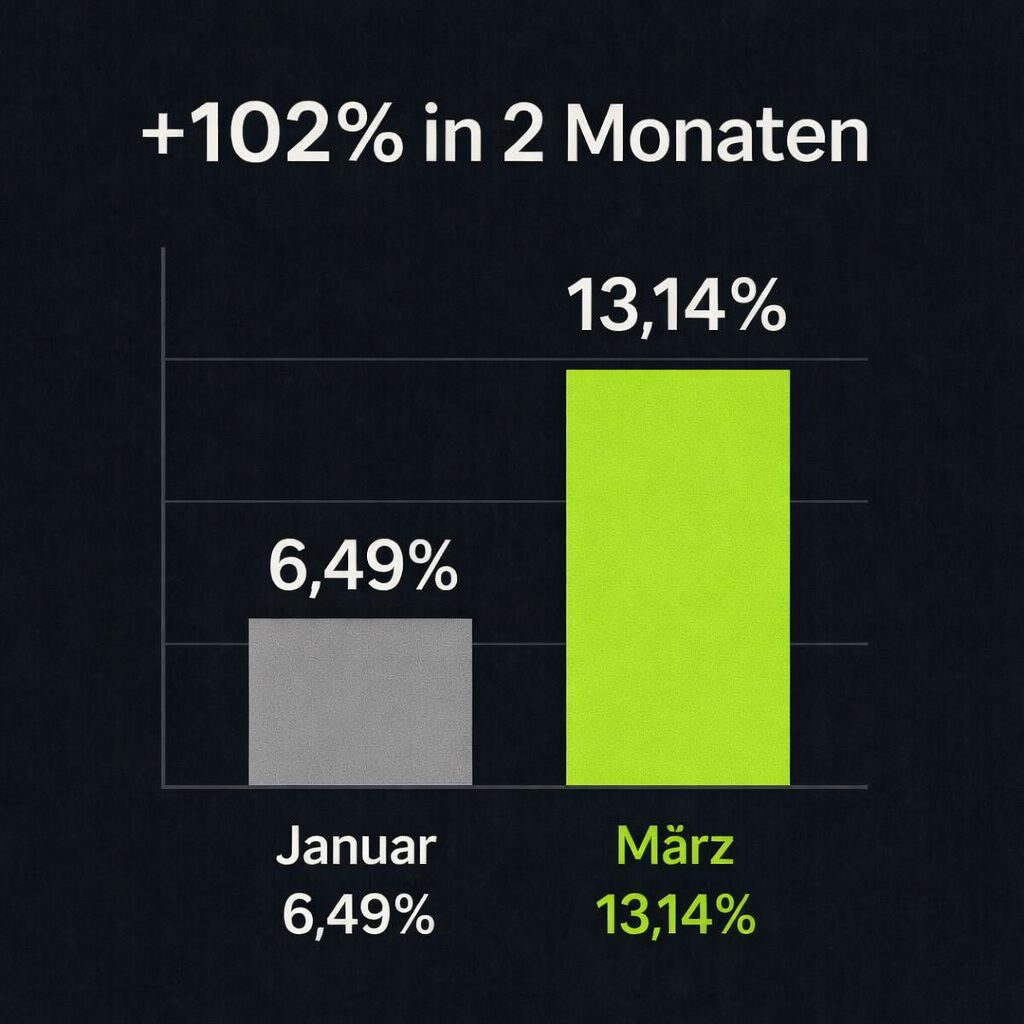
In March 2025, Google’s AI Overviews appeared in 13.14% of all desktop searches in the US. That is up from just 6.49% in January, a rise of 102% in two months (Search Engine Land).
Imagine typing “GEO vs. SEO” into an AI-powered search. Instead of a list of articles you immediately see:
“Generative Engine Optimisation (GEO) focuses on structuring content so that AI assistants can cite it directly, while SEO targets traditional search placements through keywords and backlinks.”
This crisp answer draws on several sources, perhaps even your own blog post, and gives you the quick insight you need without leaving the chat interface.
Why companies should master both GEO and SEO
Companies juggle web traffic goals and AI visibility. SEO still delivers clicks, brand awareness and long-term authority on Google and Bing.
GEO makes sure your content appears in AI-generated answers and keeps you in the spotlight in voice assistants and chat interfaces. Master both and you cover every route users take to look for information.
Many people rightly ask today whether SEO is already dead and where classic search engine optimisation is heading at all, tending away from page after page of forced link building towards more digital PR and brand marketing, while the influence of AI grows rapidly at the same time.
Should SEO one day actually disappear in its current form, GEO will not merely take over, it will become the new SEO.
One thing stays unchanged, though: as long as people search for something, that something can be optimised.
What are SEO and GEO?
SEO (search engine optimisation) optimises web pages so they are listed better in classic search engines.
GEO (generative engine optimisation) optimises content specifically for AI assistants in order to deliver direct answers.
Before you compare SEO and GEO, work out what drives each of them: SEO climbs the rankings to generate clicks, while GEO supplies AI assistants with clear, compact answers. Understanding these basics is the first step towards choosing the right visibility strategy.
SEO by definition
SEO is the practice of improving your ranking in search engines such as Google and Bing by adapting content and technical implementation to algorithm signals. The goal is higher visibility in the search results in order to generate organic traffic.
Effective SEO combines content, links and technical fundamentals. By researching user intent, building trustworthy backlinks and ensuring a fast, crawler-friendly site, SEO creates a sustainable online presence.
- Keyword research and optimisation: find the terms your target group uses, such as “best SEO conferences”, and integrate them naturally into titles, headings and body text. That way search engines understand your topic and show you for relevant queries.
- Content quality and backlink strategy: high-quality content answers user questions comprehensively and keeps readers engaged. Backlinks from reputable sites act as proof of trust and strengthen your authority and your ranking.
- Technical SEO fundamentals: optimise loading time, mobile usability and crawlability. Use XML sitemaps, clear URL structures and schema markup so search engines can find and index your pages without errors.
GEO by definition
GEO optimises content for AI-based search tools such as ChatGPT, Bard, Perplexity and Google AI Overviews, so that your insights appear in their generated answers.
Generative engines are based on large language models (LLMs) and real-time retrieval APIs. They search web content to extract facts and assemble answers conversationally, frequently with a source reference.
GEO relies on clarity, authority and structure so that AI systems can take in your content effortlessly and trust it.
- Structuring AI-friendly content: use clear headings, bullet lists and concise paragraphs. AI can break these down into answer snippets better than long blocks of prose.
- Citation and authority signals: add links and references to reputable sources, such as specialist articles, industry reports or well-known publications, to increase trustworthiness when AI makes its selection.
- Statistical and contextual integration: build current statistics directly into your text. AI engines look for concrete data to underpin answers, so place figures in context to make them stand out for extraction.
Key differences between GEO and SEO
Although both aim at visibility, they differ in platforms, workflows and metrics.
| Aspect | SEO | GEO |
|---|---|---|
| Definition and purpose | Improve the visibility of your website and its ranking in traditional search engines in order to generate organic traffic. | Optimise content for inclusion and accuracy in AI-generated answers, so your insights are cited directly. |
| Target platforms | Traditional search engines such as Google, Bing, Yahoo. | AI-based generative engines such as ChatGPT, Google’s SGE, Perplexity and BingChat. |
| Ranking method | Algorithmic ranking based on factors such as keywords, backlinks and user signals. | AI extraction and synthesis: models select relevant snippets from well-structured content and combine them. |
| Focus of optimisation | Keywords, backlinks, content quality and technical SEO (loading time, mobile friendliness). | Clear structure (headings, lists), authority signals (source references) and concise factual statements. |
| Key metrics | Organic traffic, keyword rankings, click-through rate, backlink quality, bounce rate, time on page. | Inclusion in AI answers, answer accuracy, citation frequency and share of generative summaries. |
| Content focus | In-depth, keyword-rich articles matched to search intent that encourage page visits. | Direct, manageable answers and concise fact snippets that AI can extract and present conversationally. |
| User behaviour | Users click search results in order to visit websites. | Users consume information directly in AI-generated answers, often without clicking. |
| Traffic source | Organic visits via search engine results pages (SERPs). | Citations and snippets that appear in AI assistant output. |
| Update frequency | Driven by regular algorithm updates. | Evolves with continuous model training and real-time data integration. |
Target platforms and user interactions
SEO still lives on the classic search results page. You type “best pizza near me” into Google, look at the top entries, click them and explore a website.
That journey, seeing a ranked list, choosing a link and diving deeper, is pure SEO in action: you optimise for clicks on search engine results pages (SERPs).
GEO flips that script. Instead of sending you to a website, it delivers the answer exactly where you ask.
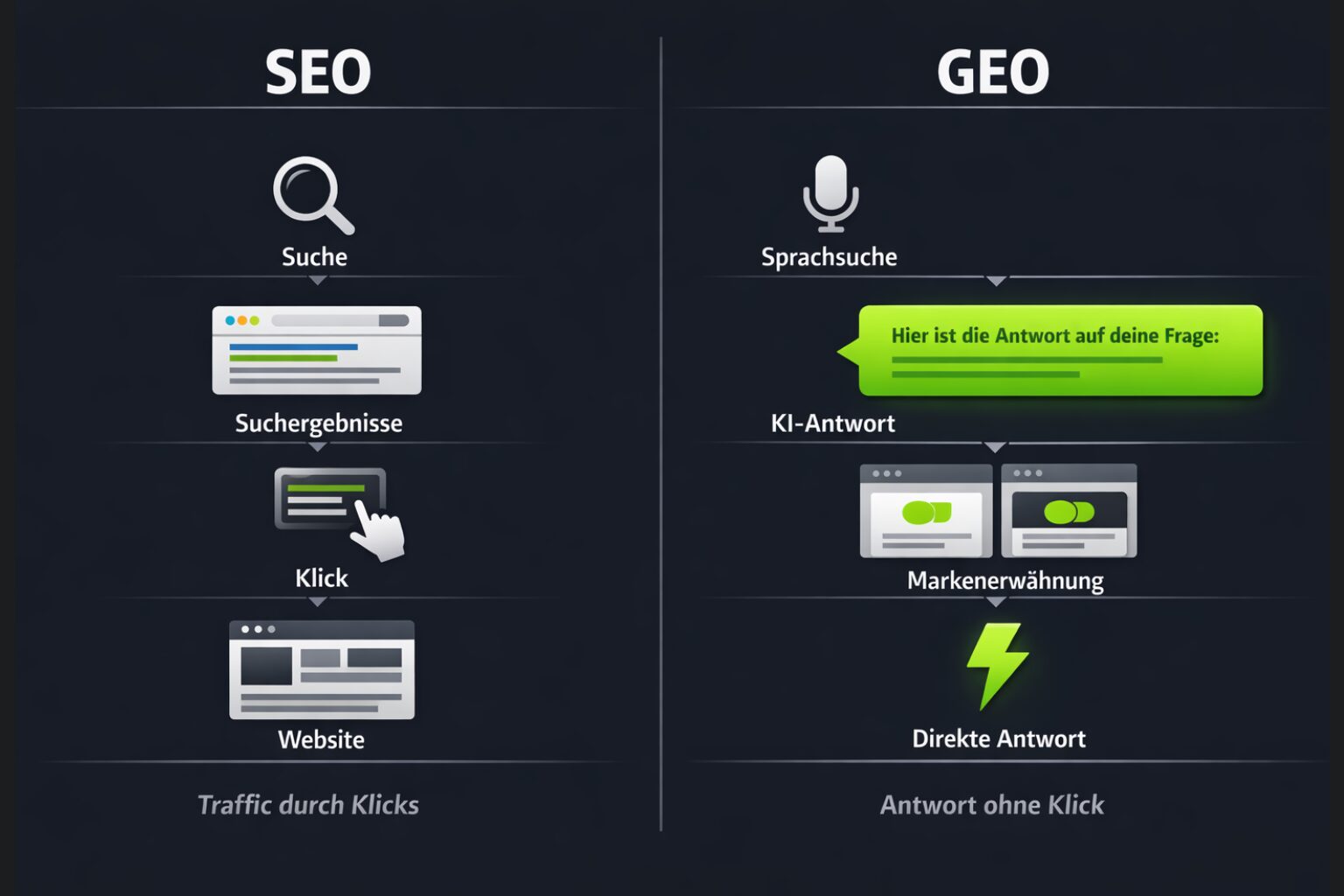
Imagine standing in the kitchen and asking your smart speaker: “Hey Google, what is the difference between SEO and GEO?” You immediately get a concise, conversational summary from several sources, with no SERP and no click.
This zero-click moment is powerful: users get answers faster and your brand becomes the answer itself.
And this is not just a gimmick, voice and AI-powered searches are booming. Worldwide, 32% of consumers used a voice assistant in the past week to find information. (GWI)
Content creation and structural priorities
SEO content reads like a rich, in-depth article: it weaves target keywords into engaging narratives, creates context with internal and external backlinks and uses subheadings to guide both readers and search engine crawlers.
Every paragraph is designed to encourage people to keep reading, think of a well-researched whitepaper that invites exploration and conveys authority through links.
GEO content, by contrast, is built for lightning-fast AI parsing. It consists of bite-sized pieces: clear headings, short bullet lists and self-contained factual sentences.
Every sentence is a potential snippet that an AI can lift out and build into its answer. Citations or source references sit right next to the facts and give AI models the confidence to cite your content without any doubt.
Example:
- SEO style: a 1,200-word blog post on “local SEO tips” that explains best practices, includes case study links and ends with a call to action to read on.
- GEO style: a single page with the heading “local SEO tips”, followed by a list:
- “Optimise your Google Business Profile (update opening hours and categories).”
- “Use consistent NAP (name, address, phone) across all directories.”
- “Win local backlinks from community sites.” (Source: Local Search Association)
This structured, list-oriented layout makes it effortless for AI assistants to extract your core statements verbatim and serve them, with no click required.
Measuring success and KPIs
SEO and GEO call for completely different yardsticks. With SEO you watch the usual suspects in Google Analytics, clicks, impressions, click-through rate, bounce rate and time on page, to see how well your pages attract and hold readers.
The benchmark for GEO looks entirely different. You measure how often AI assistants include your content in their answers (citation frequency), what share your brand has in generative summaries and even engagement signals such as follow-up questions or prompts that lead to deeper interaction.
Example:
- SEO KPI: a 15% increase in organic sessions month on month.
- GEO KPI: your article was cited in 120 AI-generated answers in ChatGPT over the past 30 days.
And here is a sense of how fast this channel is growing: according to Ahrefs, AI-powered tools generated only 0.1% of all referral traffic in early 2025, a figure almost 10 times higher than in 2024.
Technical requirements and tools
SEO relies on proven tools such as Ahrefs, SEMrush and Google Search Console. You log in to run site audits, track keyword rankings and monitor crawl errors, much like checking the dashboard before a long drive. These tools give you the data you need to optimise on-page adjustments and technical fixes.
GEO relies on AI-centric platforms. ChatGPT becomes your control centre for testing prompts and refining answer quality.
HubSpot AI Search Grader rates how AI-friendly your content is, while tools such as SEO.ai help you measure generative performance against competitors.
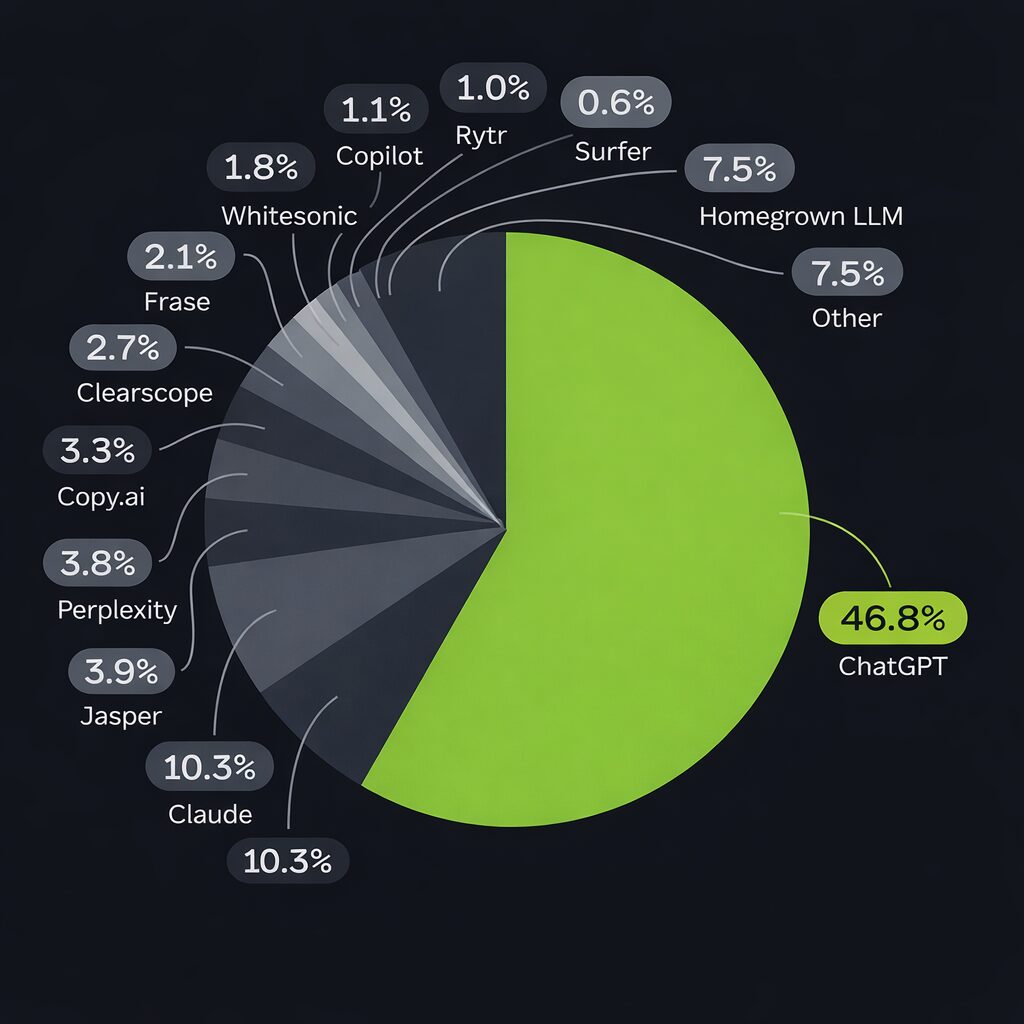
In fact, an Ahrefs survey found that content marketers draw on 94 different AI tools, with ChatGPT accounting for 44% of usage, proof of how varied the AI toolbox has become.
It is crucial that your team becomes familiar with this broad AI stack if you want AI assistants to include your content in their answers.
Ready for more revenue?
Book a free SEO and GEO audit

Find out in a free call how much revenue your website is leaving on the table, with no obligation and no agency waffle.