


Everything at a glance
- Online PR earns you credible mentions and editorial links that lift search performance, build brand trust and help your story appear in classic results and in AI summaries.
- Use high-impact formats that compound over time: original studies, fast expert commentary, specialist thought leadership and unique data stories, created once and reused across channels.
- Run PR and SEO as one plan: shared KPIs, keyword-validated topics, deliberate link targets on the pages that are meant to rank, and synchronised launch timings.
- Cover the right channels in an orchestrated way: press portals plus a strong newsroom, trade media, creators and social, and owned content, combined with paid, owned and earned for maximum reach.
- Measure what counts and reduce waste: track share of voice, link quality, ranking gains, brand and referral traffic and conversions, and avoid generic pitches, unoptimised PR pages and aimless targeting.
Attention is scarce. Trust is scarcer. Online PR earns you both, right where your buyers already read, share and search.
It is not about blasting out a press release. It is about earning credible mentions, quotes and links on respected sites, and channelling that authority to the pages that are meant to rank.
When you run online PR consistently, three things happen: your brand appears more often, your best pages climb, and your story starts to shape the conversation (including AI summaries).
Here is the easy-to-follow guide to what online PR is, how it works and how to do it without wasting time or budget.
Definition: what does online PR mean today?
Online PR means doing press and public relations work in digital spaces, on media sites, blogs, newsletters, social platforms and forums, and connecting that activity to search performance. It is interactive, measurable and built to spread across the web.
You use stories, data and expert commentary to earn mentions and links on third-party sites, then direct that attention to pages on your own domain.
This differs from classic PR, which relies on slower cycles and offline formats; online PR runs continuously and shows results in your analytics.
To be clear from the start: online PR and search engine optimisation belong together. Evergreen Media defines digital PR as internet-based public relations that strengthens reputation and increases awareness, closely linked to SEO because high-quality publications can link to your site and lift rankings. OMR puts it just as plainly: online PR distributes company news via online portals and media, shapes the brand image and supports visibility.
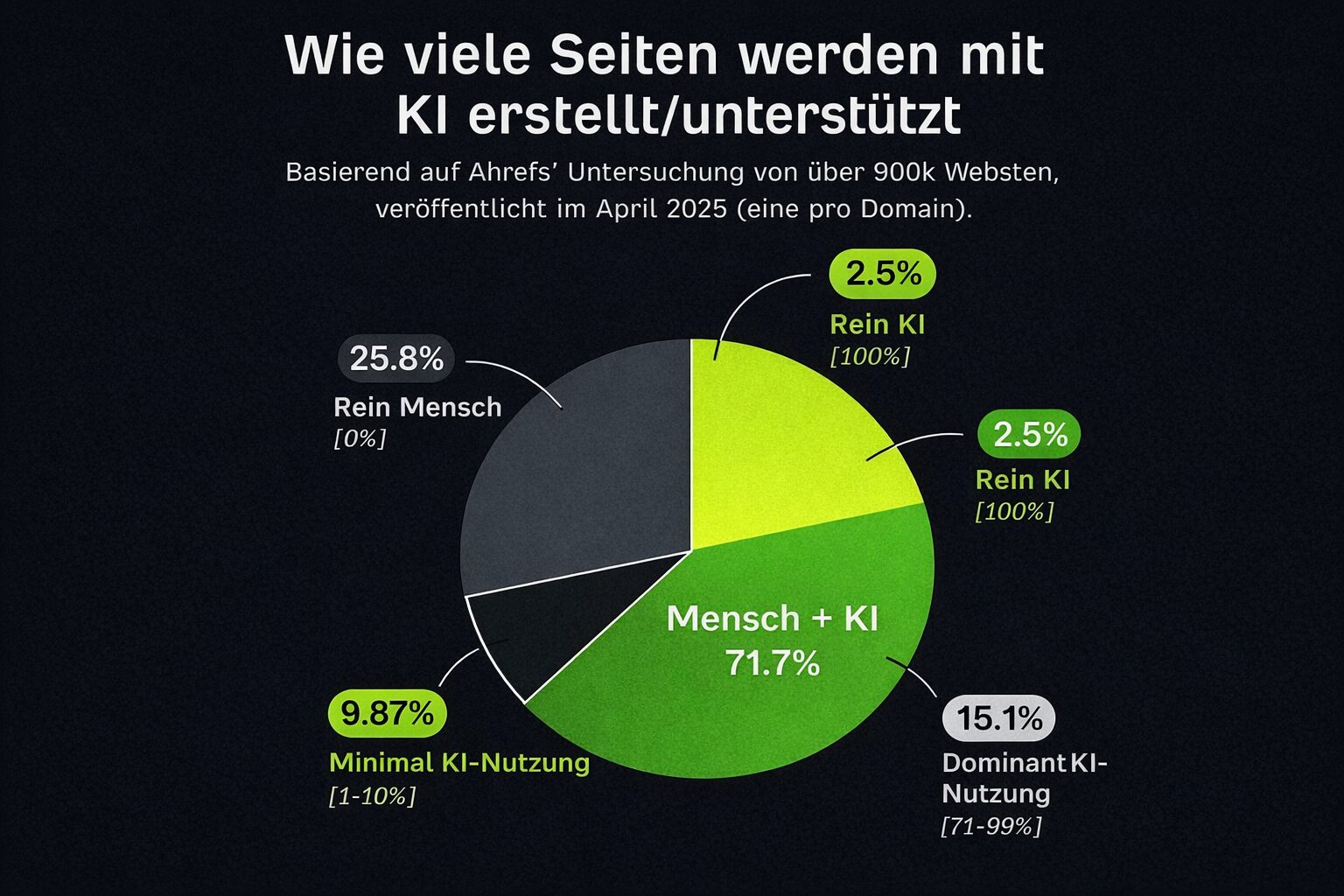
Why focus on earned coverage now? Because the web is flooded with content. Research by Ahrefs in 2025 found that 74.2 % of new web pages contain AI-generated text. In an environment like that, citations from trustworthy sources are a genuine differentiator, signals that both people and algorithms value. (Ahrefs)
The shift from classic to digital PR
Classic PR followed editorial calendars. Digital PR runs continuously. Your pitch still needs a hook, but today it comes with an optimised landing page, embeddable assets (charts, quotes, images) and simple measurement: quality of coverage, links won, referral traffic and ranking gains.
Online PR vs content marketing vs SEO
Content marketing builds the asset on your site. SEO makes sure people find it. Online PR gets other people to talk about it, and to link to it. The strongest programmes combine all three: create a citable resource, pitch a newsworthy story and structure the page so that it ranks and converts.
Why is online PR important for companies?
Most buying journeys start online. People research, compare and ask around before they ever speak to you. Online PR puts your story into those moments of discovery, on sites your audience already trusts, so that you gain credibility, attention and the kind of links that make a difference in search. It extends reach beyond your own channels and protects your reputation when the conversation shifts quickly.
Online PR works because trust beats advertising. Readers judge independent coverage very differently from self-promotion. When credible media explain your product, quote your experts or cite your data, it feels credible, and it compounds. Those mentions echo in other articles, social posts, newsletters and, increasingly, in AI systems that summarise the web.
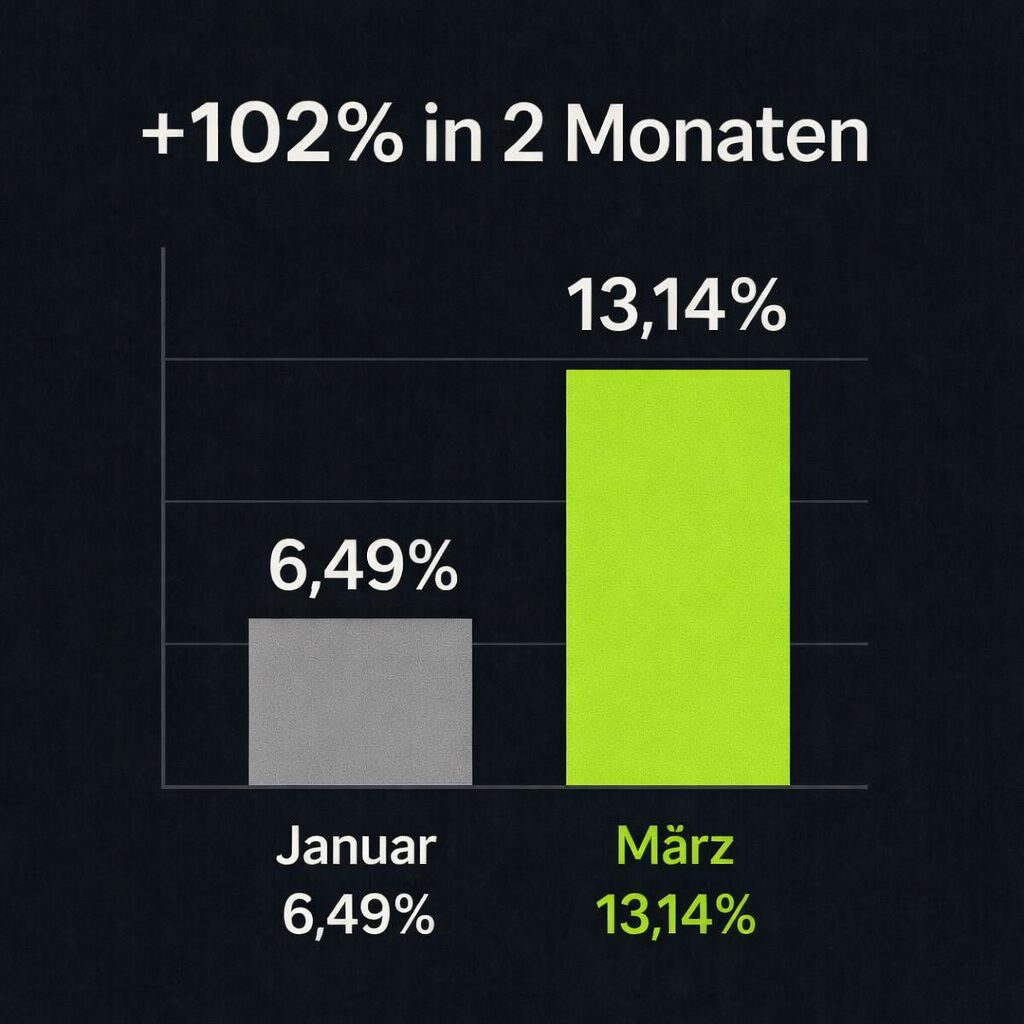
There is also a new surface: Google’s AI Overviews. Semrush tracked more than 10 million keywords and found that AI Overviews appeared on 13.14 % of searches in March 2025, up from 6.49 % in January. If you want your brand to be cited in those summaries, it helps to be referenced by trustworthy sources across the open web. Online PR seeds those citations. (Semrush)
Visibility, authority and trust
Online PR multiplies your presence where it counts: respected magazines, niche blogs, contributor columns and newsletters with a high signal. Every mention is third-party proof. Stack up enough of them and your brand becomes familiar, because people have “seen you before”, and search engines can substantiate that authority through consistent references and links.
Brand image and reputation management
News moves fast. You need a steady rhythm of clear, helpful updates that others can refer to: short press notes, expert quotes on current topics, interviews and explanatory pieces that answer real questions. Online PR gives you the cadence and the channels to steer the narrative, correct inaccuracies and hold your positioning when the spotlight arrives.
Synergies with SEO and link building
Strong stories attract journalists and earn natural links. Strong SEO makes sure those links pay off. Treat online PR and SEO as one plan: publish a citable resource on your site, pitch an angle that editorial teams genuinely want, and route the resulting coverage to the page that is meant to rank and convert.
Why this matters in the age of AI
Generative assistants and AI summaries favour sources with a reliable history. Brands that appear in respected media are more likely to be referenced when assistants answer top-of-funnel questions. In practice this means the same earned coverage that strengthens trust with people also raises the chance that your name and your ideas show up in AI answers, even when there is no explicit link to click.
Goals of an online PR strategy
Every campaign should be tied to measurable goals, not just “get coverage”. In practice you pursue three outcomes and measure them like KPIs, not like wishes.
Increase brand awareness
Aim for repeated presence in relevant publications and newsletters so that your name rings a bell before sales makes contact. Measure assisted conversions and branded search demand, not just raw impressions.
Build backlinks for SEO
You do not collect links for their own sake, you earn them because your story is genuinely useful or newsworthy. Target the pages on your website that deserve authority (original data, definitive guides, case studies) and align your pitch with those assets.
Influence online conversations
Claim the definition, the benchmark or the “how to” in your field with data or expertise. When editorial teams and creators adopt your wording or cite your study, you shape the market narrative.
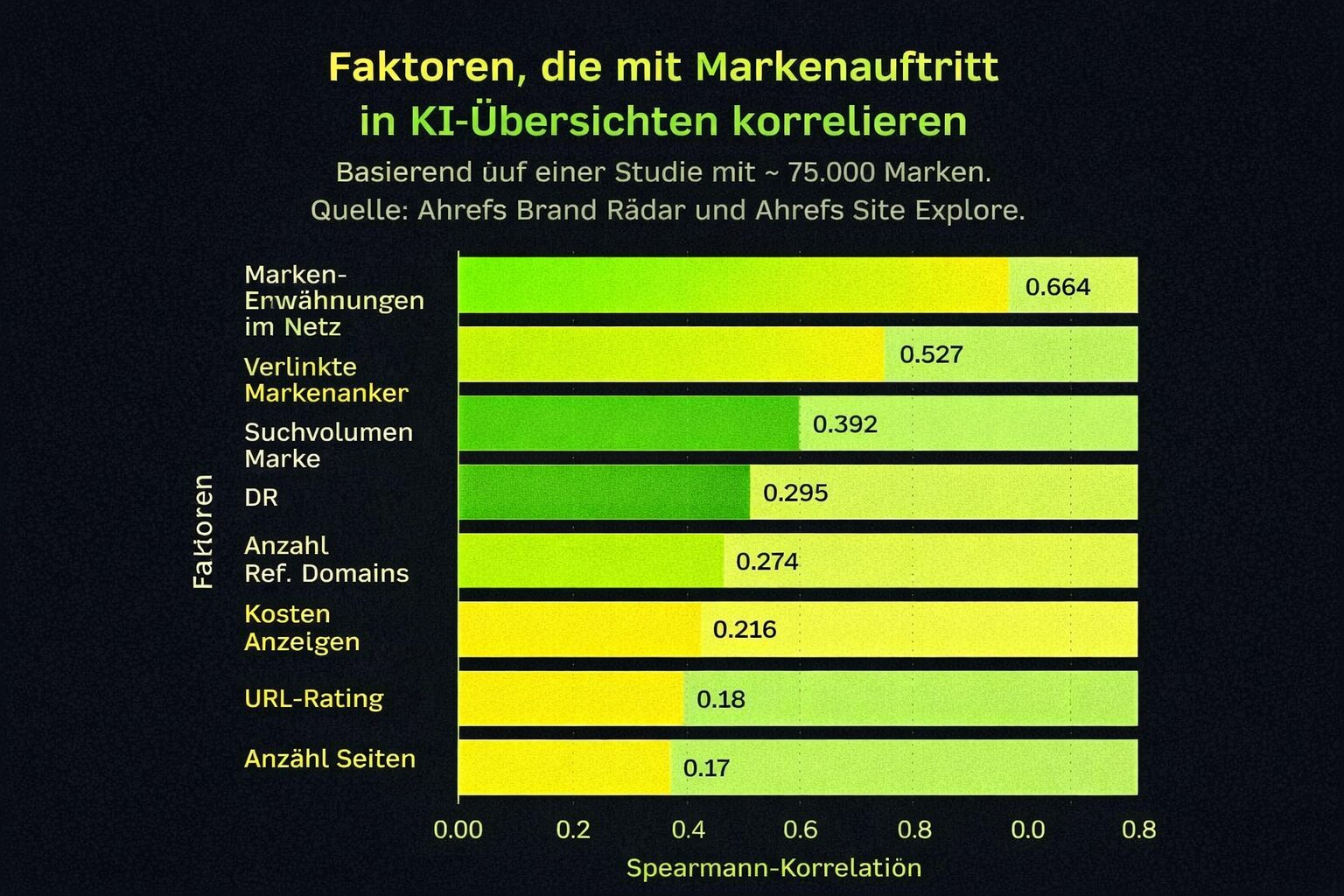
One pattern stands out in 2025: brand mentions across the web show the strongest correlation (0.664) with visibility in Google’s AI Overviews, stronger than backlinks or domain metrics. Put differently: the more people talk about you credibly on the web, the more likely you are to appear in AI summaries. (Ahrefs)
Tools and channels in online PR
A good mix uses earned, owned and shared channels. You publish strong resources on your site, pitch targeted stories to journalists and contributors, and amplify sensibly through press portals and creators. The goal is broad, credible distribution, so that your brand appears where your buyers already place their trust.
Press portals and newsrooms
Digital press portals (for example openPR, PR Newswire, ots) distribute announcements to editorial teams and topic pages. Use them as an amplifier, not as the entire plan. Combine them with a well-maintained newsroom on your site, holding press contacts, bios, approved images, logos and current facts.
Trade publications
Trade media, often with precise, high-value audiences, are ideal for in-depth pieces. Guest articles, interviews and expert statements position you as a specialist and often bring the most relevant referral traffic.
Thought leadership in your field
Continuous insight, on LinkedIn, as a podcast guest or through contributor columns, builds signal over time. Short, citable assessments of current topics make it easy for journalists to reference your expertise.
Original studies and research
Nothing attracts attention (and links) like exclusive data. Run surveys, analyse usage patterns or publish market benchmarks. Package the results with clear charts, a transparent method and citable numbers. Good research can generate mentions for months or years.
Social media and influencer partnerships
Social is not only a marketing channel; it is a PR tool. It surfaces your point of view quickly, lets you respond to questions or crises, and can trigger coverage when creators or micro-influencers in your niche amplify your story.
Journalist outreach and media databases
Build small, relevant lists around an author’s beat and their recent work. Send assets that make an editor’s job easier: a one-pager, embeddable charts, image rights and a clean URL.
Owned media (blogs, newsletters, landing pages)
Host the full story on your site: the data, the quotes, the visuals, the “why it matters”. Internal links should direct attention to the right product or service pages so that coverage turns into pipeline.
Fragmented citation patterns make this mix essential. Ahrefs found that only 14 % of the top 50 cited sources appear in ChatGPT, Perplexity and Google’s AI at the same time, so coverage on one surface rarely reaches all of them. Broader distribution and monitoring matter. (Ahrefs)
| Channel | Purpose and value | Typical uses and examples | Practical tips |
|---|---|---|---|
| Press portals and newsrooms | Increase reach, bundle information for the media | openPR, PR Newswire, ots; your own newsroom with contacts, bios, assets | Use portals as an amplifier, not as the sole strategy; keep the newsroom current |
| Trade publications | Depth and relevance for niche audiences | Guest articles, interviews, expert statements | Focus on publications that truly fit; quality before quantity |
| Thought leadership | Build authority, establish citable positions | LinkedIn, podcasts, contributor columns | Short and citable; publish regularly |
| Original studies and research | Attention and links through exclusive data | Surveys, usage analyses, market benchmarks | Clear charts, transparent method, citable numbers |
| Social media and influencer partnerships | Speed, dialogue, spikes in reach | Creator and micro-influencer partnerships, fast responses | Think of it as a PR lever, not only a marketing channel |
| Journalist outreach and media databases | Precise placements instead of scattergun waste | Curated lists, personalised pitches, one-pagers | Supply assets (charts, image rights, a clean URL); keep lists small and relevant |
| Owned media (blogs, newsletters, landing pages) | Host the whole story and convert | Complete data, quotes, visuals, “why it matters” | Internal links to matching product and service pages for pipeline impact |
High-impact digital PR formats
The best digital PR is not a one-off. You create a strong core and use it across channels, so that PR, SEO, content and even your newsletter pull in the same direction. Here are the formats that travel well, earn citations and deliver.
Studies and surveys
Original research is your strongest magnet for attention and links. Collect exclusive data on a topic that interests both journalists and your audience, and package it so that it is easy to cite.
Editorial teams love unique numbers. One clear result becomes the headline, one chart becomes the illustration, and your methodology creates trust.
How to build it
- Choose questions with real demand (search queries, sales conversations, support tickets).
- Document your method in plain language (sample size, time frame, sources).
- Visualise the top five to seven insights with simple charts that people can reuse (with credit).
- Write short, citable takeaways underneath each chart.
How to reuse it
- A whitepaper or guide on your site (an SEO asset).
- A press pitch with two or three angles for different outlets.
- Social snippets and carousels for the top charts.
- A webinar or podcast episode to explain the results.
Pro tip
Split one data set into several micro stories. Each angle can drive a focused press note and a tailored pitch list.
Expert commentary (reactive PR)
Speed beats polish. When news breaks, whether rule changes, market shifts or notable launches, publish a short, useful assessment and send it to the right editorial teams; use the same thought as a LinkedIn post, a brief blog update or a short video so that the message travels beyond the first placement.
How to build it
- Draft a comment of three to four sentences that provides context (no hype).
- Offer a practical implication for readers.
- Link to a matching resource on your site for depth.
- Add your name, your role and a direct press contact.
Thought leadership articles
In-depth pieces in recognised trade media build authority and bring qualified clicks; start with the reader’s problem, share frameworks or counterintuitive positions with evidence, publish an extended version on your blog, cut key visuals for social, and add the piece to your newsroom with a short abstract and links.
How to build it
- Start with a clear, pointed idea that helps practitioners do better work.
- Back up your claims with data, examples and screenshots.
- Add one or two diagrams that people will refer back to in future.
Unique data stories from your own systems
You are probably sitting on insights nobody else can publish, such as anonymised trends, usage patterns, seasonality and win/loss reasons. Tell a simple narrative with clear visuals and a transparent method, combine it with a short press note, a founder post on LinkedIn, targeted emails to key reporters and a talk track for sales and webinars, so that the story works across channels.
How to build it
- Look for changes over time, surprising segments or counterintuitive patterns.
- Anonymise and aggregate; explain limitations or possible bias.
- Present four to six charts with clear captions and source credits.
- Provide download links for images and a one-page briefing for the media.
Orchestrate for synergy
- Launch the core asset on your site.
- Offer an exclusive to one top-tier outlet, then roll out niche angles in trade media.
- When related news breaks, publish expert commentary quickly that points to the asset.
- Refresh the most important charts quarterly so that editorial teams keep citing you.
Putting online PR into practice: a step-by-step guide
Keep it simple and repeatable. Find a story, build the asset, pitch with relevance and measure what matters to the business. Then repeat.
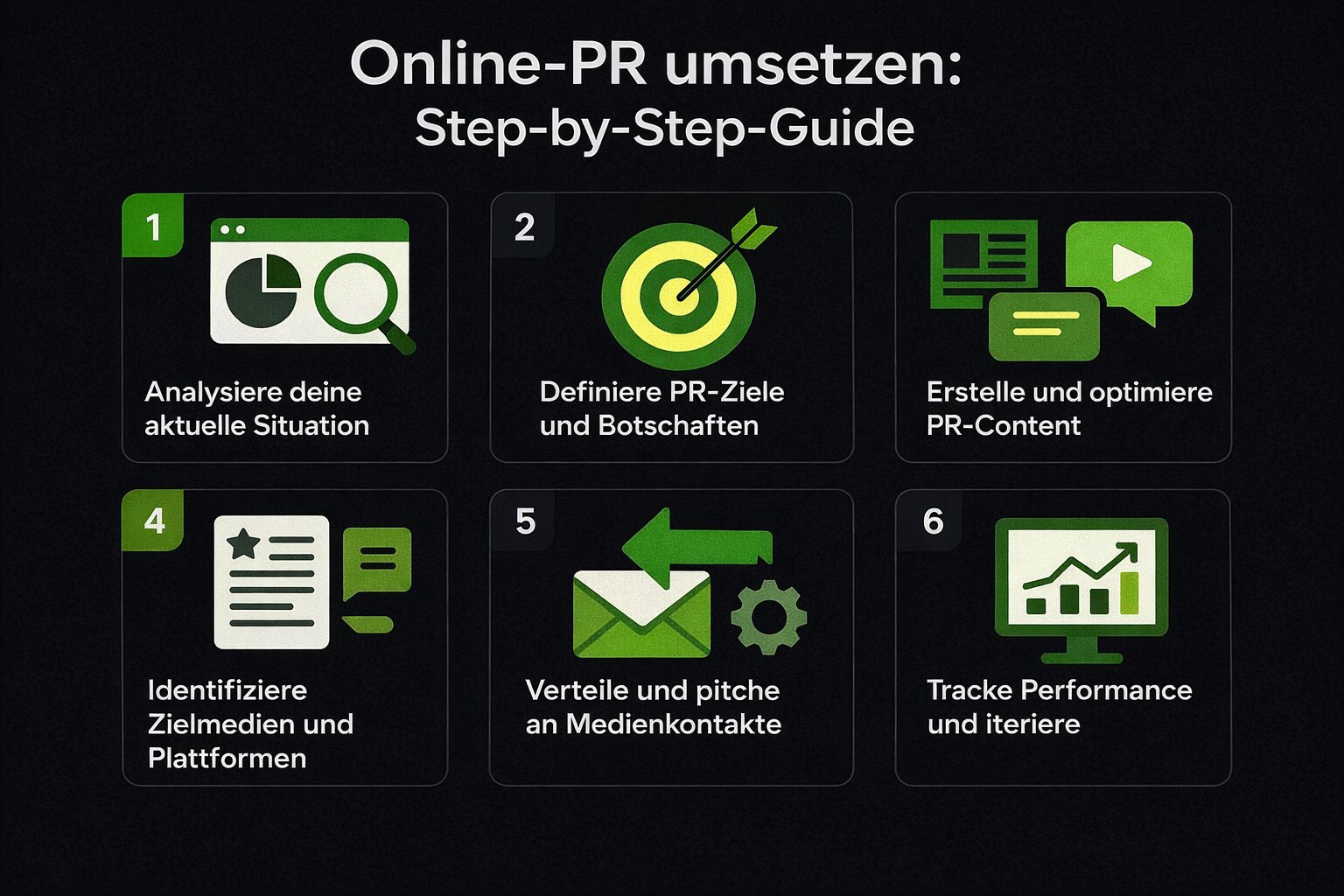
1) Analyse your current situation
Review visibility, recent mentions and your link profile. Map competitor mentions and share of voice to find topic gaps and media opportunities.
2) Define PR goals and messages
Decide whether the main goal is awareness, rankings for a particular page or product demand. Write a one-sentence angle that has news value: “We analysed X and found Y, which helps Z do W.” Keep claims specific and verifiable.
3) Identify target media and platforms
List trade media, contributor columns, newsletters, podcasts and active communities where your audience learns. Prioritise authors who have covered adjacent topics in the past 6 to 12 months. Score them by fit and authority.
4) Create and optimise PR content
Publish an anchor asset on your site (original data, a definitive guide or a case study). Add a short media brief, downloadable charts, image rights and author bios. Optimise titles, subheads and internal links.
High-leverage subformats: studies and surveys, reactive expert commentary, specialist thought leadership and unique data stories from your own systems.
5) Distribute and pitch to media contacts
Send concise, tailored notes that reference a journalist’s beat, and link directly to your asset. Offer an exclusive only when it genuinely fits; otherwise stagger outreach from top tier to niche. Submit a compact version to a press portal to increase reach.
6) Track performance and iterate
Report on the quality of coverage (relevance, authority), link equity, referral traffic, ranking gains for the target page and branded search. Keep a living media list of who opened, replied and published.
A tactical note from the 2025 Semrush analysis: AI Overviews are triggered most often by informational queries, while transactional queries account for under 3 % and navigational queries for under 2 % of AI Overview triggers. Let your anchor assets answer real questions with clear evidence, which is exactly the kind of resource that gets cited. (Semrush)
Combining online PR and SEO effectively
Online PR and SEO work best as one plan. SEO keeps you aligned with real demand and search intent; online PR delivers the credible mentions and editorial links that lift the pages that matter. When goals, topics and timing are shared, each campaign reinforces the other.
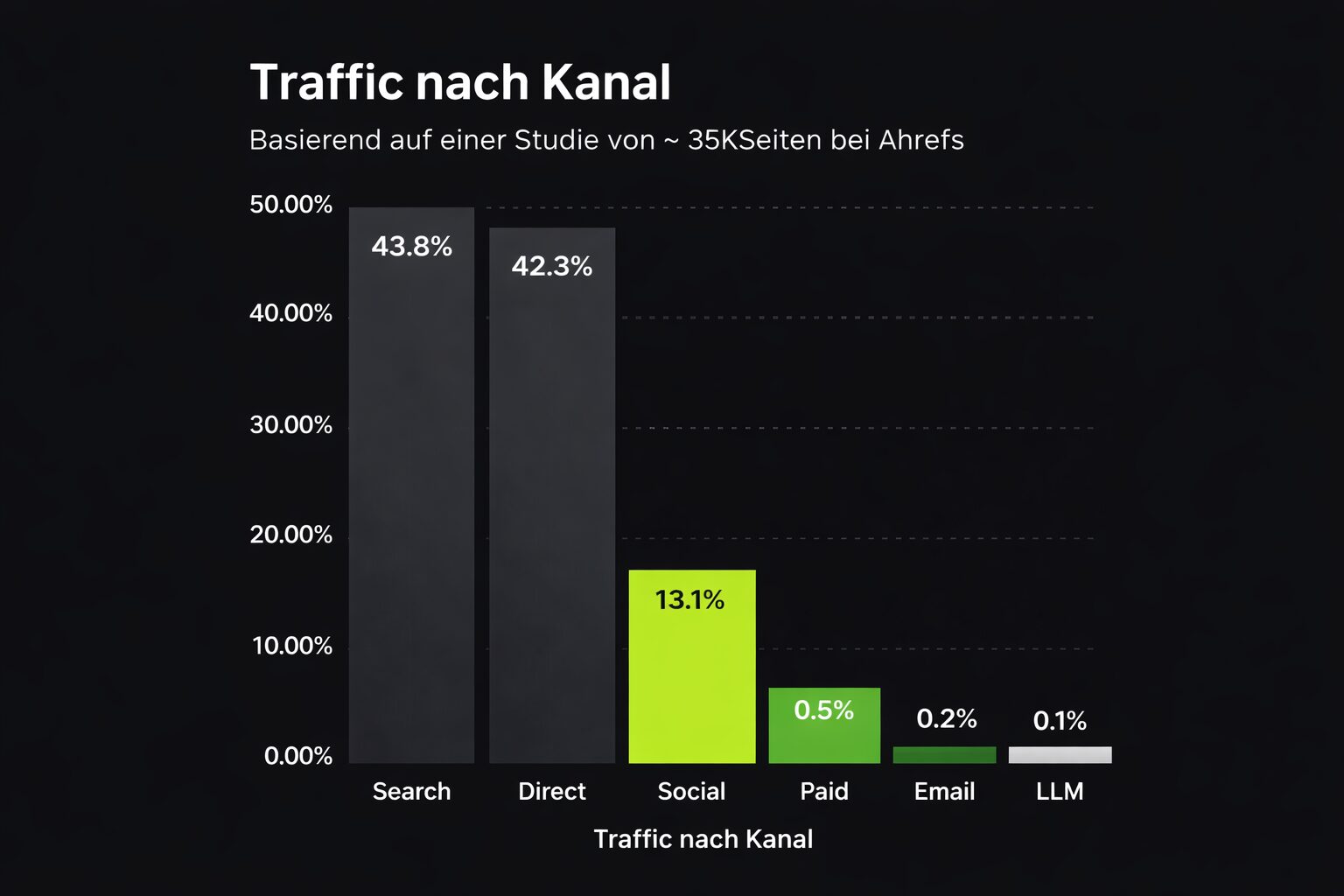
When you prioritise, one channel still dominates the rest. Ahrefs’ 2025 figures show that search drives around 43.8 % of traffic, while LLMs send around 0.1 %, so positive coverage and discoverable pages remain the core of growth, with AI visibility as a fast-growing bonus. (Ahrefs)
Define shared goals
Start with a single scoreboard that both teams own. Agree on KPIs such as the number and quality of editorial backlinks, gains for specific target pages, growth in branded search, qualified referral traffic and assisted conversions. Add secondary signals such as authority gains and share of voice so that progress is visible beyond rankings.
Develop formats that work twice
Create assets that are PR-friendly and SEO-relevant: data studies, industry reports, comprehensive guides. Use keyword research to validate the topic and to shape headlines, subheads and FAQs. One asset should earn coverage, attract links and serve a clear search query so that it ranks and converts over time.
Use PR-driven link building deliberately
Treat every placement as a chance to place natural, context-rich anchors on the page that is meant to rank. Prioritise topical relevance: a link from a trade publication that serves your audience is worth more than a generic mention. Keep the target page genuinely helpful so that editorial teams are happy to link to it.
Editorial alignment and timing
Launch in step. When you introduce a new product category or a guide, plan PR outreach and on-page SEO together. That way pitches land while the page is fresh, search demand rises in parallel, and external signals support your ranking window.
Integration best practices
- A shared content calendar and pitch plan
- A shared keyword and topic map for PR and SEO
- Clear acceptance criteria for “linkable” assets (original data, visuals, citable sentences)
- A post-campaign review with both teams to record successes, gaps and the next angles
As a practical outreach benchmark for 2025, 69 % of journalists prefer pitches under 200 words, so keep the collaboration tight and make sure your PR emails are concise, relevant and aligned with the SEO target page. (muckrack.com)
Measuring success in digital PR
You can prove ROI when you measure at three levels: media, SEO and business.
The most important KPIs
- Media response and reach: total online mentions, estimated readership, share of voice against competitors.
- SEO impact: number and quality of editorial backlinks, changes in domain or topical authority, ranking gains for target pages.
- Business outcomes: qualified referral traffic, PR-influenced leads or sales, growth in branded search and direct visits.
Tools for monitoring and reporting
- Media monitoring: platforms that capture online mentions and sentiment.
- SEO analysis: Ahrefs or Semrush to track links, authority and rankings.
- Analytics: Google Analytics or Adobe for traffic and conversions.
- Social listening: tools such as Brandwatch or Hootsuite for engagement trends.
Reporting framework
- Monthly: a detailed analysis of traffic, rankings and conversions; an overview of new mentions and links.
- Quarterly: a strategic assessment and adjustment of angles, goals and formats.
- Annually: a full ROI review and a reset of goals.
Common online PR mistakes
Three problems cause most of the waste: generic pitches, PR pages without SEO, and missing targeting. Fix these and your hit rate rises considerably.
Sending generic press releases
Editorial teams ignore vague statements. Lead with a concrete finding, a number or a user impact that fits their coverage. Your subject line should read like a headline an audience would click.
Ignoring SEO in PR content
Your announcement page needs descriptive titles, scannable subheads, structured data where appropriate, and internal links to commercial pages. Treat every earned mention as a ranking opportunity, and make the target page worth linking to.
No clear targeting and no goals
A list of 1,000 unsuitable contacts is worse than a list of 30 right ones. Match the angle to the outlet and measure against the outcome you care about: awareness, links or leads.
One note from 2025 worth internalising: in the Ahrefs AI Overview research, backlink counts showed only a weak correlation (0.218) with brand presence in AI Overviews, while brand mentions across the web were considerably stronger. No spray-and-pray link building; invest in stories that spark real discussion. (Ahrefs)
Ready for more revenue?
Book a free SEO and GEO audit

Find out in a free call how much revenue your website is leaving on the table, with no obligation and no agency waffle.