

Everything at a glance
- GEO pulls content directly into AI answers, from ChatGPT and Perplexity through to Google AI Mode and Gemini.
- Clear, self-contained blocks and headings show the AI where to find the right information.
- RAG techniques mix fresh real-time data with authoritative writing to produce precise answers.
- Machine-readable signals such as schema and metadata, paired with compelling prose that people love.
- GEO-first brands secure top placements in AI-driven search before the field gets crowded.
Have you ever wondered why your carefully written articles disappear into nowhere while AI chatbots such as ChatGPT, Perplexity and Google Gemini confidently cite other sources? This is exactly where Generative Engine Optimization, GEO for short, comes in. Instead of chasing clicks on a search results page, GEO makes your brand part of the conversation itself and lets it appear in AI-generated answers and summaries.
One study shows that Google’s AI overviews appear in almost 47 % of all search results and take up as much as 48 % of the screen on mobile devices.
In this guide I will take you through what GEO really means, how different types of AI engine work and why the combination of real-time data retrieval and authoritative writing is your secret weapon. You will see how small adjustments to structure and style give your content a leading role in AI answers, and why you will be miles ahead of your competitors if you start now, before these tools become even more everyday.
By the end you will have a clear, straightforward plan for turning your content from a distant search result into the preferred source that AI models cannot resist citing. Let us get going and make GEO the next driving force of your digital strategy.
How Is the Rise of Generative AI Affecting the Search Landscape?
Generative AI is no longer science fiction. It is showing up in search interfaces everywhere, from chatbots that answer questions through to AI overviews that condense dozens of pages into one compact answer.
As these engines evolve, they change user expectations: people want conversational, concise answers, not just ten blue links.
What defines a generative AI engine?
A generative AI engine is any system that can produce human-like text or images on the basis of enormous training data. Instead of simply retrieving pages, it “writes” answers by predicting the most probable sequence of words. Key characteristics:
- Natural language fluency: it understands context, tone and nuance.
- Knowledge synthesis: it links information from many sources into one coherent answer.
- Adaptive learning: through updates it improves over time, just like you.
Think of generative engines as co-writers. You supply reliable facts, they write the story.
These models have devoured billions of text snippets, from web pages and specialist databases through to structured data sets, so they understand natural language, grasp meaning and context, and can blend information seamlessly to deliver the right answer.
Here is an example of how ChatGPT uses search engines to answer a query:
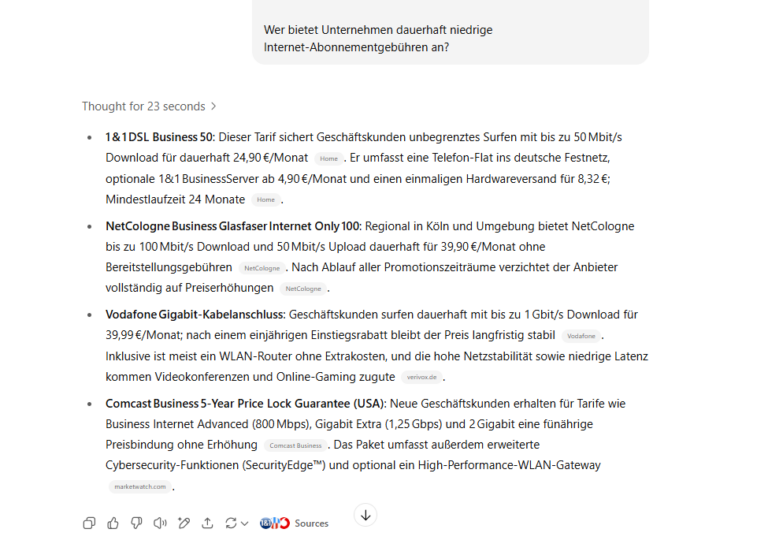
Examples of output from generative search interfaces
You have surely seen them already:
- AI overviews: a box at the top of the search results that summarises the most important points from several articles.
- Chatbot answers: “hey, how do I optimise content for AI search?” and you get a concise, numbered list.
- Interactive Q & A: follow-up questions refine the answer in real time.
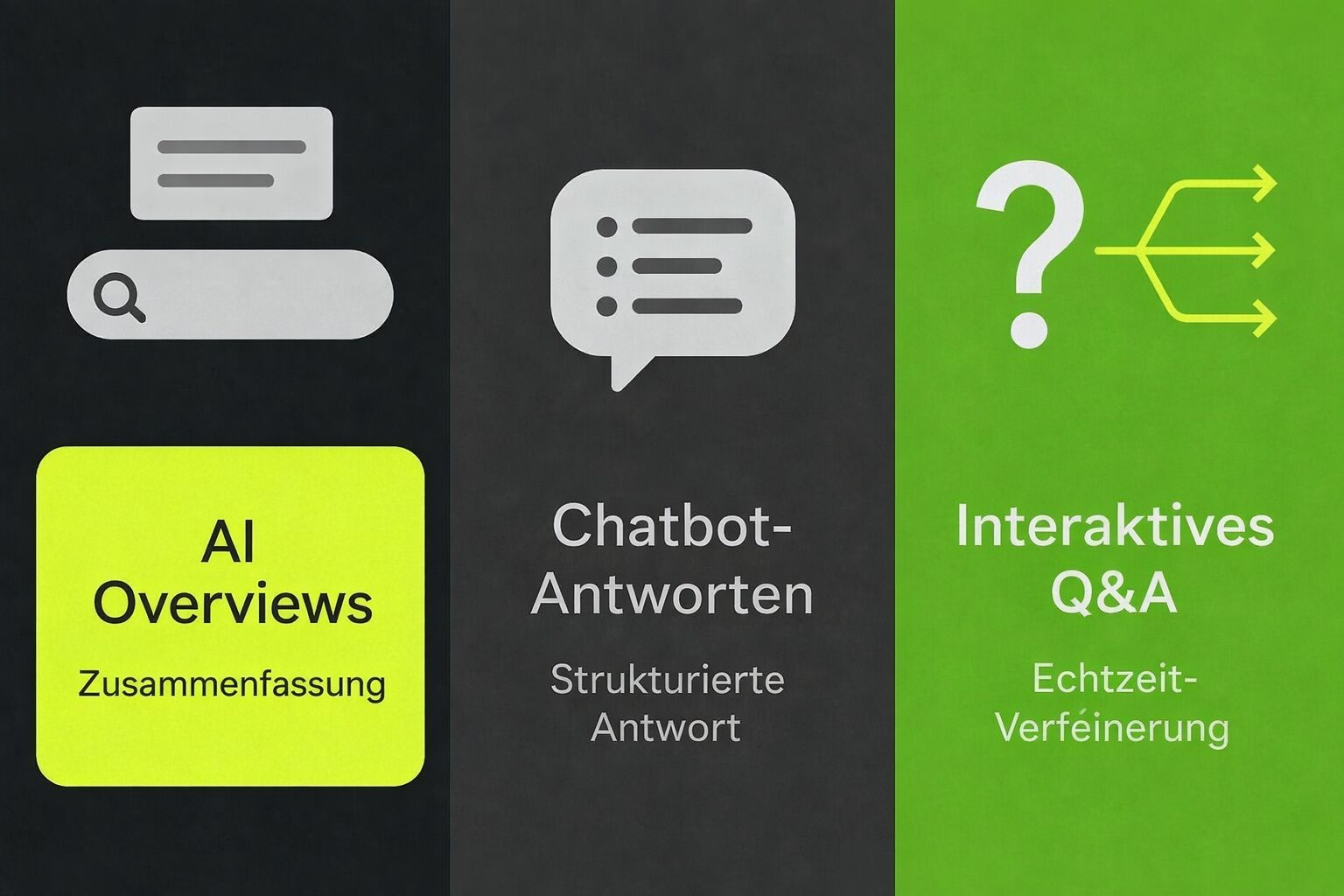
These outputs feel human because they are inspired by humans and based on real writing. They do not just show you where to look, they deliver the distilled insight.
How Do Generative Answers Differ From Classic Search Results?
With traditional SEO you want to rank on page 1 for target queries. With GEO your content has to be the perfect “source material” for the AI summary. That means:
What Categories Can Generative AI Search Engines Be Divided Into?
Generative engines come in different variants, and each has its own quirks for GEO. If you know which type you are optimising for, you can adapt your content specifically.
Pre-trained systems only (for example Claude, LLaMA)
These models produce answers exclusively from their training data from before 2024. They do not fetch real-time information, so your timeless evergreen content is what shines here, for instance fundamental guides. Keep your facts correct, because these engines cannot check live updates.
Real-time systems with search integration (for example Perplexity, AI overviews)
These combine live web search with generative answers. They search through current sources, select the best snippets and assemble an answer from them. To optimise for them:
- Stay current: publish and update content regularly.
- Use clear metadata: page titles and schema help the engine decide what is freshest.
Hybrid models with retrieval and memory (for example ChatGPT Search, Gemini)
These powerhouses combine both worlds: pre-trained knowledge plus ongoing research. They can “remember” earlier user questions in order to adapt future answers. For GEO:
- Build topic clusters: let the engine explore related pages on your website.
- Internal linking: guide the AI from overview pages to deep dives, like breadcrumbs for bots.
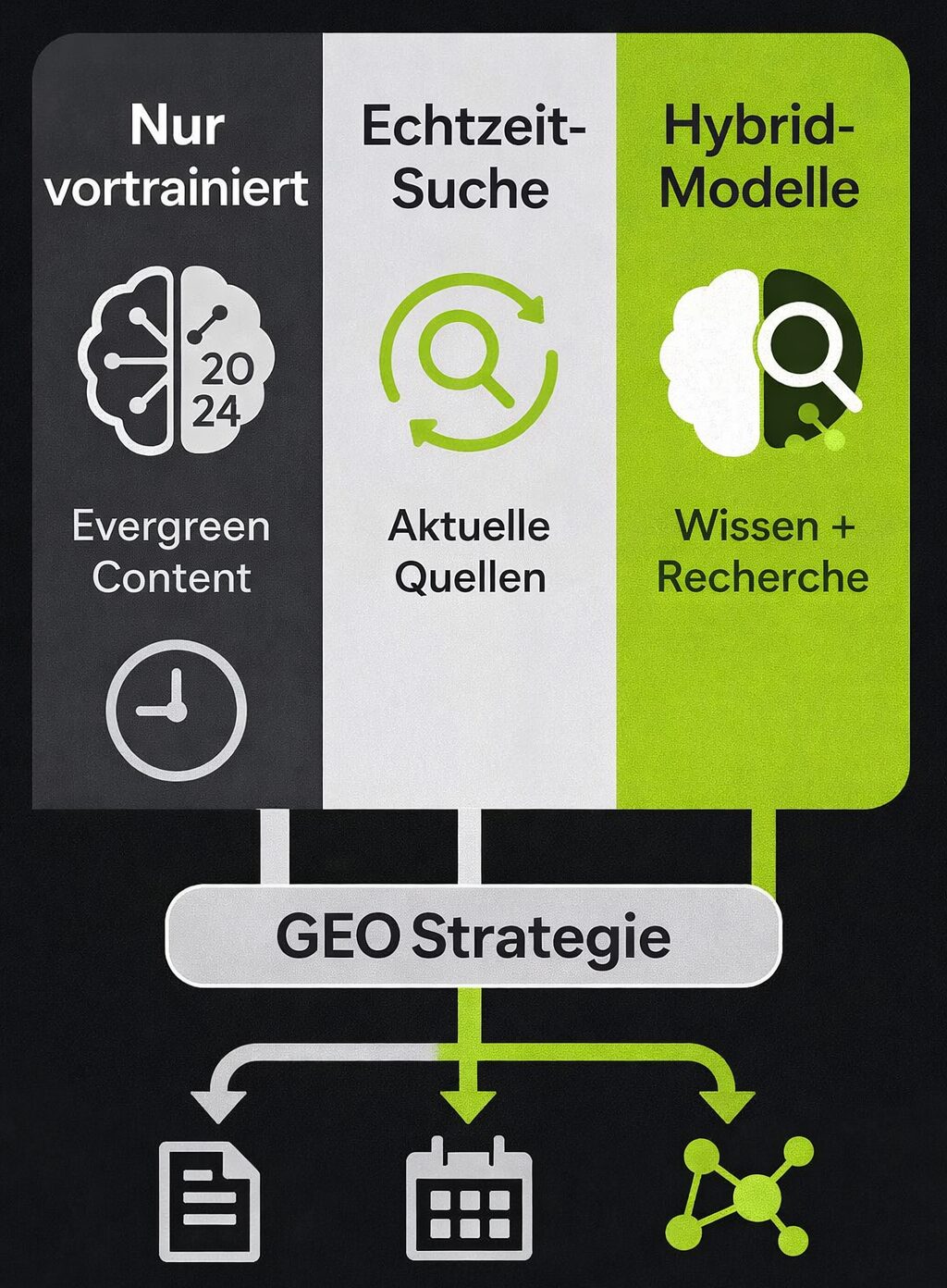
Pro tip: if you are targeting hybrid models, think in terms of a “content ecosystem” rather than individual pages. A cluster of well-linked articles is worth its weight in gold.
What is Generative Engine Optimization (GEO)?
GEO means positioning your content so that AI tools such as ChatGPT, Perplexity or Google Gemini draw on your information quite naturally when they answer questions. It is about writing clearly worded, well-structured articles and building your brand’s visibility so that these systems:
GEO is developing from a simple “get cited by the bot” tactic into a full-stack discipline. In the beginning a few well-structured pages were enough.
Now you need content ecosystems (topic clusters, internal linking), machine directives (llms.txt, schema, clean metadata) and distribution beyond your own site (Reddit, news, documentation).
As the engines shift to hybrid RAG setups and agent-based workflows, they reward freshness, clarity and authority signals at scale. In short: GEO is moving from page-level tweaks to an orchestrated framework that makes your entire knowledge base extractable, trustworthy and updatable in real time.
- Name your brand or solution explicitly
- Link to your site with live web access
- Quietly fall back on your content “in the background”
- Or learn from your pages in the long term, once they feed into the training data
Which Strategic Measures Make Sense for GEO?
See GEO as the next step after classic SEO. Instead of just appearing in search results, you want AI tools to build your content into their answers. To do that you focus on:
- Creating first-class, well-structured information that people (and bots) trust
- Publishing on sites that AIs learn from, places such as Wikipedia, Reddit or large news portals
- Building genuine authority through clever PR activity as well as sharing your own data and insights
- Fine-tuning your content so that machines can “read” it easily, with clear labels, tags and semantic cues
The goal? When an AI has to construct an answer, it reaches for your content first.
In other words: classic SEO gets you into a list of links. GEO makes you part of the AI answer itself.
What Are the Essential Differences Between SEO and GEO?
See SEO and GEO as two team-mates playing the same game but with different roles. SEO makes sure your page appears high up in the familiar results list on Google or Bing, with keywords, backlinks and technical fine-tuning.
GEO, by contrast, wants to weave your content directly into the AI’s answer, so that when someone asks ChatGPT, Google Gemini or Perplexity a question, your brand’s insights are part of the answer.
SEO has not gone away, it is the launch pad. Crawlability, fast pages, a clean information architecture, backlinks and E-E-A-T still decide whether your content is seen at all (and often whether it ranks).
The key point: strong SEO performance correlates with LLM citations. The better you rank in the classic sense, the more likely the AI is to cite you. Think of GEO as an overlay, not a replacement: SEO gets you visibility in the index, GEO makes exactly that content irresistible source material for generative answers.
SEO means visibility in a list, GEO means visibility in the answer itself.
Here is a quick comparison:
| Aspect | SEO | GEO |
|---|---|---|
| Target | Traditional search engines (Google, Bing) | AI-driven engines that produce conversational answers |
| Content structure | Built around keywords, headings and backlinks | Modular, richly cited sections with clear context and statistics |
| Success metrics | Click-through rate, bounce rate, time on page | Impressions in AI answers, frequency of citations and integration into generated answers |
| Strategic flexibility | Generally applicable tactics for blogs, landing pages, product pages and so on | Adapted to each AI engine: authoritative language for some, deep citations for others, and so on |
How does generative search use content?
Once you understand the mechanics, you can create content that plays to an AI’s strengths.
AI language models such as ChatGPT or Google Gemini can give you pinpoint answers, but they can also mix things up or misrepresent facts. That is because they do not really “understand” what they read, they only predict the probable next words on the basis of patterns.
Generative engines often use a retrieval-augmented generation (RAG) approach. They first search for relevant text excerpts and then weave them into an answer. Your task is to make sure the right snippets come from your pages:
- Clearly labelled sections: use H2 and H3 headings as “grab points”.
- Topic sentences: the first line under each heading should clearly state the purpose of the section.
Understanding RAG (retrieval-augmented generation)
Picture RAG as a system that seamlessly combines two core functions: it retrieves the most current information from the web and then shapes it into a clear, conversational answer. First it combs through live sources for current snippets. Then it assembles them into a coherent answer, like a librarian who collects the best books on a topic and afterwards summarises the most important points for you.
When RAG is in play, you get:
- • Real-time facts: no more outdated information. RAG pulls in the latest data, so the answers reflect what is happening right now.
- • Trustworthy sources: because real sources are cited, RAG “hallucinates” wild claims less often. You see links or references and can check the facts immediately.
- • Tailored answers: want the model to concentrate on your content? With a clear structure you decide which text excerpts the AI pulls, and shape the result that way.
Central benefits of RAG systems
- Greater accuracy: by combining search results with generative phrasing, RAG delivers precise and well-formulated answers.
- Seamless content updates: your latest blog post or data report feeds in immediately, without manual retraining.
- Built-in scalability: whether you have ten pages or ten thousand, RAG processes it all and continuously updates its knowledge base.
What RAG means for you
Tools such as ChatGPT, Google Gemini and Perplexity use RAG to mix their built-in knowledge with fresh web content. Here is the split:
- Core model memory: the AI relies on what it “learned” during training, and you cannot change that part.
- Live web queries: on top of that it fetches current information from search indexes, which is how your content gets the chance to appear in the answers.
The result is an individual answer that connects reliable facts with the latest insights, neatly stitched together in one package.
Index sources by engine:
- • ChatGPT accesses the Bing index
- • Gemini uses the Google index
- • Perplexity relies on its own search index
What the Claude leak shows about source selection
When developers accidentally published Claude’s internal prompt, we got an insight into how the model draws on external information.
Instead of always starting a web search, Claude sticks with its own memory and only reaches for external sources when something new, complex or time-critical is needed. And when it does look things up, it prefers the following:
- Freshness first: the more recent the publication, the more likely Claude is to cite it. Think news articles, studies from this year or real-time dashboards.
- Strong reputation: sites with proven authority, such as large news portals, academic journals and government domains, take precedence over unknown blogs.
- Exact matches: if your phrasing mirrors the user’s question or common search phrases, Claude is more likely to take up your text word for word.
Why this matters for GEO:
To end up in Claude’s spotlight, your material has to meet all three criteria. Publish regularly, build backlinks and press mentions on trustworthy platforms, and mirror the language of your target group. That way, when the AI needs reliable, up-to-the-minute information, it falls back on your content almost automatically.
Is generative AI changing search traffic, or fuelling it?
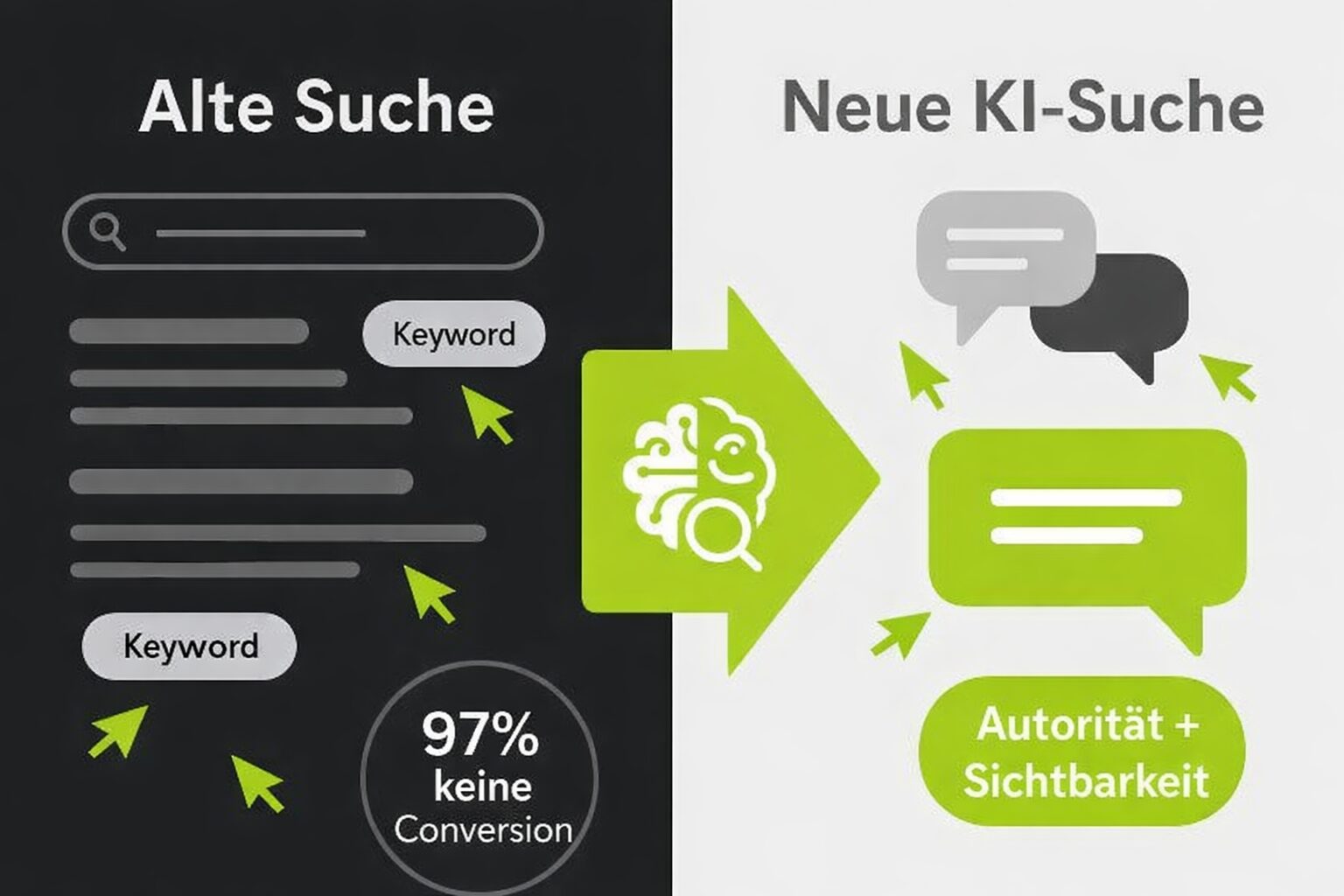
There is a lot of talk about AI stealing clicks, but the truth is more interesting. Generative AI does not reduce demand, it only simplifies how people find answers. They still convert at a similar rate, but with fewer clicks and touchpoints along the way.
Worries about traffic cannibalisation
Of course, if an AI delivers everything up front, the user may never click through to your site. Early data from SEO tools shows falling click-through rates in AI overviews.
But here is the catch: many of those short one- or two-word searches rarely led to sales anyway. In fact, on traditional websites over 97 % of simple search queries did not convert.
If the AI takes over these low-value questions, you lose little, because they brought in no revenue in the first place.
New opportunities for visibility and brand building
Think of AI answers as a new kind of billboard. Even if someone does not click, simply seeing your brand name in the answer strengthens trust and keeps you present. On top of that:
- Source links often appear underneath AI summaries, so savvy users can still jump across to your site.
- Voice assistants read out only the top answer. GEO can secure you that coveted first mention.
By becoming part of the AI answer, you are not just chasing clicks, you are building authority and recognition.
Shifting search intent
Search is shifting from “best laptops” towards detailed dialogues such as “which laptops under EUR 1,500 are suitable for gaming and video editing while still being portable?”
Generative engines love these more complex questions and deliver precise, synthesised answers. That has consequences:
- Simple keyword queries are declining, because the AI handles such short searches internally.
- Complex, conversational search queries are increasing and open up new opportunities for brands that offer in-depth, structured content.
- Total search volume is rising, but there are fewer clicks per query. The real battlefield is the answer, not just the link.
Industry analysts predict that classic search traffic could fall by as much as 25 % over the next few years. Companies have to rethink their visibility strategy: ranking on page 1 is no longer enough. You have to rank in the AI answer.
Should your brand invest in GEO now?
If you are steering a large company, GEO is not a nice-to-have for the future, it is already having an effect today.
Strategic value for companies and digital teams
- Enormous reach: ChatGPT alone records over 3.8 billion visits a month, and Google’s AI Mode is live in the USA, delivering fresh AI answers on demand.
- Growing referral streams: users who click “source” in AI overviews drive more outbound traffic than ever before.
Taken together, these trends mean real visibility for your content, not only in search results but in the AI interfaces your target group uses every day.
Competitive advantages for early adopters
- Perplexity’s rise: with over 100 million queries a week, Perplexity shows that specialised AI search tools have traction, and they need high-quality sources.
- First-mover momentum: while competitors catch up, you establish your brand as an authority for AI answers.
Whoever starts now shapes the narrative instead of merely reacting later, once AI has become the standard.
Budget recommendations
- SEO already strong? Set aside an additional 15 to 20 % of that budget for GEO tactics, for example structuring content for AI extraction and setting up llms.txt.
- SEO foundation still being built? Focus on that first. Strong organic performance is the foundation that GEO builds on.
And remember: a recent study found a 0.65 correlation between ranking on Google’s first page and being cited by AI models. That underlines how SEO and GEO go hand in hand.
Use cases across industries and content types
- Technical documentation and how-tos: perfect for AI short summaries.
- In-depth analysis: AI weaves expert pieces into trend overviews.
- FAQs and quick guides: ideal for chatbots and voice assistants.
Pro tip: start your GEO offensive with your ten best cornerstone pages. Use structured headings, clear definitions and current statistics, then watch AI engines reference your content first.
How do you optimise content for generative engines?
For AI systems to notice your content, you have to think a little differently, but it is easier than you believe. Here are proven, data-based tactics you can use straight away to shape how brands appear in large language models (LLMs) for months to come:
1. Research what your audience asks the AI
Before you write a word, find out the real questions people are asking AI tools. Use keyword and AI insights tools (for example the SEMrush AI Toolkit) to uncover high-volume prompts and compare them with Google Trends.
Adapt your content to the scenarios people put to an LLM, whether that is “best X under EUR Y” or “how to solve problem Z”.
Pro tip: look at Reddit threads and community forums. We are seeing that 24 % of brand mentions in LLM dialogues reflect the sentiment on platforms such as Reddit, so user-generated content can influence AI answers.
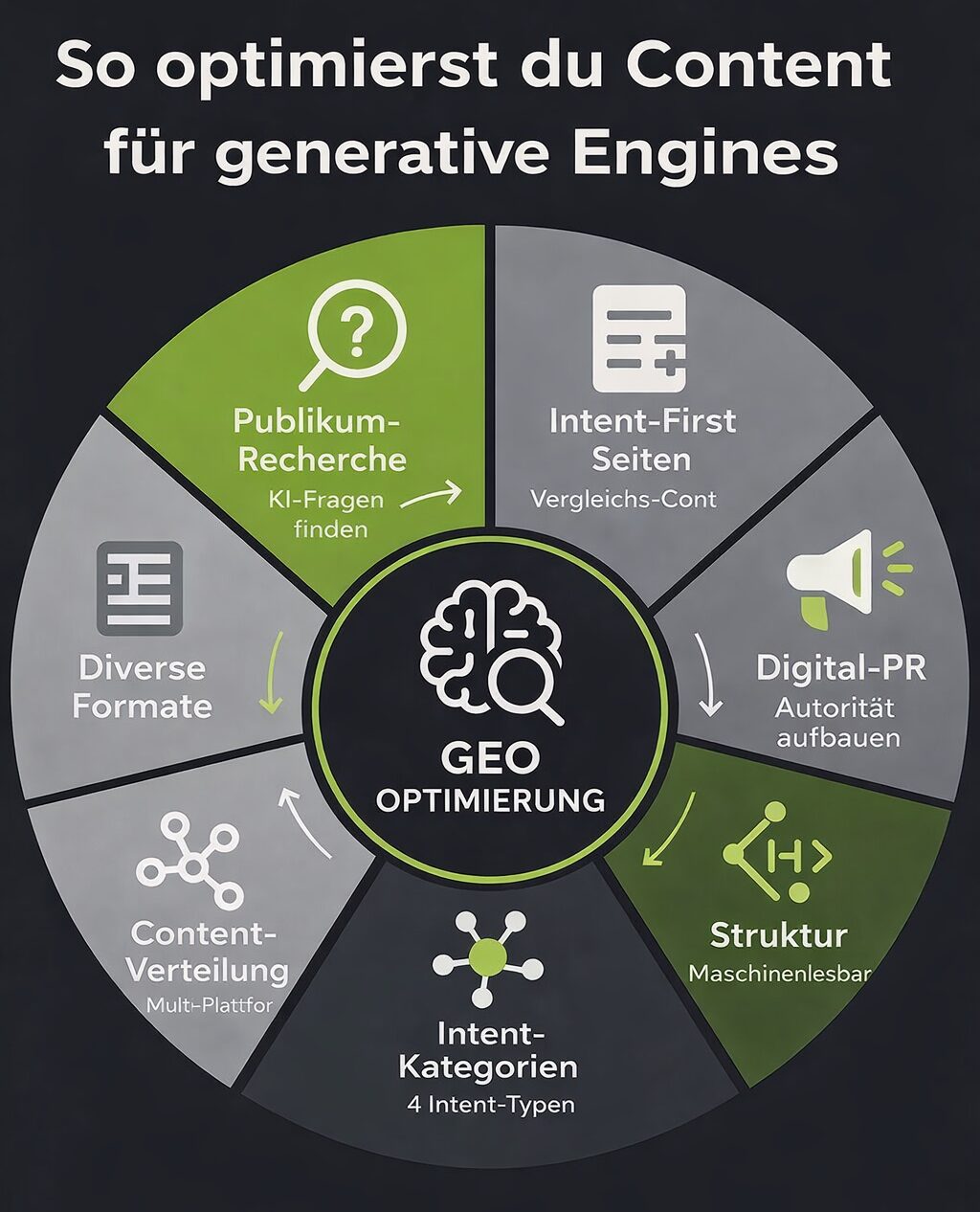
2. Build “intent-first” pages at scale
Studies show that around a third of AI citations come from comparison listicles, with a further 10 % from blog posts and opinion pieces.
Create clear, intent-driven pages, for instance “top 5 alternatives to [product]”, “XYZ vs. ABC” or “how to choose [solution] in 2025”. Make them:
- Compact: short introductions and clear headings
- Data-rich: charts, tables or bullet lists for statistics
- Authoritative: include relevant citations, outbound links and current sources
Pages like these, the “SaaS money pages”, give LLMs exactly what they need in order to cite your brand.
3. Strengthen authority with smart digital PR
Authority counts more than ever. When AI looks for experts, it prefers content that is in the spotlight elsewhere. So plan for:
- Expert quotes in industry news or trend reports
- Podcast appearances in which you share insights
- Positive media features in top-tier outlets
- White paper or report citations to demonstrate data leadership
Every mention strengthens your domain’s trust signals and increases the chance that LLMs will use your content.
4. Give your site a structure that AI can read
Make your pages machine-friendly by adding structured data:
- Schema markup for FAQs, how-tos and product information
- A custom llms.txt to steer AI crawlers
- Clear metadata with AI-focused keywords in titles and descriptions
A well-marked-up page is like a roadmap for the AI: it finds the right sections immediately.
5. Cover every intent category
Unlike classic SEO, GEO requires you to serve different AI prompts. Address all four main intents:
- Informational (“what is [topic]?”)
- Investigational (“best tools for [use case]?”)
- Navigational (“[brand] login”, “[product] pricing”)
- Transactional (“buy [product] online”, “discount codes”)
Each deserves its own page or section. Comprehensive coverage means the AI finds exactly the piece it needs.
6. Distribute content beyond your blog
LLMs train on diverse sources: blogs, news sites, Reddit, Quora, even social media. Increase your influence by sharing content on:
- Community forums (for example Reddit)
- Q & A platforms (for example Quora)
- Social channels (LinkedIn articles, Medium posts)
A recent analysis identified Reddit as the most frequently cited URL source for LLMs. Being active there can shape the AI narrative about your brand.
7. Use multimedia and AI readiness tools
Diversify formats to win AI attention:
- Videos or infographics that explain complex topics
- Interactive quizzes or calculators for dynamic data retrieval
Then run your site through an AI search grader (for example HubSpot’s free tool) to uncover gaps in structure, relevance and quality. Regular audits keep your GEO strategy up to date.
Ready for more revenue?
Book a free SEO and GEO audit

Find out in a free call how much revenue your website is leaving on the table, with no obligation and no agency waffle.