


Everything at a glance
- Structure wins: plan categories and facets around keyword intent; keep indexing clean to counter the rise in zero-click behaviour.
- On-page polish pays off: the top organic result still receives around 27.6 % of clicks in 2025, so optimise titles, descriptions and content depth.
- Technology matters more: AI Overviews and shifting SERPs reduce clicks, which makes speed, schema and crawl efficiency non-negotiable.
- Content has to earn answers: AI Overviews reach huge audiences, so create guides, tools and how-tos that get cited and linked.
- Links still separate the winners: most pages have zero backlinks, so consistent link earning takes you past the crowd.
You want your shop to rank, to get clicked and to convert, without paying forever for every visit. Here is a practical, ROI-focused playbook you can work through in the order of the seven-step checklist: map demand by intent (and NLP), audit the technology, design clean URLs and navigation, produce the right content types (including link bait), raise content quality with user signals, speed up the UX, and then earn sustainable links. I keep it simple and add short summaries after each main section so you can move quickly.
Choosing the right shop system for SEO success
Your platform should make ranking easier: clean URLs, fast templates, flexible categories, native schema and full control over filters. Statistic for 2025: Google’s AI Overviews appeared in March 2025 on 13.14 % of US desktop searches, twice as many as in January, so your shop system has to support speed and structured data to stay visible. (Search Engine Land)
Top e-commerce platforms at a glance
- Shopify: launch-friendly; plan filtering and canonicals early; choose a lightweight theme so that code does not bloat and low-value URLs do not get indexed.
- WooCommerce (WordPress): combines content and commerce; control hosting, caching and plugins to protect Core Web Vitals.
- Adobe Commerce (Magento) / Shopware: strong for large catalogues and complex merchandising; needs experienced developers to avoid bloat and slowdowns.
Here is a study showing the ten most widely used shop systems:
| Technology | Websites | % |
|---|---|---|
| Shopify | 39,091 | 3.91 |
| WooCommerce Checkout | 20,052 | 2.01 |
| Shopify Plus | 14,939 | 1.49 |
| Magento | 10,511 | 1.05 |
| PrestaShop | 4,864 | 0.49 |
| Lazada | 3,964 | 0.40 |
| Squarespace Add to Cart | 3,936 | 0.39 |
| Amplience | 3,355 | 0.34 |
| OpenCart | 3,295 | 0.33 |
| Wix Stores | 2,920 | 0.29 |
Essential SEO features for shop systems
Full URL control; scalable meta templates; native Product and Breadcrumb schema; index/noindex and canonical control for facets and pagination; separate XML sitemaps with a correct lastmod; performance levers (CDN, critical CSS, JS defer); bulk APIs for redirects and meta data.
Reality check and common mistakes
Implementation beats the logo. Avoid immutable URL patterns, a missing option to noindex filter combinations, and bloated themes or plugin sprawl that ruin speed.
1) Mastering keyword research for e-commerce
Rankings start with intent. Combine commercial “money” terms with helpful informational queries and map them to the right pages so that users (and Google) always land where they expect to.
88 % of Google AI Overviews are triggered by informational searches, so understanding intent and covering it well is decisive for discoverability. (Search Engine Land)
The best keyword tools for online shops
Before you build pages, check demand and the SERP. Use one source for your own data, one for the overall market, and your own eyes to validate intent.
- Google Search Console (your current demand): start with the queries you are already visible for. Those are quick wins and they show how Google currently labels your pages, which you can use for early optimisation.
- Ahrefs / Semrush (volume, difficulty, SERP features): lift out head terms and modifiers, then compare difficulty and features (for example snippets, AI Overviews). That way you do not chase keywords that do not fit the page type or funnel stage.
- Live SERP checks: open the results and study the formats. If guides dominate, do not force a product page; build the format that fits the query and link from there to the right products.
Understanding search intent: commercial vs informational
Intent determines the page type. You win faster when the URL matches what the searcher wants to do right now.
- Commercial intent, category and product pages: queries such as “men’s trail running shoes” or “waterproof hiking boots size 44” belong on money pages with options, filters and clear reasons to buy.
- Informational intent, guides, comparisons, FAQs: teach first, then sell. Explain the choice, compare options or give care tips, and then lead to the best category. This is also where you earn links and trust.
Analysing competitor keywords intelligently
Competitors show you what Google rewards. Reverse-engineer the patterns and do it more cleanly, with more depth and better UX.
- Export competitor URLs and their top keywords: this shows which page types (category, guide, comparison) win and which modifiers matter, which shapes your own structure.
- Find gaps (filters, subcategories, use cases): if others ignore “wide fit”, “vegan leather” or “cold weather”, turn those into subcategories or filters and occupy the niches.
- Watch internal anchor patterns: anchors show how they strengthen winning pages. Adopt the principle (not the spam) to signal your primary targets consistently.
Keyword mapping you will actually use
A simple map prevents cannibalisation and speeds up writing, linking and reporting. Keep it alive and refresh it quarterly.
- Categories: one head term plus three to five strategic modifiers: use brand, material, use case or season. That focuses the on-page work and keeps every category distinct for Google.
- Products: exact model or variant plus unique features: never paste supplier copy. Write the specifics buyers need, covering fit, specs, care and what sets this SKU apart.
- Guides and hubs: questions, comparisons and “best” topics: capture earlier intent and then route to the right categories and SKUs. These pages attract natural links over time.
2) Technical SEO fundamentals for e-commerce websites
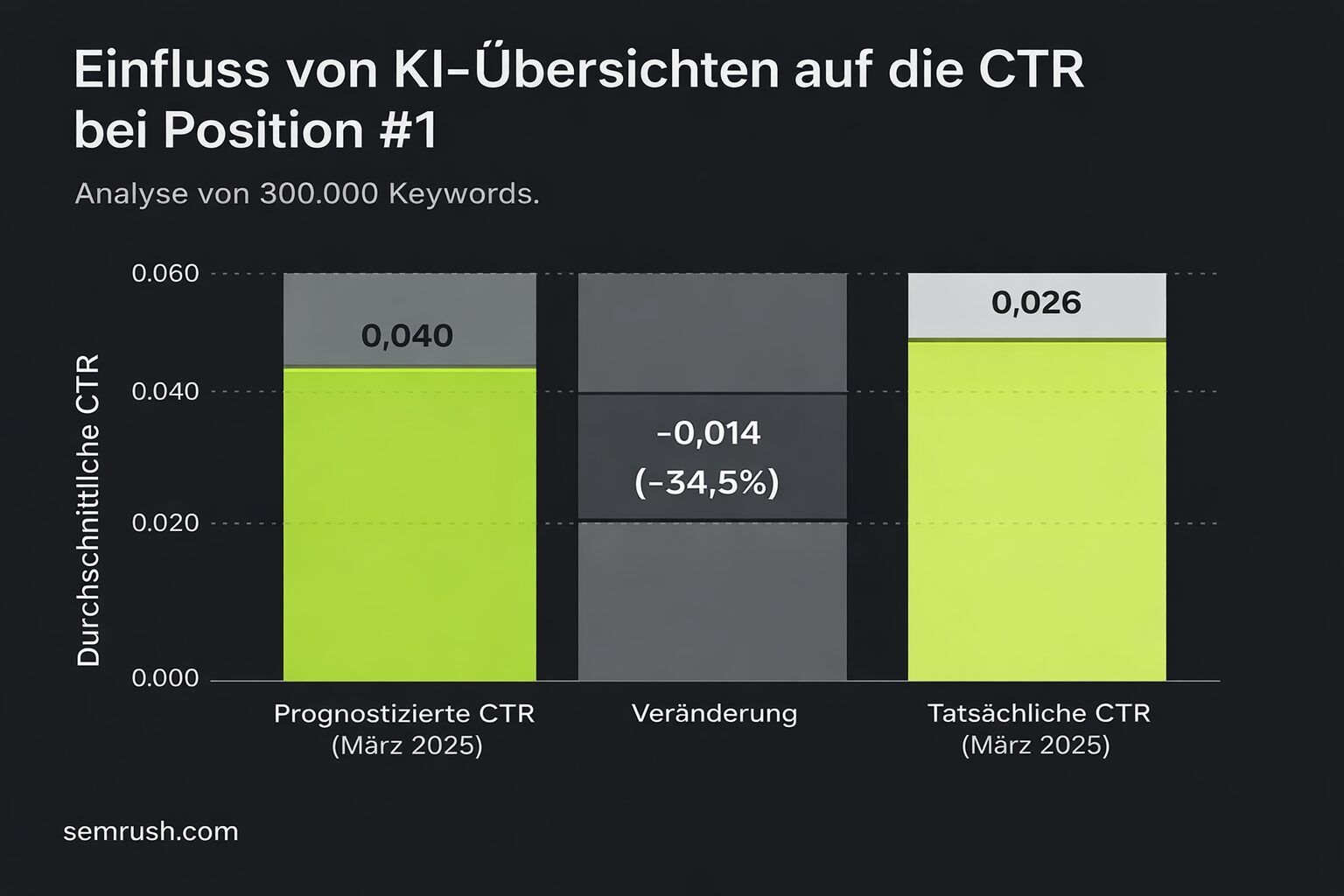
Audit first, then fix. Run crawlers (for example Screaming Frog), check Search Console, Analytics and PageSpeed Insights, and then prioritise crawl depth, architecture, internal linking and indexability. AI Overviews correlate with a drop of around 34.5 % in clicks on top results, so clean index control and performance are non-negotiable. (Ahrefs)
SSL certificates and HTTPS
- Enforce HTTPS and fix mixed content
Make sure every URL resolves over HTTPS and remove mixed-content calls. That avoids browser warnings, consolidates signals on one protocol and meets modern security expectations.
Managing large product inventories
- Split XML sitemaps and keep lastmod current
- Handle discontinued items cleanly
Segment sitemaps (products, categories, content) and update lastmod so that crawlers revisit what has changed. Leave discontinued SKUs live with alternatives, or 301 them to the closest matching page, to preserve equity and avoid soft 404s.
Handling duplicate content
- Canonicals for product variants and filters
- Set low-value sort orders or trivial filter states to noindex
Point near-identical variants back to the primary product and control indexing for filter and sort URLs that have no unique value. This consolidates signals and keeps the index lean.
Spotting and fixing thin content
- Add unique value to sparse product pages
- Merge near-duplicate categories or demote them to filters
Replace boilerplate with specifics (specs, care, comparisons, FAQs). Fewer, stronger pages beat many weak ones and reduce cannibalisation.
Pagination without SEO damage
- Keep paginated sets crawlable and self-canonicalising
Link pages within the set and make the next/previous UI obvious; only use “view all” if it is fast and stays stable for Core Web Vitals.
Speed optimisation for shops
- WebP/AVIF, responsive images, lazy loading
- Edge caching and JavaScript hygiene
Compress and resize media, serve modern formats, lazy-load below the fold, use a CDN, reduce third-party scripts and defer render-blocking JavaScript.
Internal linking and orphan clean-up
- Low click depth from home to category to product
- Place links from guides back to money pages
No key page may be orphaned. Standardise breadcrumbs; link from guides into the most relevant categories and SKUs so that authority flows to revenue pages.
Preventing keyword cannibalisation and correcting redirects
- Exactly one primary page per intent
- Only one hop; update internal links
Choose a single URL per query and align the anchors. After migrations, update internal links to the destination to avoid chains and loops.
3) Building a search-optimised shop structure
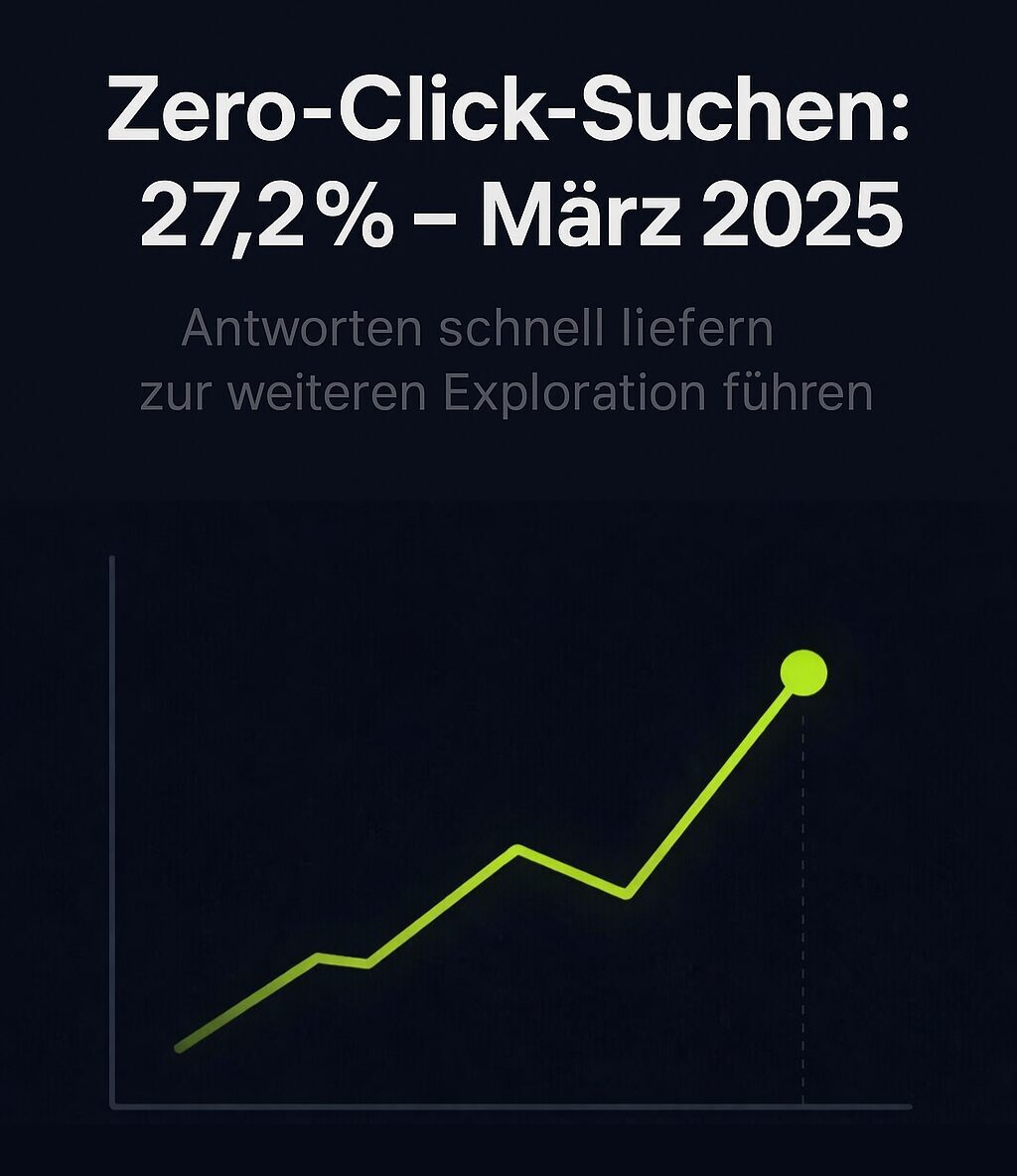
Align the hierarchy with intent, control facets and keep internal links clean so that crawlers and shoppers find what matters faster. Statistic for 2025: zero-click searches rose to 27.2 % in March 2025, so deliver answers quickly and guide people towards further exploration. (Search Engine Land)
SEO tactics for your home page
- Top topics above the fold
- Editorial blocks pointing to key pages
- Visible trust signals
Lead with primary categories and current priorities so that users know where to click and Google understands your commercial focus.
Add short editorial blocks with links to category hubs and buying guides: they work like signposts and concentrate internal link equity. Place shipping, returns, support and reviews where the eyes land in order to remove doubts early.
Structuring category pages for maximum visibility
- A clear tree: category to subcategory
- Smart, controlled facets
- A short introduction to the scope
- Helpful internal links
Let intent, not aesthetics, determine the hierarchy so that pages do not overlap and the right URL wins the right query.
Offer the filters buyers expect (size, brand, material) and control index/noindex plus canonicals so that filter states do not create duplicate low-value URLs.
Start with a two to three sentence introduction to set expectations and place important modifiers naturally; link to related subcategories plus one or two guides.
Optimising product pages for rankings and conversions
- Unique copy
- Rich detail
- Strong media
- Proof and policies
Explain what sets the SKU apart and who it is for. Add specs, sizes, care, comparisons and FAQs so that buyers do not have to leave to research. Use clear photos, 360-degree spins or short demos for trust and dwell time. Show delivery, returns and reviews in a way that cannot be missed.
Content hubs: blogs, guides and resources
- Buying guides
- “Best of” lists
- Care and how-tos
Teach the selection criteria, be transparent about those criteria and support use after the purchase, then link back to the right category or SKU so that content feeds the catalogue.
4) Content marketing strategies for e-commerce SEO
Content wins attention before people are ready to buy. Use guides, comparisons, tools and how-tos to answer questions and lead buyers back into the catalogue. Statistic for 2025: 95 % of Americans still use search engines every month, even as the use of AI tools rises, so search-friendly content remains a cornerstone of growth. (Search Engine Land)
Creating informational content for long-tail demand
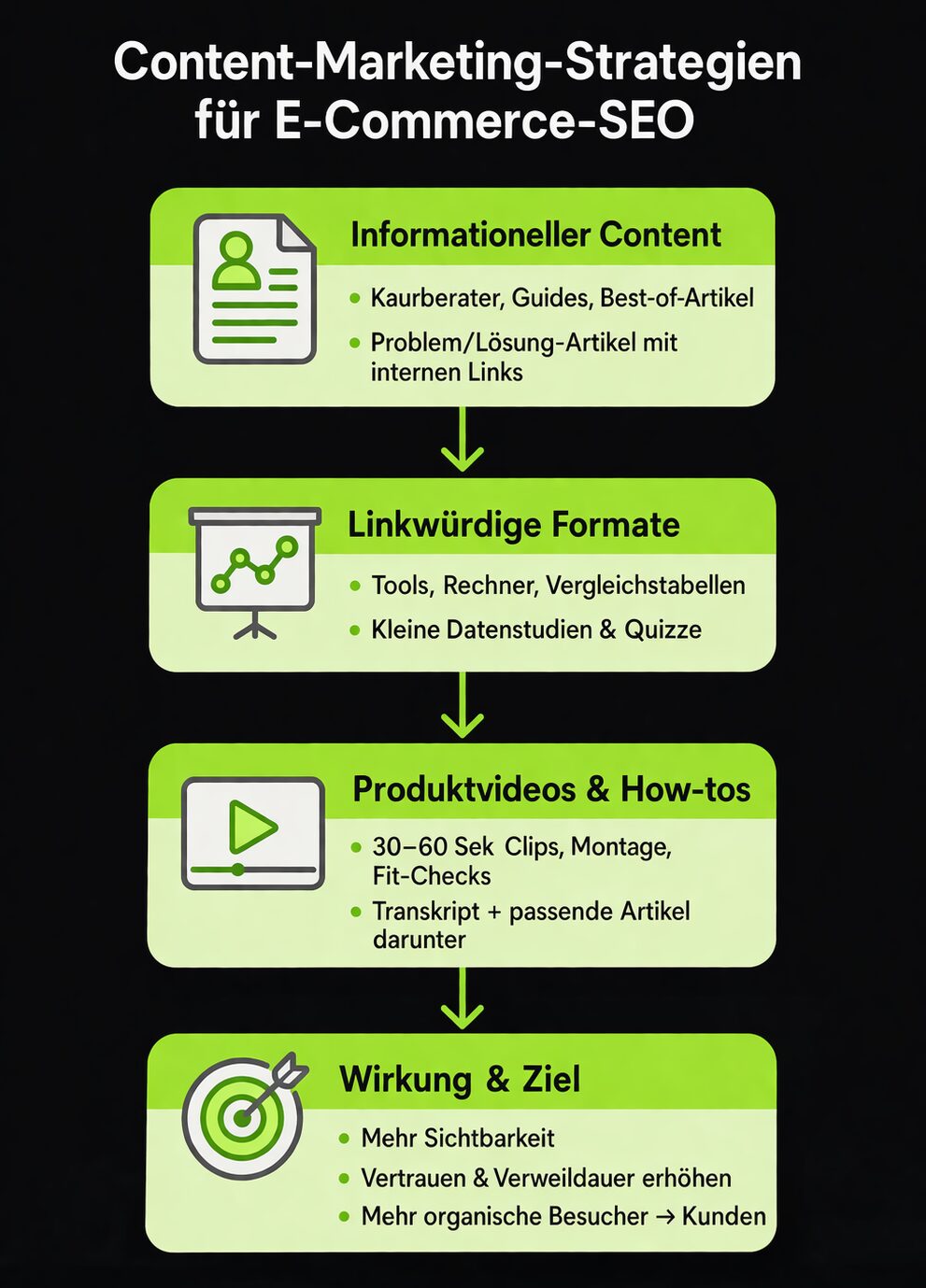
Think like a coach, not a closer. Create buying guides that sort the choice by budget, use case, material or season and give clear recommendations.
Add honest “best of” pieces that explain your criteria (what you tested and why it matters) so that readers trust the picks.
Include problem and solution articles that help with needs recognition, and link them directly to the matching category or SKU. This early-journey content reduces friction, gets shared and quietly steers buyers towards suitable products.
Link-worthy formats: tools, guides, calculators
Give people something to bookmark. Lean size calculators, fit finders and bundle builders take away uncertainty and keep users on your site while they decide.
Simple comparison tables or “choose your model” quizzes make the options clear without sales speak. If you have access to even small internal data sets, publish mini studies with clear takeaways (returns by material, common size-exchange patterns, durability).
These formats attract organic mentions and, crucially, should link back to the most relevant category or product so that the authority lands where it pays off.
Using product videos and how-tos
Show what words cannot. Short 30 to 60 second clips, covering assembly, try-ons, fit checks and care, clear up the last doubts before a purchase.
Embed them on category and product pages, add a one-paragraph summary or a transcript for clarity, and mention matching items right below the player.
Honest close-ups build trust, increase dwell time and turn more of your existing organic traffic into customers.
5) On-page SEO for online shops (content quality and user signals)
Deliver clean metadata, helpful copy, logical headings, tidy URLs and valid schema, then track click-through rate and engagement to focus your edits where they pay. The number one organic result achieves an average click-through rate of 27.6 %, so polishing titles and on-page elements can move noticeable revenue when you are close to the top. (Backlinko)
Writing effective meta titles and descriptions
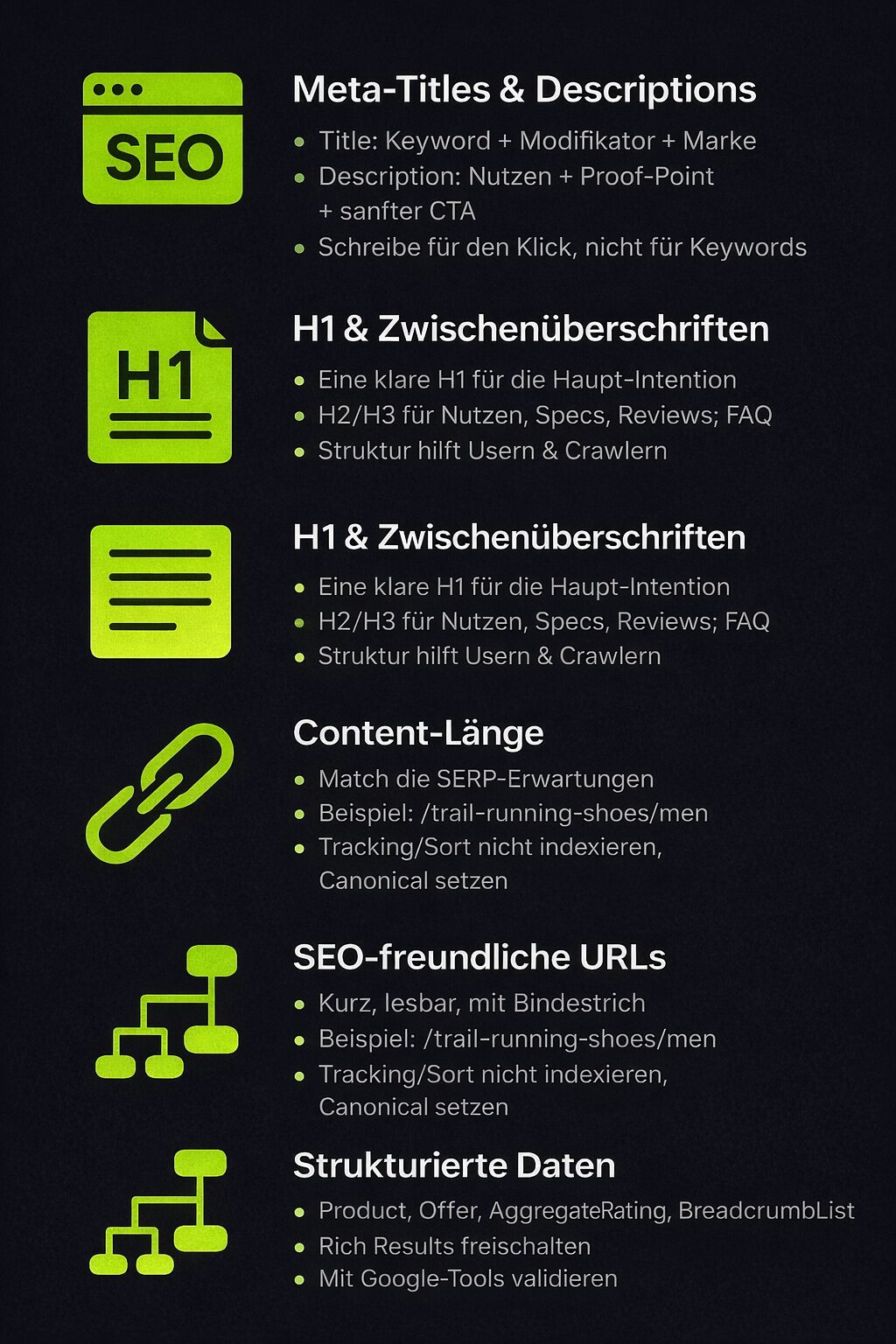
- Title: primary term plus key modifier plus brand
- Description: benefit plus trust signal plus a gentle CTA
Write for the click first. Match the query, add the most convincing qualifier, close with your brand and tune the top earners by hand. Explain why your result is the right stop, add a proof point (delivery, returns, review count) and nudge gently towards action, without stuffing.
Best practices for H1s and subheadings
- One H1 that hits the core intent
- H2s and H3s to structure benefits, specs, reviews and FAQs
Make the H1 literal. Use subheadings for easy scanning so that people and crawlers grasp your offer quickly.
How much copy is “enough”?
- Match the expectations of the SERP
- Quality before word count
If the winners are visual and fast, keep category copy short (roughly 120 to 250 words for the framing). On product pages, write the specifics that remove doubt: fit, care, comparisons and answers to common questions.
SEO-friendly URLs for product and category pages
- Short, readable, hyphen-separated slugs
- Do not drag parameters around on core pages
“/trail-running-shoes/men” beats “/prd?id=123&cat=4”. Keep one canonical per core URL; keep tracking and sort states out of the index.
Implementing structured data and rich snippets
- Product
- Offer
- AggregateRating
- BreadcrumbList
Mark up important details so that search engines can show richer results. Validate with Google’s Rich Results Test and monitor enhancements in Search Console.
On-page checklist for category pages
- A clear H1 with head term plus key modifier
- A short introduction that defines the selection and the benefit
- Facets visible; canonical to the base page when filtered
- Consistent product cards (price, availability, rating)
- Internal links to top subcategories plus one or two guides
- Individual meta title and description
Start with a precise H1 and a short introduction so that relevance is immediately clear. Let buyers filter by brand, size or material, but control index/noindex and canonicals so that filter states do not create duplicates. Keep product cards uniform, add clever internal links to related subcategories and guides, and edit the meta data for competitive categories by hand.
On-page checklist for product pages
- Unique title and description
- Specs, sizing, care; comparisons
- Images plus a short video; descriptive alt text
- Stock, delivery, returns; reviews
- FAQ block for common objections
- Internal links to the parent and to related pages
- Validate the Product schema
Explain what distinguishes the SKU and who it is for. Deliver the details that decide the purchase, show them clearly in photos, 360-degree views or short demos, and place logistics and reviews where the eyes land.
Answer common questions in a compact FAQ, keep visitors in the flow with links to the parent category and to complementary items, and check the Product schema for clean processing.
6) Speed and UX: technical improvements for shops
Every millisecond counts, so optimise images, delivery and scripts. Measure improvements where it matters: bounce, engagement and conversion on your most important organic landing pages.
- Images: WebP/AVIF, responsive sizes, lazy loading below the fold
- Delivery: edge caching and CDN, HTTP/2 or newer, preconnect and prefetch for critical origins
- JavaScript hygiene: defer non-critical JavaScript, trim third-party tags, split heavy bundles
- Templates before apps: lean themes first; plugins only when essential
Measure Core Web Vitals with PageSpeed Insights and CrUX or Search Console; prioritise the changes that reduce drop-offs on revenue pages.
7) Link building tactics for online shops
You do not trick your way to links, you earn them by being useful. Start with reclamation, analyse what already earns links, and then add brand PR and partnerships. More than 66 % of pages have no backlinks, so a steady stream of high-quality links can put you ahead of most of them. (Backlinko)
Reclaiming and repairing broken backlinks
Crawl for strong links that point to 404s, from old products, expired campaigns or migrations. Restore the page or 301 it to the closest matching page. If referrers use outdated URLs, send them the exact replacement: most editorial teams will update when you make it easy.
Analysing competitor backlink profiles
Pull competitors’ most-linked pages to see what attracts citations (tools, guides, comparisons, unique category angles). Offer something better, with fresher data, clearer visuals or a tighter scope, and lead with value for their readers.
Using local store finders for natural links
Create one page per location with correct NAP data, opening hours and a short unique paragraph. Local partners, chambers of commerce and the regional press regularly cite location pages like these and send qualified visitors into your catalogue.
Ready for more revenue?
Book a free SEO and GEO audit

Find out in a free call how much revenue your website is leaving on the table, with no obligation and no agency waffle.