


Everything at a glance
- Treat B2B SEO as demand capture for high-value decisions: intent fit beats volume.
- Plan for AI-shaped SERPs, with impressions up and click-through rates down. Optimise for clear answers, strong snippets and credible sourcing.
- Connect SEO to sales-accepted leads and pipeline, and build clusters that take evaluators from definition through evidence to a demo.
- Keep the four pillars healthy, on-page, off-page, technical/UX and local, and give them time to work and compound.
- Use tools to monitor rankings, mentions and AI Overview presence: small position gains and broader brand visibility still make a difference.
B2B SEO is search engine optimisation for companies that sell to other companies. The goal is visibility in the few valuable queries that real buyers make, not mass traffic.
It combines technical foundations, specialised content and credible off-site signals so that decision-makers find you, trust you and take the next step. That is exactly what long, complex buying cycles need: clarity, evidence and guard rails that reduce the risk for a committee.
How does B2B SEO differ from B2C SEO?
B2B SEO means optimising your website and content so that buying committees in other companies discover, evaluate and choose you through organic search, creating qualified leads and pipeline across longer, multi-touch sales cycles.
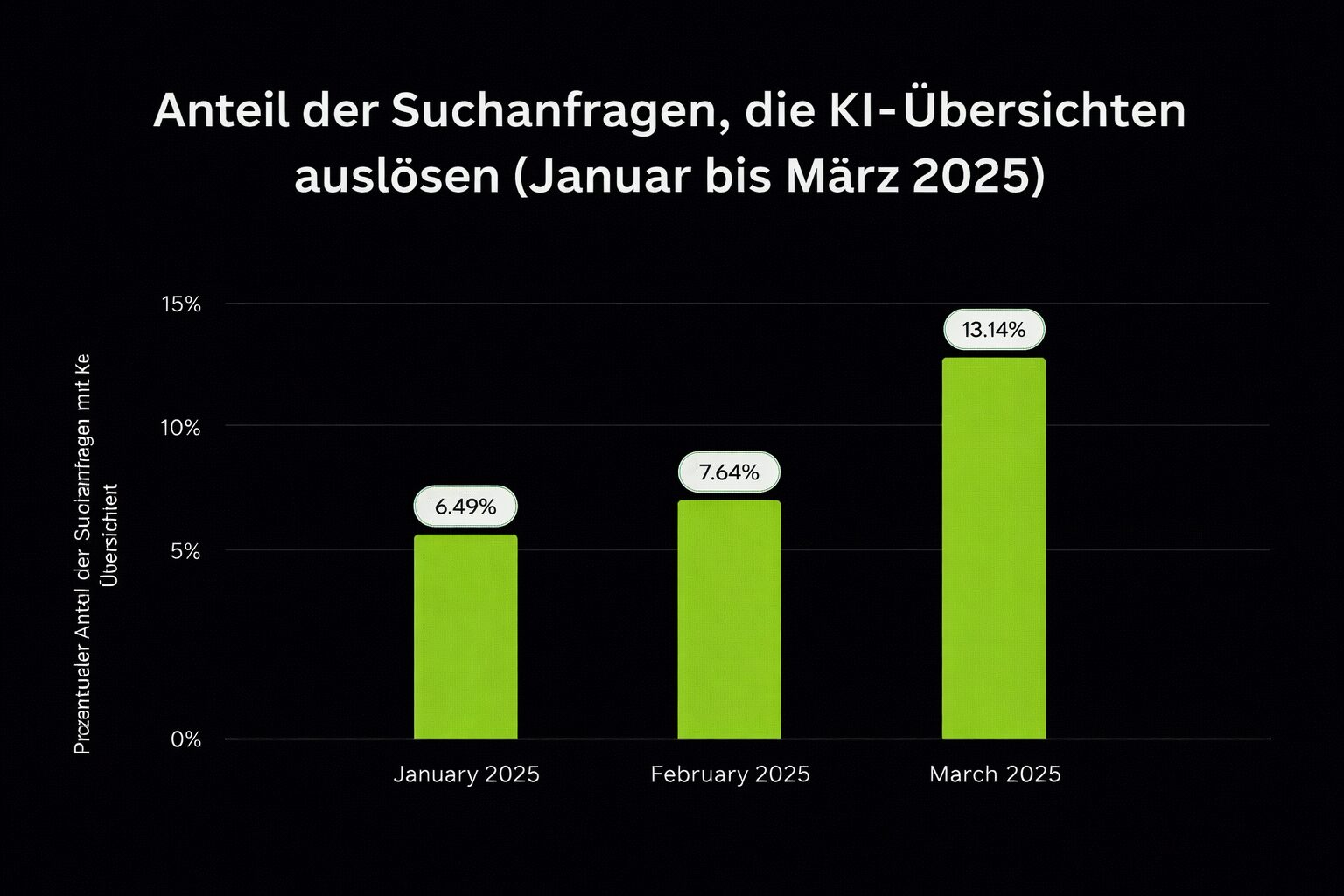
The SERP has changed: in Q1 2025, Semrush measured AI Overviews on 13.14 % of US desktop queries, a rise that mainly affects informational research, which is where B2B buyers start. That is your signal to put clear answers, sources and practical steps front and centre. (Semrush)
You are guiding evaluators through a purchase-critical process involving several roles. Volume is smaller, intent is sharper, and evidence counts for more than slogans.
| Dimension | B2B SEO | B2C SEO |
|---|---|---|
| Audience and demand volume | Small, niche audiences with specialised requirements. | Large, broad audiences with mass-market needs. |
| Decision process | Buying committees; several roles and sign-offs. | Individual or household decisions; fewer sign-offs. |
| Sales cycle | Long, multi-touch, heavily evaluative. | Shorter, more impulsive or convenience-driven. |
| Search volume and keyword type | Lower; long-tail, technical, integration or compliance related. | Higher; head terms and product phrases. |
| Intent patterns | Mostly informational, then comparative, then solution fit. | A mix of informational and transactional; more “buy now”. |
| Job of the content | Reduce risk, explain scope, show how it works, prove ROI. | Persuade quickly, show benefits, remove friction from the purchase. |
| Proof and E-E-A-T | Critical: author credentials, cases with numbers, certifications. | Helpful: reviews, user-generated content, social proof; usually less depth. |
| Conversion goal | Demo, consultation, RFP, technical call; lead qualification. | Add to basket, sign-up, voucher redemption; immediate purchase. |
| SERP landscape | Strongly influenced by informational features such as AI Overviews; clear, sourced answers win attention early. | A mix of shopping packs, reviews, local and brand results; price and availability are prominent. |
| Primary success metrics | Sales-accepted leads (SAL), pipeline value, win rate, influenced revenue. | Revenue, average order value, conversion rate, ROAS, subscriber growth. |
Characteristics of B2B services
B2B offerings are complex, bespoke and expensive. They raise questions about risk, integration, law and ROI. The pages that win do not hype: they explain the scope, show how something works, name dependencies and back up claims with cases and numbers. That produces content a buyer can take into an internal meeting and defend.
SEO keywords in B2B: why search volume is not enough
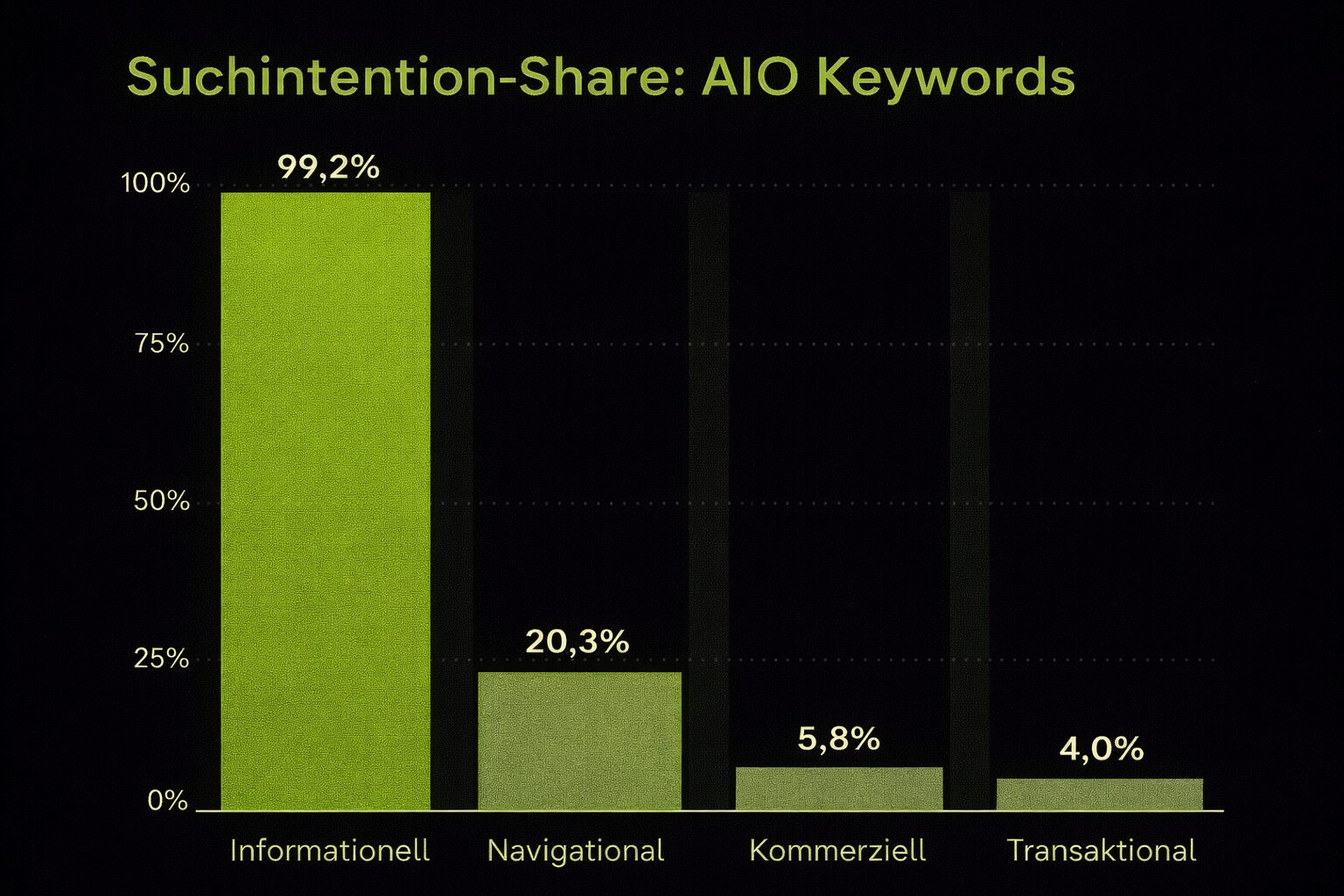
A good B2B keyword matches intent, budget fit and buying stage. Ten of the right visitors are worth more than a hundred random clicks. The 2025 landscape makes that even clearer: the large-scale AI Overview study by Ahrefs found that 99.2 % of keywords with AI Overviews are informational, exactly the early questions that serious B2B journeys start with. (Ahrefs)
Search volume vs search intent
Volume is an estimate; intent is reality. Read the SERP like a product manager: which formats appear, what the top pages actually answer, and whether the query is shouting “learn”, “compare” or “buy”. Then assign the query to a stage (awareness, consideration, decision) and design the page to win that moment.
How to research B2B keywords effectively
Start with customer language from sales calls, RFPs, support tickets and win/loss notes. Expand it with a tool to cover variants, SERP features and competitor gaps, then build a keyword-to-URL map with one primary intent per page. Add SERP notes (is an AI Overview present? People Also Ask? comparison packs?) and internal paths that lead readers to evaluation assets.
SEO content: B2B vs B2C approaches
In B2B, content reduces uncertainty and enables action in everyday work. Use an “explain and prove” rhythm: plain-language definitions, checklists, frameworks, integration notes and case studies with real numbers. Opinion is fine when it is backed by method and data.
| Area | B2B approach | B2C approach |
|---|---|---|
| Keyword strategy | Intent fit before volume; map terms to stages (learn, compare, decide); include integration and compliance queries. | High-volume commercial terms; seasonal and head terms; brand plus product modifiers. |
| Content formats | Definitions, frameworks, comparison guides, integration notes, security and compliance pages, case studies with numbers. | Buying guides, product pages, reviews, user-generated content, how-tos, social content, promotions. |
| Page design | Start with a clear answer; how it works, KPIs, risks, FAQs; downloadable assets (checklists, templates). | Benefit-first hero, images, quick specs, social proof, simple pricing and returns blocks. |
| Internal linking and journeys | Structured paths: “What is X?”, “X vs Y”, “Integrations with Z”, “Case in industry A”, “Talk to an expert”. | Category, product, basket, with cross-sells and FAQs; minimal steps to purchase. |
| Off-page and citations | Authority through data studies, partner content, industry portals, conference mentions. | Reviews, influencers and user-generated content, editorial features, coupon and deal sites. |
| Technology and UX | Indexing hygiene, Core Web Vitals, semantic structure; information architecture mirrors problems, solutions, industries and integrations. | Speed, mobile checkout, image optimisation, filters and facets for discovery. |
| Local SEO | Where relevant: complete business profiles, location pages with services, certifications and local references. | Essential for shops: Google Business Profile optimisation, reviews, photos, offers, local stock. |
| CTAs and offers | Demo, technical consultation, ROI calculator, solution blueprint, pilot. | Buy now, limited-time offer, free shipping, bundle or discount. |
| Measurement | Track SALs, opportunity value, influenced revenue; connect SEO to the CRM. | Revenue, conversion rate, average order value, subscription and retention; connect to e-commerce analytics. |
| Refresh cadence | Quarterly updates for pillars and comparisons; add new cases and integration notes. | Frequent product and content updates driven by seasonality, trends and promotions. |
Informational vs commercial content types
Informational pieces explain “what it is” and “how it works”. Commercial pieces help with the choice: comparisons, ROI breakdowns, use cases and proof. Both need visible E-E-A-T, meaning author bios, references and certifications, plus a clear next step (demo, audit, conversation with an engineer).
Clear and accessible content structure
Lead with the promise and the outcome. Use scannable subheadings, cite sources and show the “so what” with tables or charts. Keep the voice direct and human. That is how you earn trust with people and citations on AI surfaces.
Audiences, buyer personas and the B2B customer journey
A persona is not a job title; it is goals, risks, KPIs, tools and objections per role. Create short profiles for the economic buyer, the technical owner and the day-to-day user; map their questions by stage and link pages so that each role naturally finds the next answers.
Is SEO worth it for B2B companies at all?
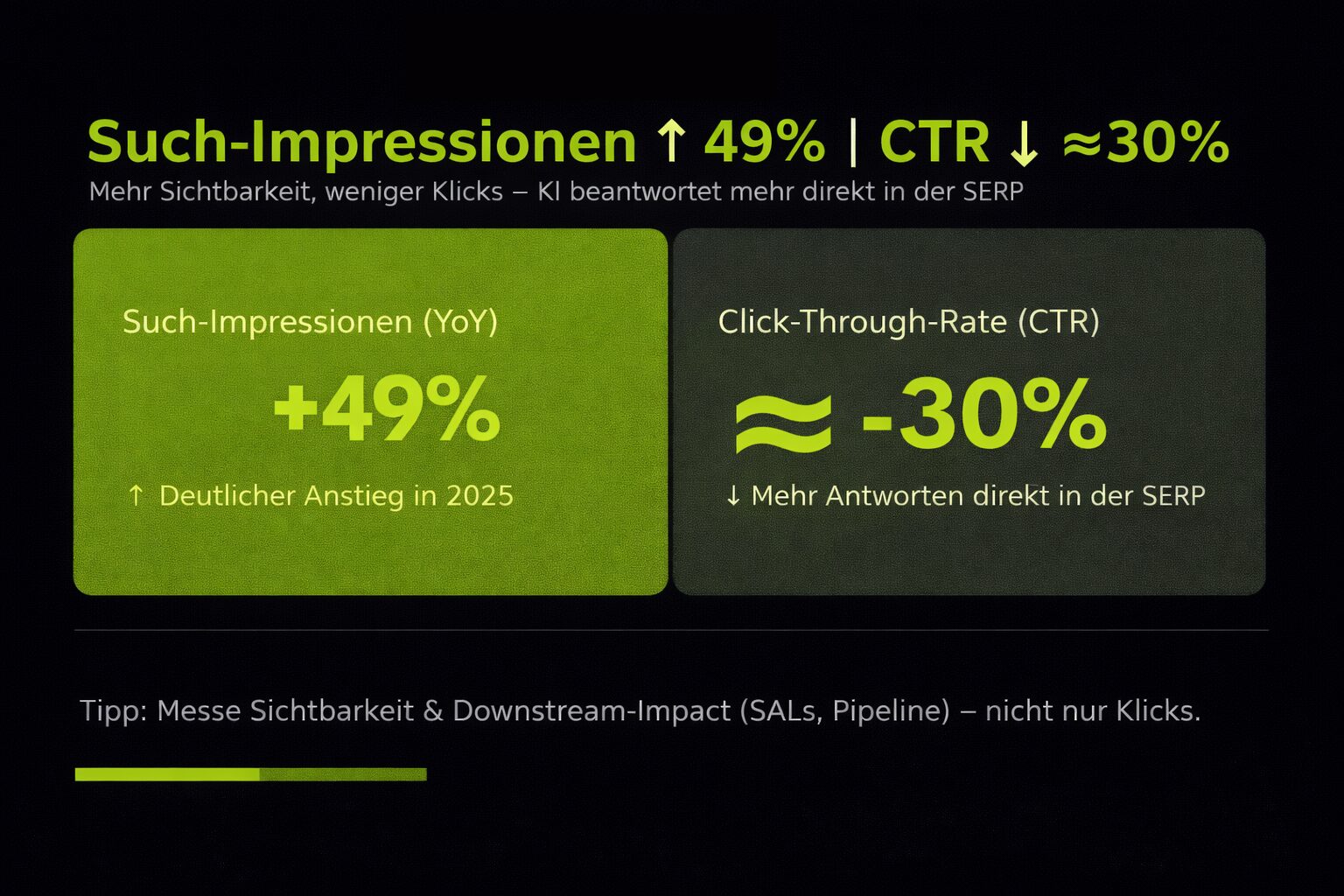
Yes, because it captures active demand and compounds. The dashboard has changed. BrightEdge reported more than 49 % growth in search impressions year on year, while click-through rates fell by roughly 30 % as AI delivers more answers directly in the SERP. That pushes you to measure visibility and downstream impact (SALs, pipeline), not only clicks. (Search Engine Land)
Long sales cycles and lead quality
B2B SEO works like a flywheel: visibility creates repeated touchpoints, touchpoints build trust, and trust turns into qualified conversations. Measure success by sales-accepted leads and influenced pipeline, not by raw form fills. Fewer, better demos beat more noisy MQLs.
ROI potential and measurability
Treat content as an asset that gains value with updates and internal links. Connect Search Console, analytics and your CRM to see paths such as “definition, comparison, case, demo”, and expect results to compound over months rather than weeks, especially with today’s decoupling of impressions and click-through rate.
Building visibility and reputation
Authority travels. Mentions on respected industry sites, data studies and partner content make both people and AI systems more likely to trust you. That credibility is exactly what earns prominent placement and citations when AI Overviews appear.
What are the most important areas in B2B SEO?
Four pillars carry the load: on-page, off-page, technology and UX, and, where relevant, local. Master the fundamentals and let content and reputation compound.
With AI Overviews on a growing share of queries in 2025, clean answers with sources and structure give you an advantage.
To make this practical, think in five parallel tracks:
- On-page (and on-site) optimisation: align every page with a clear intent; keep the whole site coherent.
- Off-page optimisation: earn authority through mentions, citations and links that genuinely make sense in your niche.
- Technical SEO and UX: make discovery, rendering and speed effortless.
- Local SEO (where relevant): win region-based searches and map visibility.
- Patience: B2B cycles are longer; results compound with consistency.
On-page optimisation
On-page aligns every page with a clear intent and makes it understandable for users and crawlers. Start with the answer, set a precise title and meta promise, keep headings logical, add schema where it helps, and link to evaluation assets such as comparisons and case studies.
Ahrefs reports that one of its own blog articles climbed seven positions in Google’s rankings after changing just a single word in the title (26 Aug 2025). (Ahrefs)
Go one level deeper (including on-site):
- Content strategy first: map topics to stages (learn, compare, prove, talk to sales). Each primary intent equals one page.
- Metadata that earns the click: one H1 per page; the main keyword naturally near the front; titles and descriptions that match the page’s promise.
- Trust signals built in: visible authorship, testimonials, certifications, logos, compliance notes and short “how it works” blocks. People buy evidence.
- Internal linking as a system: guide readers from definitions to comparisons to integrations to case studies to a demo. Internally linked clusters distribute authority and keep momentum high.
Off-page optimisation
Off-page is borrowed trust: authoritative links, mentions and citations, earned by publishing things that are worth citing. In B2B, a few relevant, highly authoritative placements beat dozens of off-topic links. Think data studies, industry benchmarks, partner content and expert contributions.
Make it repeatable:
- Partner links: ask integration and implementation partners for dofollow mentions on relevant pages.
- Data and opinions worth citing: your own benchmarks, pricing or ROI calculators, or teardown articles that answer hard questions.
- Digital PR instead of spam: pitch industry publications, associations and event sites that your buyers already read.
- Refreshes that earn links again: update key guides with new examples and figures, and notify sites that have cited you before.
The top 50 domains account for 28.90 % of all mentions across AI answer surfaces (AI Overviews, ChatGPT, Perplexity), and off-site signals such as web mentions correlate more strongly with this visibility than backlinks do. (Ahrefs)
| Domain | Mentions | Impressions |
|---|---|---|
| reddit.com | 2,971,746 | 1,881,884,930 |
| en.wikipedia.org | 2,920,525 | 13,910,509,832 |
| quora.com | 2,276,494 | 618,988,629 |
| youtube.com | 2,063,355 | 3,577,707,498 |
| nih.gov | 1,288,730 | 3,124,783,852 |
| mayoclinic.org | 1,316,872 | 6,159,726,120 |
| clevelandclinic.org | 1,109,623 | 5,098,852,777 |
| translate.google.com | 857,892 | 4,465,811,843 |
| healthline.com | 979,908 | 2,236,792,358 |
| webmd.com | 917,464 | 2,190,526,123 |
Technical SEO and user experience
Technical SEO secures discovery, rendering and understanding, plus speed and stability for users. Keep crawl paths clean, watch Core Web Vitals and build an information architecture that thinks like buyers (problems, solutions, industries, integrations, resources). Slowness undermines trust in high-involvement decisions.
Prioritise impact over tinkering:
- Crawl and index: XML sitemaps, robots.txt hygiene, canonicals and log file checks to confirm that Googlebot sees what matters.
- Speed and stability: optimise LCP, INP and CLS; trim JavaScript; lazy-load media; test on mobile hardware, not just desktop.
- Structure and semantics: consistent headings, helpful schema (for example FAQ, HowTo, Article), clean code.
- Mobile-first reality: design and test flows for small screens; complex B2B journeys still start on mobile.
Local SEO in a B2B context
If you sell regionally, run workshops or service equipment, local signals matter. Maintain consistent NAP data and complete Google profiles, and build location pages that show services, industries and proof (photos, certifications, references) for the region.
Concrete moves:
- Business profiles: complete categories, services, opening hours, photos and Q&A; ask for reviews and respond to them.
- Location pages: unique copy per region, embedded maps, nearby customers or case snippets, and local CTAs.
- Citations: industry directories as well as chambers and associations that your buyers trust.
- Map pack readiness: secure proximity, relevance and prominence with real-world signals (events, sponsorships, PR).
Patience: why results take longer in B2B
More stakeholders, more evaluation, more steps. Ship regularly, link internally in an aggressive way, keep improving the UX and give the programme months to compound: visibility usually becomes noticeably stronger in months 6 to 12 and grows substantially between 12 and 24.
How to stay on track:
- Quarterly themes: pick one or two clusters per quarter and go deep (pillar plus comparisons plus integrations plus case).
- Review cadence: monthly technical checks; quarterly content refreshes for top assets.
- Sales feedback loop: log objections from calls and turn them into pages you can link to in follow-ups.
How do you develop a successful B2B SEO strategy?
Start where buyers get stuck. Document jobs to be done, objections, procurement risks and integration hurdles. Map keywords to journey stages and build clusters that each solve one sharp problem, and prove that you can deliver.
Anchor everything in business and marketing goals and work cross-functionally (SEO, product, sales, success) so that your strategy reflects real customer conversations, not just keyword lists.
One more insight from 2025: Ahrefs found that 99.2 % of AI Overview keywords are informational, so clear, sourced education is your default. (Ahrefs)
Defining the right audience and buyer personas
You are not targeting “the internet”; you are solving for specific roles with specific stakes. Clarify who decides, who implements and who influences, plus how success is measured and what could go wrong. Use verbatim quotes from calls and emails to capture language and criteria.
- Start with a lean persona set (two to three at most): the economic buyer, the technical owner, the day-to-day user.
- Capture for each persona: role and seniority, team size, KPIs, budget range, must-have features, blockers, compliance needs, tools and stack, and “red flag” risks.
- Add search behaviour: terms, questions, preferred formats, device mix, seasonality.
- Cross-check weekly with sales and customer success so that personas stay real.
Questions that focus your content:
- What exactly is my audience trying to achieve at work right now?
- How do they search (problem, solution, comparison, integration, pricing)?
- Which terms do they use for the same concept?
- Which objections block deals, and can a page defuse them?
E-E-A-T and trust signals as ranking factors
Experience, expertise, authoritativeness and trust are not abstract: they are visible. Make authorship tangible (bio, credentials, field experience). Show your work (methods, data, sources).
Place risk reducers where buyers look: certifications, SLAs, security and compliance notes, partner logos, referenceable customers.
Practical moves:
- Author pages with credentials plus links to talks and publications.
- Case studies with numbers (scope, timeline, KPIs before and after).
- Transparent methodology sections and “last updated” dates on evergreen guides.
- Reviews and testimonials on relevant pages, not only on a “wall of love”.
In categories such as health and B2B tech, trustworthy sources were also more likely to appear in AI Overviews in 2025.
Keyword strategy and content mapping
One primary intent per page; one page per primary intent. Build pillar pages (definitions, frameworks) and link into deeper clusters (comparisons, use cases, integrations, case studies). Avoid cannibalisation by grouping close variants and choosing one canonical, ownable angle per URL.
What takes priority:
- Long-tail and specific B2B queries (fewer searches, higher deal value).
- Journey coverage: awareness (“what is”), consideration (“X vs Y”, “best tools for…”), decision (“pricing”, “requirements”, “security checklist”).
- SERP reality check: review formats, questions and AI Overview occurrences; match the page structure to the target surface.
- Naming discipline: consistent slugs, internal anchors and breadcrumb logic that reflect how buyers think.
Keyword research workflow (condensed):
- Collect language from calls, RFPs and support.
- Expand it with a tool to cover variants, questions and competitors.
- Cluster by intent and stage; assign one target page per cluster.
- Write titles and metas that set a precise promise; add SERP notes (People Also Ask, snippets, AI Overviews).
- Plan internal links from pillars to evaluation assets to conversion pages.
Content marketing as a core discipline
Content is enablement: if it makes someone’s next meeting easier, it works. Write in plain language, show the steps, quantify trade-offs and add the artefacts buyers need in order to move forward (checklists, templates, diagrams, comparison criteria).
Publish a few pieces that only you could write, such as field notes, teardown studies and integration playbooks, so that people and AI systems have a reason to cite you.
Formats that perform in B2B (mix them, do not max out just one):
- Webinars and video tutorials that demonstrate real workflows.
- Case studies and customer interviews with measurable outcomes.
- Whitepapers and ebooks that bundle complex topics into a single asset.
- Integration guides and security or compliance pages that buyers can forward internally.
- Blog frameworks (definition, pitfalls, implementation) that link into comparisons and pricing logic.
- Events, workshops and meetups, with the material turned into searchable pages afterwards.
- Newsletters and guest contributions to extend reach into communities that already trust you.
Tie it all together with a sensible structure (URL plus breadcrumbs plus in-text links). That signals depth to crawlers, builds topical authority and, more importantly, gives real people a path from “learn” to “choose”.
Aligning SEO with the B2B sales funnel
SEO has to match CRM reality. Model a path such as “What is X?”, “X vs Y”, “Integrations with Z”, “Case in industry A”, “Talk to an expert.” Give each step a clear next action and track the transitions to spot bottlenecks.
How to operationalise it:
- Shared goals: align SEO targets with SALs, pipeline value and win rate, not just traffic.
- Attribution that sales trusts: tag journeys so that key pages get credit for opportunities.
- Objection-to-asset loop: every recurring sales objection gets a page or section you can link to in follow-ups.
- Quarterly focus: pick one or two clusters per quarter (pillar plus comparisons plus integrations plus case) and finish them completely before moving on.
If you keep the map lean, with personas, E-E-A-T proof, intent-clean pages, a system that teaches and proves, and a funnel connected to the CRM, your programme compounds. The result: fewer, better leads and a site that sales actually uses during a deal.
What role does the website play in lead generation?
Your site is your sales deck, available around the clock. It should reduce risk, clarify fit and make the next step obvious for every role on the committee.
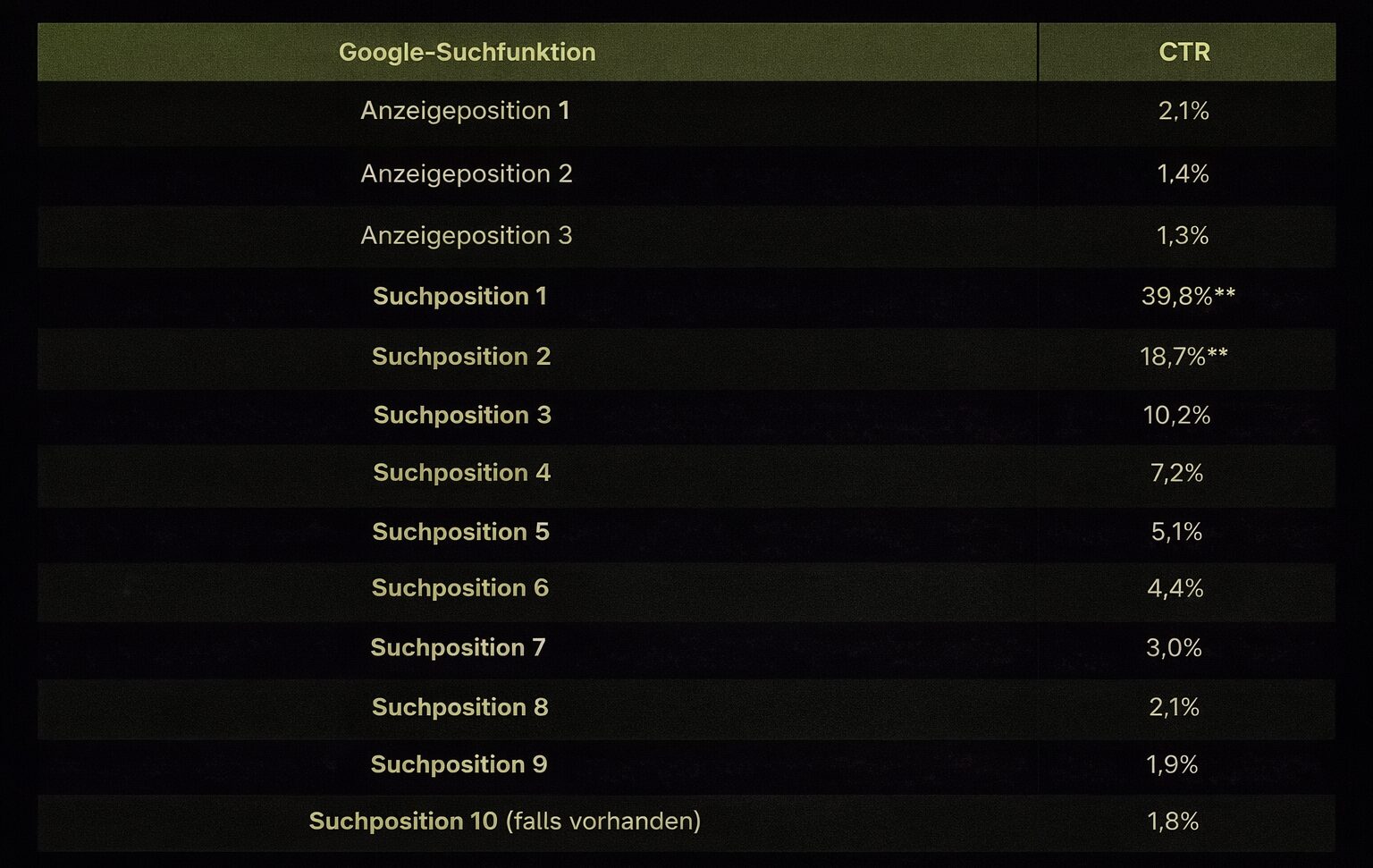
Position still pays off: FirstPageSage reported average click-through rates in 2025 of 39.8 % for position 1 and 18.7 % for position 2, which is strong motivation for fast pages with razor-sharp snippets and a clear above-the-fold message. First Page Sage
- Landing pages and conversion optimisation: a focused landing page translates search intent into a concrete offer. Above the fold: who it is for, which outcome, short proof and a clear CTA. Add “how it works”, outcomes, integrations, compliance and a few short FAQs that defuse common objections.
- User-friendly navigation and structure: information architecture is strategy. Lead every role to “their” answers in one or two clicks. Group by problems and solutions, not by your org chart; use mega menus for solution clusters; keep breadcrumbs and internal links clean so that visits become journeys.
- Connecting SEO with marketing automation and the CRM: SEO data becomes valuable when it meets CRM data. Map UTM parameters and events to leads and opportunities, build nurture paths along the journey, and report assisted revenue at URL level to secure budget for content that moves pipeline.
Which tools are useful for B2B SEO?
Start lean: research (keywords, SERPs), crawling (technical health), analytics (behaviour), rank tracking (visibility) and CRM integration (business impact). The 2025 Ahrefs analysis shows concentration in AI citations, with the top 50 brands accounting for around 28.9 % of all AI Overview citations, so monitor mentions and citations alongside links. (Ahrefs)
Keyword research tools
- Ahrefs
- Semrush
- Google Keyword Planner
- AlsoAsked
- AnswerThePublic
- Ahrefs Content Gap / Semrush Keyword Gap (competitor gaps)
Technical SEO and crawling tools
Crawlers uncover broken paths, rendering problems and gaps in internal linking before users feel them. Schedule routines, prioritise issues by impact times effort, and watch Core Web Vitals and indexing shifts after every release.
- Screaming Frog SEO Spider
- Sitebulb
- Lumar (Deepcrawl)
- JetOctopus
- Ryte
- ContentKing (Conductor Live) / Little Warden (change monitoring)
- Google PageSpeed Insights, Lighthouse, WebPageTest, Chrome DevTools (performance diagnostics)
- Screaming Frog Log File Analyzer / ELK stack (log analysis)
Analytics and performance tracking tools
Combine analytics and Search Console with rank tracking and your CRM. Track funnel metrics per cluster: impressions and visibility, then click-through rate and qualified visits, then SALs, then pipeline value. Watch how AI Overview presence affects click-through rate so you can adjust snippet strategy and content formats.
- Google Analytics 4 (GA4), Google Search Console
- Plausible, Matomo (privacy-focused analytics)
- Hotjar, Microsoft Clarity (behaviour insights)
- Rank tracking: STAT, AccuRanker, Ahrefs Rank Tracker, Semrush Position Tracking, SEOmonitor, Nozzle
- CRM and automation: HubSpot, Salesforce (MCAE/Pardot), Marketo; connectors: Zapier, Segment
- Reporting: Looker Studio, Power BI, Tableau
- Mentions and citations: Ahrefs Alerts, Brand24, Mention, Google Alerts
Which mistakes should B2B companies avoid in SEO?
Chasing traffic instead of qualified demand, neglecting technical basics, thin content without expertise, and ignoring AI-shaped SERPs. The 2025 Ahrefs analysis found that AI Overviews reduce clicks to websites by roughly 34.5 % when they appear, so if you do not align titles, snippets and formats to earn the click (or the citation), you will see visibility without results. (Ahrefs)
- Over-indexing on traffic instead of qualified leads: volume without fit wastes time. Prioritise keywords that start real projects, and link readers from awareness through evaluation and proof to the demo so that momentum does not die.
- Ignoring technical SEO basics: if crawlers and users cannot get through smoothly, nothing else takes hold. Fix crawl errors, speed problems, fragile templates and broken internal links before chasing new topics. Technical stability builds trust in high-involvement decisions.
- Cutting corners on content depth and expertise: surface-level content is not enough in 2025. Show experience, data and clear steps. Publish pieces that can be acted on today, with sources and numbers that people and AI Overviews can cite, and refresh them as your product and market evolve.
Ready for more revenue?
Book a free SEO and GEO audit

Find out in a free call how much revenue your website is leaving on the table, with no obligation and no agency waffle.