


Everything at a glance
- Quality beats quantity: relevant, contextual links placed for real readers deliver lasting gains; prioritise placements that match search intent instead of raw volume and vanity metrics.
- Be transparent: label paid placements and prioritise reader-focused content to reduce risk and build trust across audiences and platforms.
- Expect a ramp-up phase: meaningful gains add up over time; plan with steady inputs and measurable outputs rather than overnight success.
- Measure what counts: track referral traffic, rankings and conversions, not just scores; assess links by audience fit and real business results.
- Hybrid wins: use selected sponsorships to support a content engine that earns links naturally and accumulates authority over months and years.
If you are considering buying backlinks, you are probably weighing risk against benefit. This guide gives you the full picture: what a “good” link looks like, when paid links can help, when they do harm, how much they typically cost and the practical steps for doing this as safely and effectively as possible.
See backlinks as trust signals. When the right websites reference you, you gain visibility where it counts most: in front of people who are actively searching. But not all links are equal. The goal is not to collect as many as possible, it is to secure relevant, reader-focused placements that genuinely move something without putting your brand at risk.
This is not a loophole manual. It is a clear, practical field guide for entrepreneurs, marketing managers, in-house SEO teams and bloggers who want straight answers. You will learn what “good” looks like, where paid links fit into a legitimate strategy, which red flags to avoid, realistic prices, smarter ways to do outreach and negotiation, best practices for anchor texts and placements, and how to track impact over time.
What is a good backlink?
A backlink is simply a hyperlink on another website that points to your page. Good backlinks are relevant, trustworthy and useful for real readers.
They sit on pages with real traffic and are placed within helpful content, not in footers or random directories.
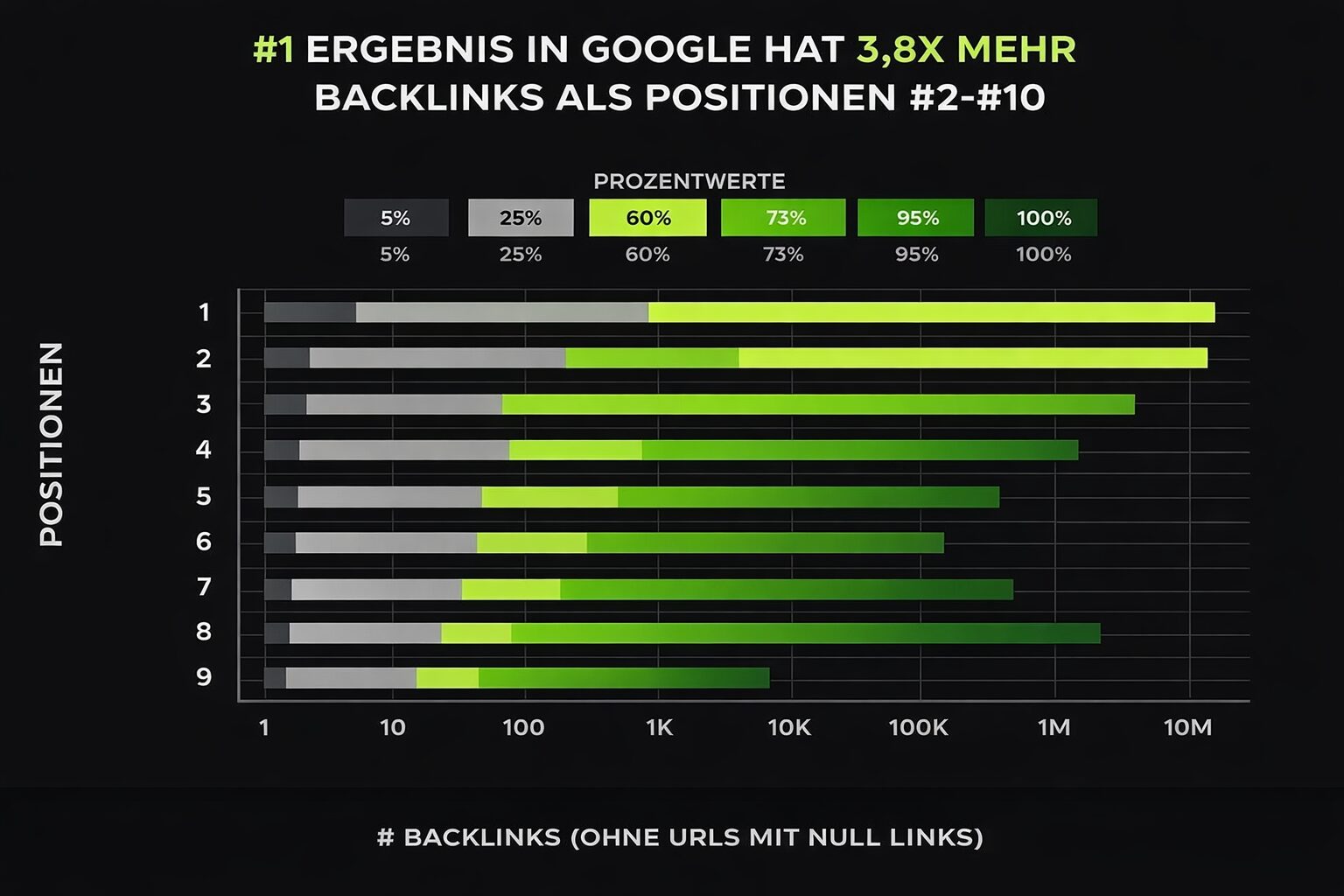
Strong link profiles tend to correlate with better rankings; a large-scale study found, for example, that the number 1 result on Google has 3.8× more backlinks than positions 2 to 10. (Backlinko)
What makes a high-quality backlink?
- Topical relevance: the linking site and the linking post should clearly fit your topic. A link from a recognised niche site can beat a random high-metric domain that covers irrelevant subjects.
- Real audience signals: look for sites that rank for keywords, have stable organic traffic and receive comments or shares.
- Editorial context: the link should sit in the main content, surrounded by text that explains why the reference helps the reader.
- Natural anchors: prefer brand, URL or partial-match anchors that sound natural. Exact-match anchors are fine in small doses, but risky at scale.
- Clean neighbourhood: avoid pages stuffed with outbound links or categories known for spam (casino, loans, crypto, adult), unless they are genuinely relevant to your niche.
Which metrics count most: domain authority, traffic or relevance?
Treat DA/DR as benchmarks, not as targets. What matters most is relevance plus traffic plus context. A DR 35 site with healthy organic traffic and a highly relevant audience can perform better than a DR 70 domain with weak content in your niche. Use metrics to build the shortlist; decide on the basis of traffic, topical fit and link placement.
Dofollow vs. nofollow
- Sponsored links should be marked with rel=”sponsored”. (If you want to be on the safe side.)
- nofollow/sponsored are generally treated as hints, not as hard rules, but you should still disclose paid placements.
- Nofollow can still help through referral traffic, brand lift and serendipitous “follow” links later on, when new readers discover your content.
Why do SEO professionals buy backlinks?
Paid links are a reality in competitive markets. Some pages (such as product or service pages) rarely receive organic citations, so site owners sponsor content to gain coverage, discovery and authority signals.
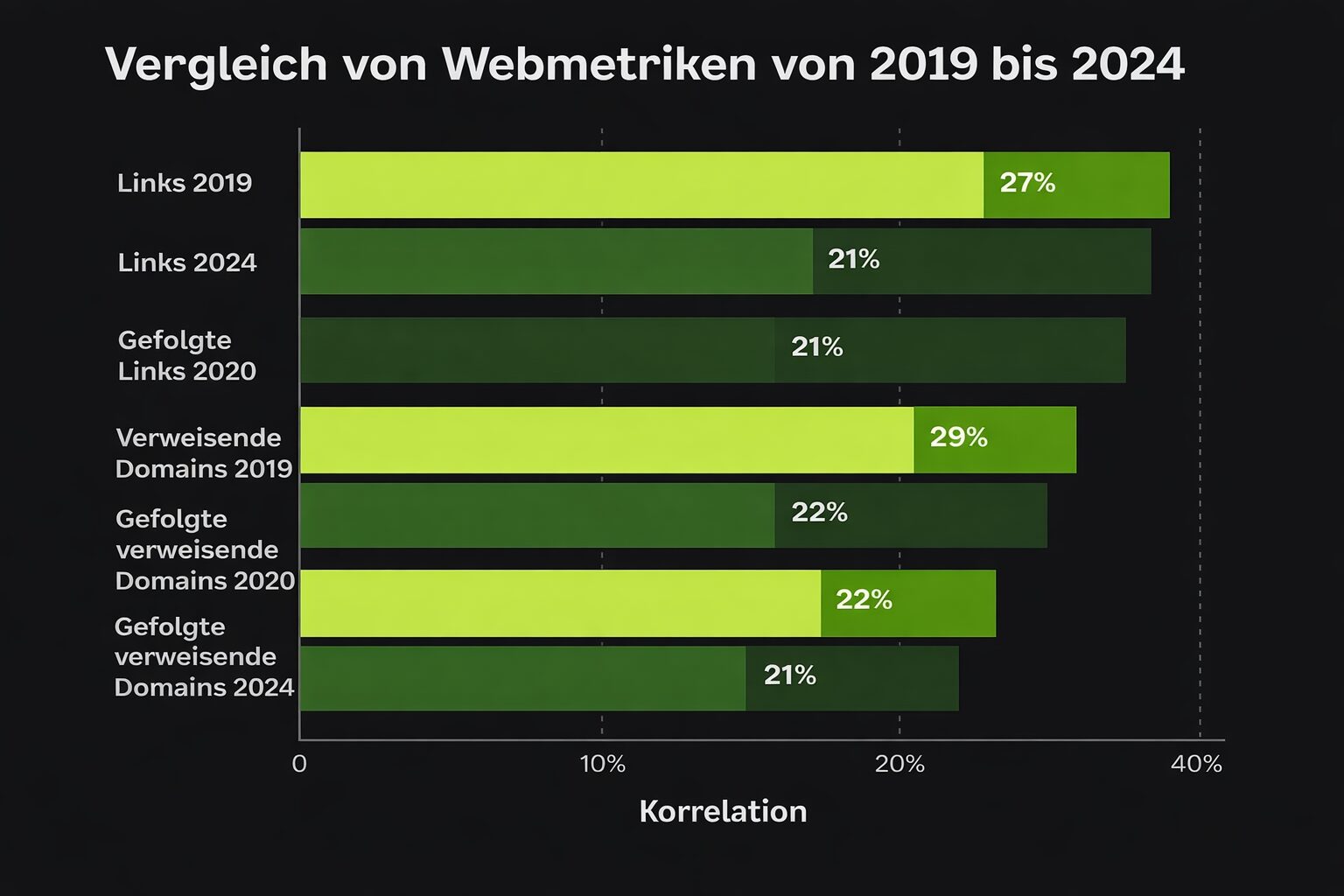
Links correlate with higher rankings, which is why many teams budget for them alongside content and digital PR. An Ahrefs analysis from 2025, for instance, reported that the number of referring domains showed a correlation coefficient of around 0.29 with rankings, one of the stronger measurable link-related signals.
1) Proven effectiveness and scalable acquisition
In competitive markets, many product and service pages do not attract links on their own, so teams sponsor content to gain coverage, discovery and authority signals. Links correlate with better visibility, and top pages keep acquiring new referring domains.
2) Manageable risk with standards
Buying links sits in a grey area, but the risk is controllable if you treat placements as sponsorships for readers: insist on relevance, editorial quality and clear labelling (rel=”sponsored”).
Avoid networks, bulk packages and over-optimised anchors; prioritise context that genuinely helps the audience.
3) Paid reach fits with normal PR
Brands routinely pay for distribution: events, advertorials, newsletters, podcasts. Sponsoring an article on a reputable, topically relevant site is at heart paid reach, with the added benefit of referral traffic and potential secondary mentions over time.
4) Not unlawful, but stick to the guidelines
Search engines disapprove of undisclosed, manipulative links; disclosed sponsorships put the benefit to the audience first. Treat undisclosed purchased “follow” links as off limits. Aim for placements you would confidently show a client.
5) Where it makes strategic sense
- Ultra-competitive niches in which outreach alone does not close the authority gap.
- Commercial pages (services, category pages) that rarely receive natural citations.
- Audience-fit sponsorships, where the publisher’s readers match your market.
- Early-stage sites that need momentum in landscapes where most pages get no search traction.
What paid backlinks can deliver: faster discovery for pages that are hard to link to, topical reinforcement through relevant publications and referral traffic that can trigger future organic mentions, used selectively and transparently, flanked by content and digital PR.
Risks and what you should avoid
Buying or selling links to manipulate rankings counts as link spam. The practical risk today is twofold: (a) links are devalued or ignored, so you waste budget; (b) patterns trigger manual actions or algorithmic suppression. Even if no penalty appears, low-quality placements can damage brand trust.
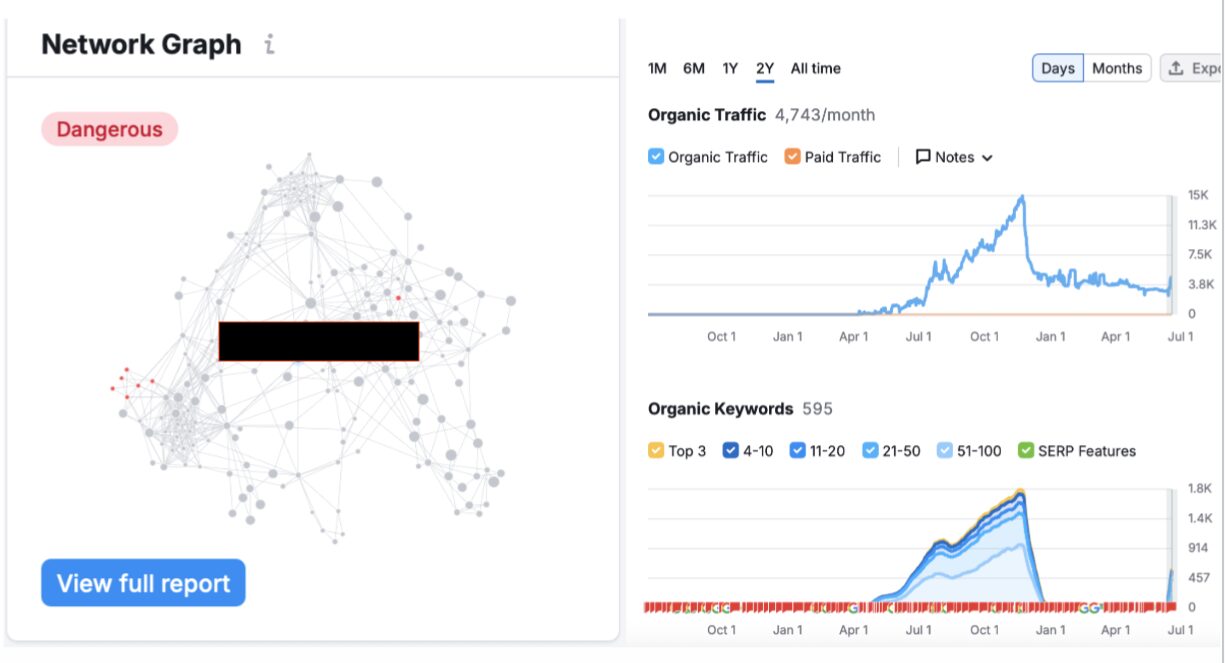
Here you can see an example of what it looks like when Semrush advises against a link building campaign. The link profile of the site in question looks highly unnatural, and that is exactly what Google recognises.
On the right-hand side you can see the consequences this can have for your own website: Google recognises that you have built spam links and tried to manipulate the algorithm. In the worst case your pages are deindexed. The result: your traffic collapses, your SEO work was for nothing, and you have lost a lot of money.
Recommendation:
-
Optimal ratio of dofollow to nofollow: around 60 : 40
-
Strong links, exact keywords possible; weaker links, better to use brand or URL
-
At least 60 % of the links should be topically suitable
-
Up to around 150 referring domains: linear growth; after that the pace can be increased step by step
What does Google say about buying links?
Its published guidelines classify buying and selling links for the purpose of ranking as link spam and recommend rel=”sponsored” for every paid placement. While nofollow/sponsored are treated as hints, disclosure remains the safest choice.
Common warning signs and spam tactics
- PBNs/link farms: thin content, template pages, many outbound links, identical layouts and suspicious network footprints.
- Cheap bulk packages: hundreds of links, no editorial review, you get to choose every anchor, high risk and low value.
- Irrelevant sites: off-topic placements that exist to sell links rather than to serve readers.
- Anchor stuffing: repeating exact-match anchors across many domains.
- Unnatural placement: footers, sidebars, resource pages stuffed with commercial anchors.
Consequences of low-quality schemes
- Manual actions that require cleanup and reconsideration.
- Long-term suppression, where links are quietly ignored and budgets go nowhere.
- Brand risk: appearing on low-trust sites damages credibility with real customers.
Don’ts when buying backlinks
Buying links is not a set-and-forget exercise. It is easy to burn budget, leave footprints and get quietly devalued. Keep your footprint clean with these hard no-gos:
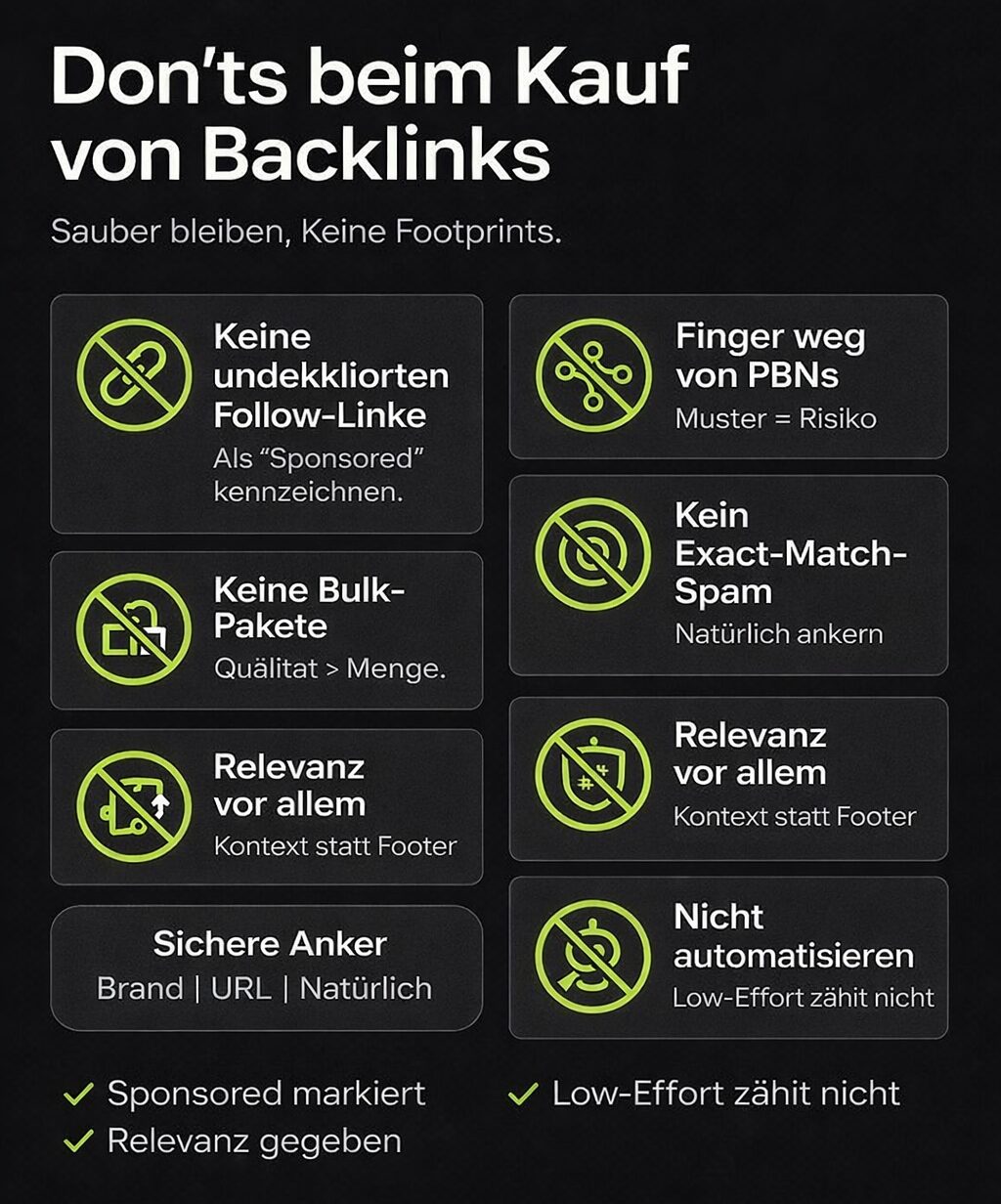
- Do not buy undisclosed “follow” links. If money changes hands, treat it as a sponsorship and label it accordingly. Undisclosed paid links are risky and are often ignored.
- Do not chase private blog networks. Networks leave patterns, shared owners, hosting, themes, recycled content, which are easy to spot. If a site mainly exists to sell links, move on.
- Keep away from bulk packages and broker lists. One-size-fits-all bundles (50, 100, 500 links) signal little editorial control and overused domains. Quality research beats bulk buying every time.
- Do not force exact-match anchors everywhere. Keyword-stuffed anchors across many sites look artificial. Use anchor texts that help readers and set clear expectations: brand, URL or natural phrasing wins.
- Do not accept irrelevant placements. If the site’s topic and audience do not fit you, or the link sits in a thin page, a footer or a link dump, skip it. Low-context links rarely help and can send bad signals.
- Do not ignore disclosure and advertising rules. Sponsored content is fine; pretending it is editorial is not. Keep sponsorships clearly labelled and write for readers first.
- Do not automate your way out of the game. Automated link generation and low-effort guest posts leave footprints. If the content is not genuinely useful, the link carries no weight, and it can count against you.
Conclusion: buy sparingly, label clearly, favour relevance and real editorial context, and assume that anything which scales “too easily” is just as easy to detect.
How can you buy backlinks properly?
Think of this as a clean four-step workflow. The goal is not to “collect links”, it is to secure placements that make sense for real readers, fit the publication and do not cause headaches later.
Step 1: research the right site
Start with audience and language fit. If your customers read in English and buy in the US, prioritise publications that speak to that audience. Then validate that the site actually reaches people through search, because search still drives the lion’s share of discovery.
A recent analysis of around 35K sites found that search accounted for 43.8 % of all traffic, while AI assistants delivered only 0.1 % (Google alone drove 345× more visits than the main AI tools combined). (Ahrefs)
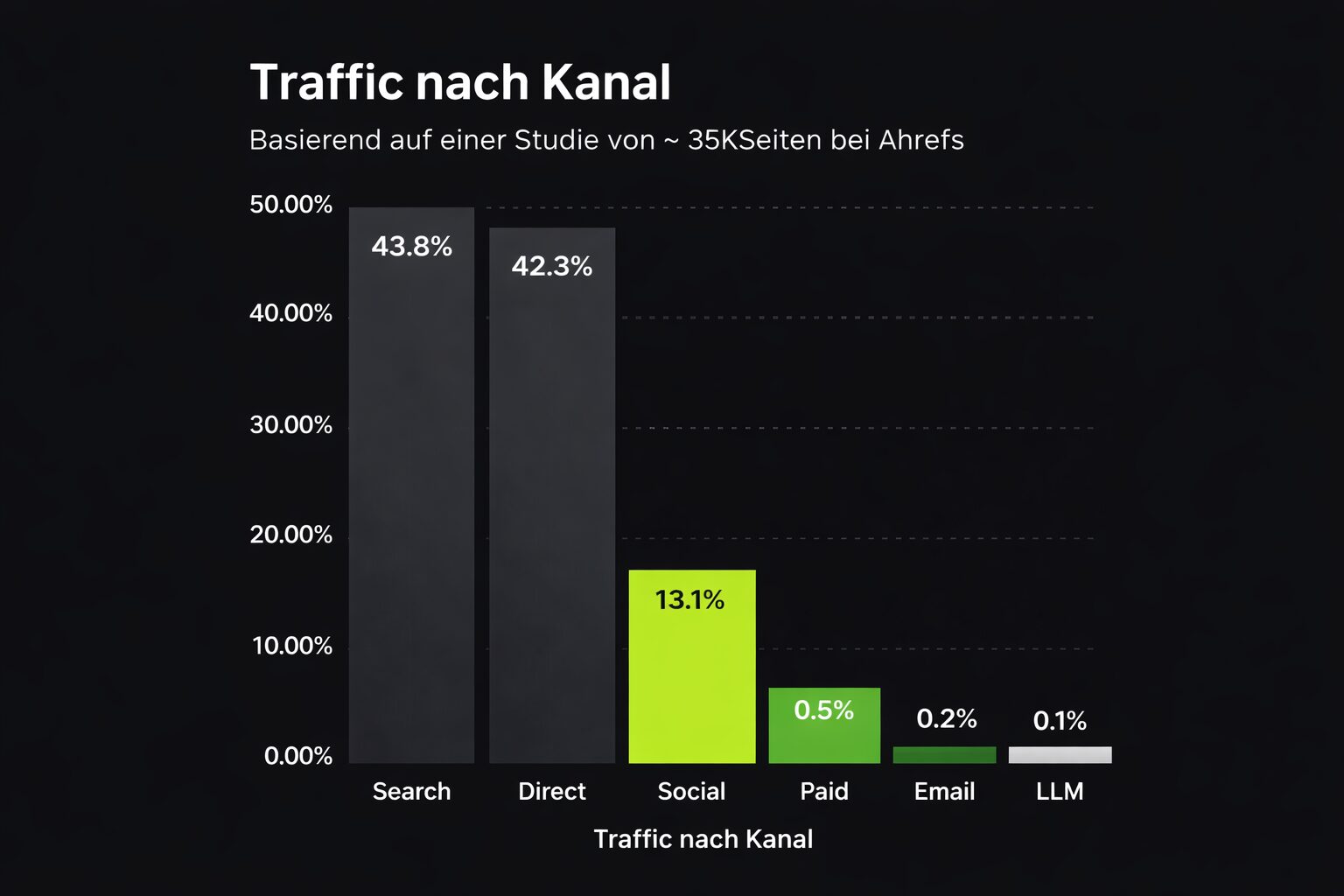
Also be realistic about how rare organic links are: around 95 % of all pages have no backlinks at all, which is why clearly declared, relevant sponsorships can be a pragmatic accelerator. (Backlinko)
Build a shortlist of sites with stable organic traffic, topical fit, transparent ownership and a clean outbound link profile. Use authority scores only to narrow things down; the final decision should rest on relevance, traffic and content quality.
Step 2: plan the placement
Decide where the link belongs before you pitch. The ideal is a contextual mention in the body text of an informative article, something a real reader finds helpful. Keep the topic, tone and formatting consistent with the host site. Choose an anchor that sounds natural (brand, URL or a short descriptive phrase).
Resist stuffing exact-match keywords; a natural mention in a useful paragraph beats five keyword blocks in the footer.
And remember: an Ahrefs analysis (January 2025) of 1,000,000 SERPs showed a Spearman correlation of around 0.255 between rankings and referring domains, and around 0.33 for local queries. In other words: a cleanly placed contextual link counts for more than a mere score.
Step 3: pitch like a partner
Get in touch politely with a clear, reader-focused idea: what you want to contribute and why it improves their article (or a new one). Lead with value: a topic angle, a short outline, quotes, data points and visuals ready to go.
Do not start with money. Establish the editorial fit first; if a fee is expected, discuss it once you have agreed on content and placement. Keep the email short, error-free and specific about where your link provides real benefit.
Step 4: agree the terms
Confirm the essentials in writing:
- Labelling and attributes: paid placements should be clearly marked; do not push for undisclosed “follow” links.
- Placement details: in the primary content (or the author box, if appropriate), not in a link farm or a thin page.
- Longevity and maintenance: because links naturally decay over time, one study found that at least 66.5 % of links to websites went dead within nine years, agree a sensible minimum live time and clarify update and removal rules now. (Ahrefs)
- Quality standard: non-promotional text that helps readers, not advertorial filler.
- Sales posture: check how often the site sells placements; if every post is paid, think twice.
Pro tip: your goal is not just a hyperlink, it is discovery. If a smaller but highly relevant site offers a thoughtful placement with engaged readers, that can be smarter than a larger but off-topic domain.
How much do backlinks actually cost?
There is no single “right” price. In Europe, costs vary according to niche competition, language and region, the publisher’s audience and whether content production is included.
As a practical planning range, in mature markets you can expect low hundreds to low thousands of euros per placement, with premium editorial inventory at the upper end.
For context: an industry analysis (January 2025) shows that the average price per guest post link is around €315, high-quality guest posts cost around €800, and digital PR links come in at roughly €1,075 to €1,290 per link. (Buzzstream)
Typical price range across industries
Competitive sectors (finance, legal, software, gambling) tend to command higher rates than hobby or local niches. In many EU markets, a sensible working range for high-quality, context-rich placements is around €150 to €1,500+ per link, while top national media or highly regulated niches may quote mid three-figure to low four-figure sums, depending on audience size, editorial standards and turnaround.
Price factors
- Niche difficulty and CPCs: the tougher the SERPs, the higher the fee.
- Publisher authority and traffic: a real readership and stable organic visibility push prices up.
- Language and geography: large EU markets (for example DE/FR/IT/ES/UK/NL) with a strong commercial audience typically cost more than smaller regional sites.
- Content scope: custom research, expert review and graphics increase production costs.
- SLA and permanence: faster publication and guaranteed longevity (for example 24+ months live) usually come with a surcharge.
Free vs. sponsored vs. editorial (EU)
- Free / earned: no direct fees, but time-intensive; driven by outstanding content, PR and relationships.
- Sponsored (disclosed): transparent pay-to-publish or sponsorship models; safer when relevant and reader-focused.
- Undisclosed paid “follow” links: risky and often worth little in the long run; prone to devaluation and cleanup costs.
Why do people charge money for backlinks?
Because real publications carry real costs, and real risk. A quality site does not just sell a hyperlink; it offers access to its audience along with the editorial work and reputation behind every page.
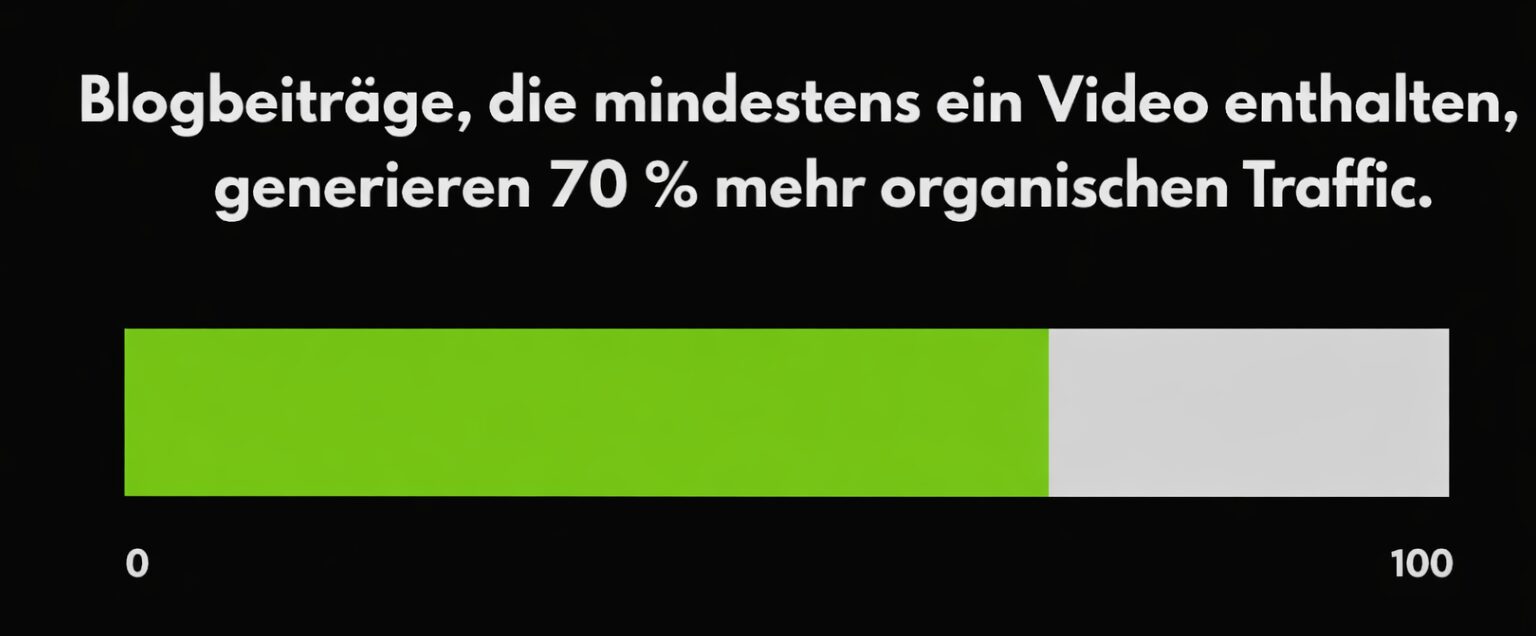
Editors and authors invest time in planning, drafting, fact-checking, formatting and updates. Blog posts with at least one video generate around 70 % more organic traffic than posts without a video. (Backlinko)
There are opportunity costs as well. Featuring one brand means not featuring another, so publishers weigh up fit, benefit to readers and the long-term health of their site.
That selectivity, plus the reality that many outlets now monetise limited inventory, creates a market price.
Finally, there is brand risk and maintenance. Reputable sites protect their reputation, enforce editorial standards, label sponsorships and keep content up to date, all of which requires ongoing attention. When a publisher charges money, it covers the whole stack: content creation, distribution to a real audience and the trust they are putting on the line.
Impact and timeline
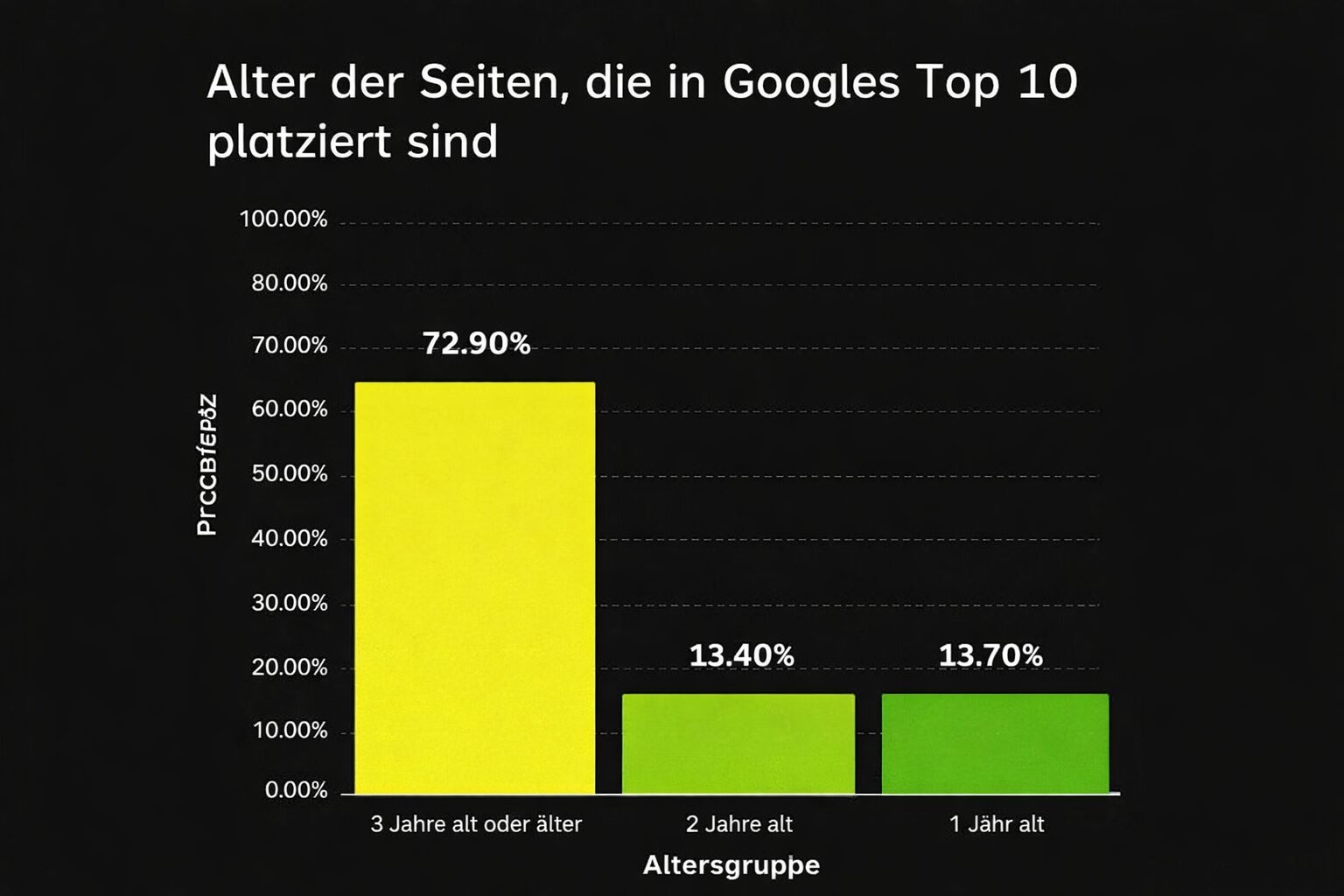
Strong link profiles tend to go hand in hand with top rankings, but results take time. Recent Ahrefs research shows that only 1.74 % of newly published pages make it into the top 10 within a year (down from 5.7 % in an earlier cohort). In addition, 72.9 % of the pages in the top 10 are older than 3 years, and the average number 1 page is around 5 years old. (Ahrefs)
Typical time frame
Plan for weeks to months. Competitive terms take longer; lighter ones move faster. Compounding matters: pages and domains with a history of quality gain momentum as more people discover and cite them.
Link echoes and ghosts
SEOs often observe that rankings can hold on to some gains even after a few links disappear, presumably through secondary effects (brand mentions, internal links, user behaviour). That is interesting, but not a tactic to rely on; consistency wins.
Monitoring and evaluating links
- Track referring domains, non-branded organic traffic and keyword movements for the linked page.
- Watch referral traffic and engagement; strong placements should send qualified visitors.
- Review anchor distribution and target page relevance every quarter.
- Prune or replace underperforming links and strengthen pages that are gaining momentum.
- Keep perspective: a large share of pages (over 96 %) receives no search traffic at all, so standing out requires quality content and thoughtful promotion. (Ahrefs)
Ready for more revenue?
Book a free SEO and GEO audit

Find out in a free call how much revenue your website is leaving on the table, with no obligation and no agency waffle.